The Pilgrims' Inn

  • Welcome to The Pilgrims’ Inn
‘I do choose. Be made clean!’ Sunday Reflections, 6th Sunday in Ordinary Time, Year B

Sunday Reflections

Sunday Reflections

‘I do choose. Be made clean!’ Sunday Reflections, 6th Sunday in Ordinary Time, Year B

February 7, 2018 by Father Sean Coyle

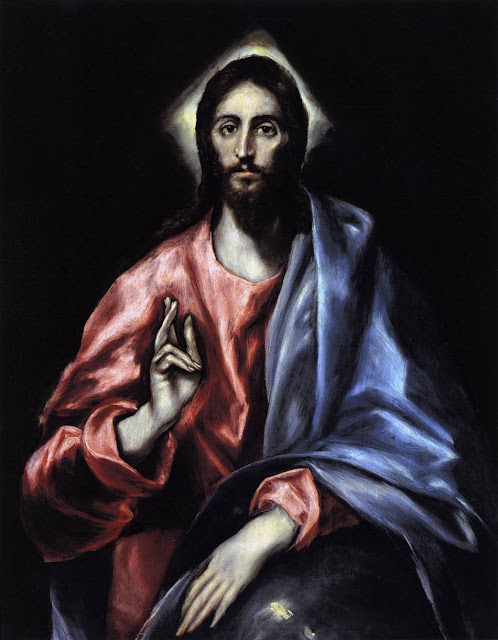
Christ as Saviour, El Greco [Web Gallery of Art]

Readings (New American Bible: Philippines, USA)

Readings (Jerusalem Bible: Australia, England & Wales, India [optional], Ireland, New Zealand, Pakistan, Scotland, South Africa)

Gospel Mark 1:40-45 (New Revised Standard Version, Anglicised Catholic Edition) 

A leper came to Jesus begging him, and kneeling he said to him, ‘If you choose, you can make me clean.’ Moved with pity, Jesus stretched out his hand and touched him, and said to him, ‘I do choose. Be made clean!’ Immediately the leprosy left him, and he was made clean. After sternly warning him he sent him away at once, saying to him, ‘See that you say nothing to anyone; but go, show yourself to the priest, and offer for your cleansing what Moses commanded, as a testimony to them.’ But he went out and began to proclaim it freely, and to spread the word, so that Jesus could no longer go into a town openly, but stayed out in the country; and people came to him from every quarter.

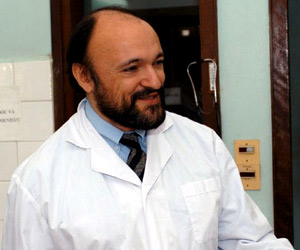
Dr Carlo Urbani

(1956 – 2004) [Wikipedia]

Towards the end of February 2003 Dr Carlo Urbani, an Italian, went to Vietnam, representing the World Health Organisation, to investigate an American businessman who was showing unusual symptoms. It turned out to be severe acute respiratory syndrome (SARS), a highly contagious virus. The man who discovered this new disease died from it himself about a month later on 29 March. In a conscious moment, while in the ICU in a hospital in Bangkok, he asked for a priest to give him the Last Rites.

Vladimir Redzioch of Inside the Vatican interviewed Giuliana Chiorrini, the widow of Dr Urbani. MISYON, the Columban magazine in the Philippines, published the interview, with permission, in its March-April 2004 issue. Here are extracts from the interview.

ITV: Your husband chose to work with the sick and poor around the world. Why?

Giuliana Chiorrini: Carlo was always involved in volunteer work and since his youth was attracted by the poor. He cultivated the desire to discover new horizons. To do this he left for Africa with the missionaries. Since his days as a young student with a backpack full of medicines, he had traveled in Africa (Mali, Niger, and Benin). Afterwards he work in solidarity camps run by the Xaverian Fathers, Catholic Action and Open Hands. He was always in contact with missionaries. As a doctor he wrote for the missionary magazine Missioni Consolata. Carlo also fulfilled his desire to help he poor during his 10 years working at the hospital in Macerata. This confirmed him in his work with Médecins Sans Frontières, of which he was the president, and in this capacity he received the Nobel Peace Prize when it was conferred on the organization in 1999.

ITV: What role did his faith play in his choice of life?

Chiorrini: Faith had an extremely important role in my husband’s life. Everything he did enriched the spiritual lives of the people who were in contact with him. He was also very sensitive to the beauty of creation – he even used to go hang-gliding to admire nature.

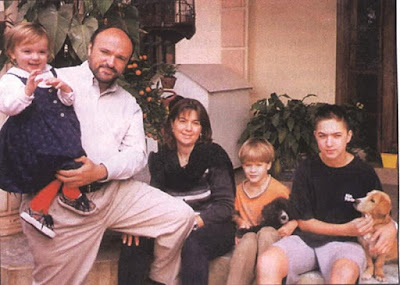
Dr Carlo Urbani with his wife, Giuliana, and their children, Maddalena, Luca and Tommaso [Source]

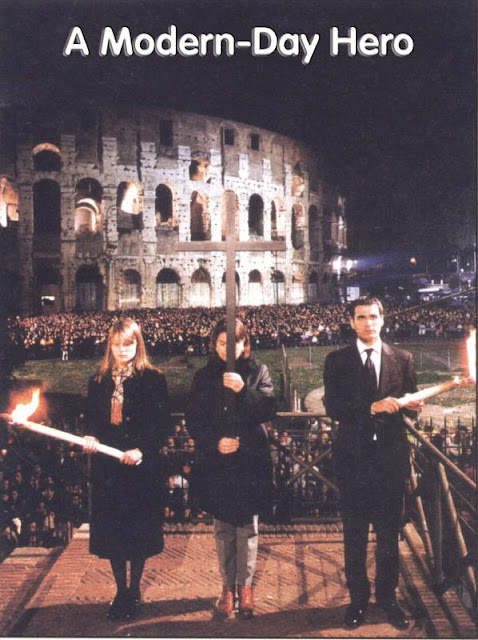
That year St John Paul II invited the family of Dr Urbani to carry the Cross during the Via Crucis on Good Friday, 18 April, in the Colosseum.
ITV: This year, during the Via Crucis at the Colosseum, you and your son carried the cross. How did you react when you heard you had been chosen by the Holy Father, and what significance did it have for your family to participate in this Good Friday liturgy?
Chiorrini: I am a believer, as was my husband, and knowing I was to carry the cross during the Via Crucis touched me a great deal, as well as giving me an enormous joy. It was a very intense moment of the interior spirituality and in all honesty it was also very moving, with the evocative atmosphere which was created that evening.

Giuliana Chiorrini, Dr Urbani’s widow, carries the cross during the Via Crucis at the Colosseum, Good Friday 2003

If you choose, you can make me clean. Like Jesus, Dr Carlo Urbani chose and made many clean, sacrificing his own life in doing so.

Antiphona ad communionem
Communion Antiphon  Cf Psalm 77[78]:29-30

Manducaverunt, et saturati sunt nimis,

They ate and had their fill,

et desiderium eorum attulit eis Dominus;

and what they craved the Lord gave them;

non sunt fraudati a desiderio suo.

they were not disappointed in what they craved.

In the Ordinary Form of the Mass this is the first of two options for the Communion Antiphon. In the Extraordinary Form of the Mass it is the Communion Antiphon for Quinquagesima Sunday, the Sunday before Ash Wednesday.

Posted in: Sunday Reflections Tagged: Dr Carlo Urbani, El Greco, Giuliana Chiorrini, SARS, Sunday Reflections

‘They brought to him all who were sick.’ Sunday Reflections, 5th Sunday in Ordinary Time, Year B

January 31, 2018 by Father Sean Coyle

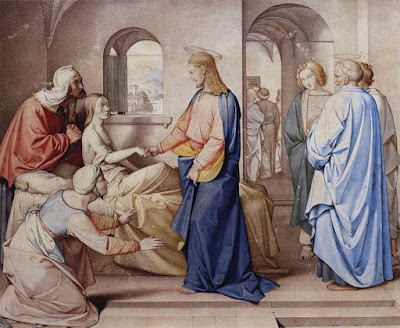
Christ Raises the Daughter of Jairus

Friedrich Overbeck [Web Gallery of Art]

Readings (New American Bible: Philippines, USA)

Readings (Jerusalem Bible: Australia, England & Wales, India [optional], Ireland, New Zealand, Pakistan, Scotland, South Africa)

Gospel Mark 1:29-39 (New Revised StandardVersion, Anglicised Catholic Edition) 

As soon as they left the synagogue, Jesus entered the house of Simon and Andrew, with James and John. Now Simon’s mother-in-law was in bed with a fever, and they told him about her at once. He came and took her by the hand and lifted her up. Then the fever left her, and she began to serve them.

That evening, at sunset, they brought to him all who were sick or possessed with demons. And the whole city was gathered around the door. And he cured many who were sick with various diseases, and cast out many demons; and he would not permit the demons to speak, because they knew him.

In the morning, while it was still very dark, he got up and went out to a deserted place, and there he prayed. And Simon and his companions hunted for him. When they found him, they said to him, ‘Everyone is searching for you.’ He answered, ‘Let us go on to the neighbouring towns, so that I may proclaim the message there also; for that is what I came out to do.’ And he went throughout Galilee, proclaiming the message in their synagogues and casting out demons.

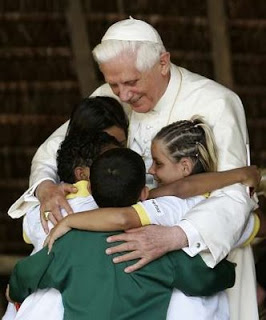
Pope Benedict with children [Source]

This week I will simply copy Pope Benedict’s words on today’s gospel during his Angelus talk on this same Sunday in 2012. I will highlight what particularly strikes me. 

Dear Brothers and Sisters,

This Sunday’s Gospel presents to us Jesus who heals the sick: first Simon Peter’s mother-in-law who was in bed with a fever and Jesus, taking her by the hand, healed her and helped her to her feet; then all the sick in Capernaum, tried in body, mind and spirit, and he “healed many… and cast out many demons” (Mk 1:34). The four Evangelists agree in testifying that this liberation from illness and infirmity of every kind was — together with preaching — Jesus’ main activity in his public ministry.

Illness is in fact a sign of the action of Evil in the world and in people, whereas healing shows that the Kingdom of God, God himself, is at hand. Jesus Christ came to defeat Evil at the root and instances of healing are an anticipation of his triumph, obtained with his death and Resurrection.

Jesus said one day: “those who are well have no need of a physician, but those who are sick” (Mk 2:17). On that occasion he was referring to sinners, whom he came to call and to save. It is nonetheless true that illness is a typically human condition in which we feel strongly that we are not self-sufficient but need others. In this regard we might say paradoxically that illness can be a salutary moment in which to experience the attention of others and to pay attention to others!

However illness is also always a trial that can even become long and difficult. When healing does not happen and suffering is prolonged, we can be as it were overwhelmed, isolated, and then our life is depressed and dehumanized. How should we react to this attack of Evil? With the appropriate treatment, certainly — medicine in these decades has taken giant strides and we are grateful for it — but the Word of God teaches us that there is a crucial basic attitude with which to face illness and it is that of faith in God, in his goodness. Jesus always repeats this to the people he heals: your faith has made you well (cf. Mk 5:34, 36).

Even in the face of death, faith can make possible what is humanly impossible. But faith in what? In the love of God. This is the real answer which radically defeats Evil. Just as Jesus confronted the Evil One with the power of the love that came to him from the Father, so we too can confront and live through the trial of illness, keeping our heart immersed in God’s love.

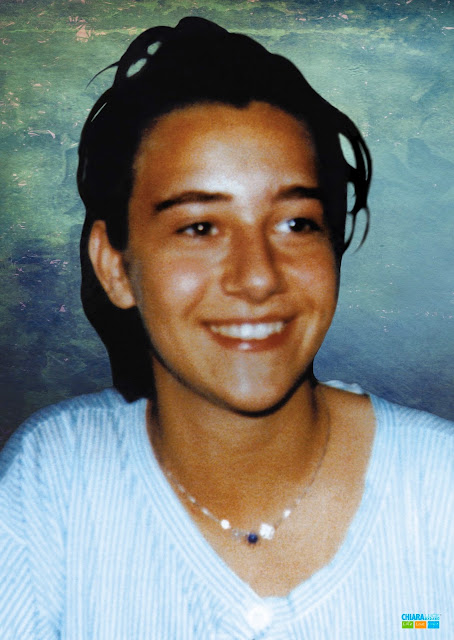
Blessed Chiara Luce Badano [Source]

(29 October 1971 – 7 October 1990)

We all know people who were able to bear terrible suffering because God gave them profound serenity. I am thinking of the recent example of Blessed Chiara Badano, cut off in the flower of her youth by a disease from which there was no escape: all those who went to visit her received light and confidence from her! Nonetheless, in sickness we all need human warmth: to comfort a sick person what counts more than words is serene and sincere closeness.


Dear friends, next Saturday, 11 February, the Memorial of Our Lady of Lourdes, is the World Day of the Sick. Let us too do as people did in Jesus’ day: let us present to him spiritually all the sick, confident that he wants to and can heal them. And let us invoke the intercession of Our Lady, especially for the situations of greater suffering and neglect. Mary, Health of the Sick, pray for us!


Next Sunday, 11 February, is this year’s World Day of the Sick.


Blessed Chiara [Source]

On a pastoral visit to Palermo, Italy, on 3 October 2010 Pope Benedict had this to say about Blessed Chiara [emphases added]: I do not want to start with a discussion but with a testimonial, a true and very timely life story. I believe you know that last Saturday, 25 September, a young Italian girl, called Chiara, Chiara Badano, was declared Blessed in Rome. I invite you to become acquainted with her. Her life was a short one but it is a wonderful message. Chiara was born in 1971 and died in 1990 from an incurable disease. Nineteen years full of life, love and faith. Her last two years were also full of pain, yet always of love and light, a light that shone around her, that came from within: from her heart filled with God! How was this possible? How could a 17 or 18-year-old girl live her suffering in this way, humanly without hope, spreading love, serenity, peace and faith? This was obviously a grace of God, but this grace was prepared and accompanied by human collaboration as well: the collaboration of Chiara herself, of course, but also of her parents and friends.


You may read more about Blessed Chiara Luce Badano in The Saint Who Failed Math by Richelle Verdeprado  published in the September-October 2010 issue of MISYONonline.com, the magazine of the Columbans in the Philippines of which I used to be editor. 

The whole of Pope Benedict’s address to the young people and families of Sicily is well worth reading and reflecting on in the context of this year’s World Meeting of Families in Ireland in August.

Posted in: Sunday Reflections Tagged: Benedict XVI, Blessed Chiara Luce Badano, Friedrich Overbeck, Sunday Reflections, Web Gallery of Art

‘He taught them as one having authority.’ Sunday Reflections, 4th Sunday in Ordinary Time, Year B

January 28, 2018 by Father Sean Coyle

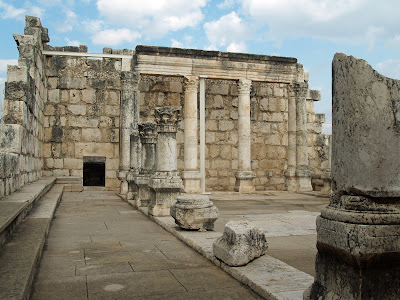
4th-century synagogue, Capernaum [Wikipedia]

Readings (New American Bible: Philippines, USA)

Readings (Jerusalem Bible: Australia, England & Wales, India [optional], Ireland, New Zealand, Pakistan, Scotland, South Africa)

Gospel Mark 1:21-28 (New Revised StandardVersion, Anglicised Catholic Edition) 

They went to Capernaum; and when the sabbath came, Jesus entered the synagogue and taught. They were astounded at his teaching, for he taught them as one having authority, and not as the scribes. Just then there was in their synagogue a man with an unclean spirit, and he cried out, ‘What have you to do with us, Jesus of Nazareth? Have you come to destroy us? I know who you are, the Holy One of God.’ But Jesus rebuked him, saying, ‘Be silent, and come out of him!’ And the unclean spirit, throwing him into convulsions and crying with a loud voice, came out of him. They were all amazed, and they kept on asking one another, ‘What is this? A new teaching—with authority! He commands even the unclean spirits, and they obey him.’ At once his fame began to spread throughout the surrounding region of Galilee.

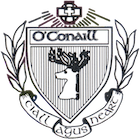
O’Connell School’s crest and motto

(‘Ciall agus Neart’ is Irish for ‘Sense and Strength’)


For the last two years of my secondary education in O’Connell School, Dublin, the A and B sections had the same set of teachers. Heading that group was a member of the Irish Christian Brothers, now often known as Edmund Rice Brothers after their founder, Blessed Edmund Ignatius Rice, Brother Mícheál S. Ó Flaitile whom we called ‘Pancho’ after a character in a cartoon strip, The Cisco Kid, in the now defunct Irish Press.

‘Pancho’ used to take the A and B sections together for Religions, the last class in the morning. He was in his late 50s at the time while we were progressing from 16 to 18 over the course of those two years.

One day I learned a lesson for life from ‘Pancho’. He apologised to all of us in Religions class for having accused a student in the B section the previous day of having done something or other wrong. I don’t recall the particular ‘misdemeanour’. Whatever it was, it was trivial. But Brother Ó Flaitile had discovered that the student had not done what he had accused him of. Next day at the beginning of class he told us he was sorry and that the student whom he had accused had not done anything wrong. The apology was a genuine one, not of the ‘If I have hurt anyone . . .’ variety. He acknowledged that he had misjudged a student and that he had been wrong to do so.

Years later I mentioned this incident to Brother Ó Flaitile while on  a home visit from the Philippines. He said he didn’t remember it – but he smiled.

I’ve always been struck in today’s gospel by what St Mark highlights twice: They were astounded at his teaching, for he taught them as one having authority, and not as the scribes and ‘What is this? A new teaching—with authority!’

All of us had the deepest respect for ‘Pancho’, though we sometimes played tricks on him. And I think that we recognised his sanctity, though I don’t recall any of us using that word at the time. My own respect for him went even deeper that day when he apologised to us – more than 60 teenagers who were 40 years or so younger than he was.

For me Brother Ó Flaitile taught us as one having authority, the authority of his integrity, the authority of his faith in Jesus Christ, with the authority of Jesus himself who is the way, and the truth, and the life.

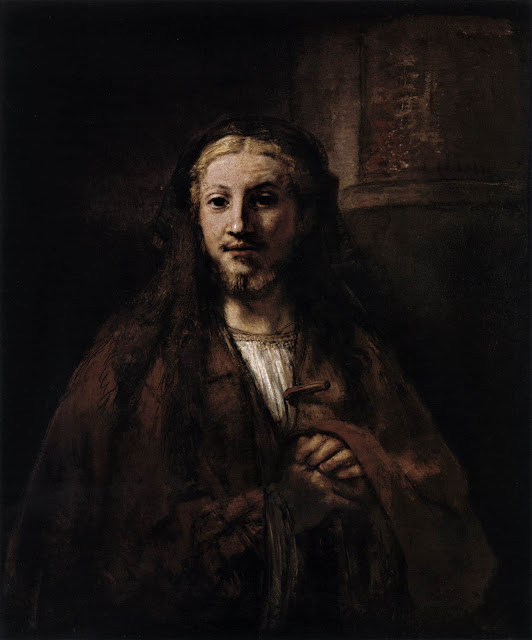
Christ with a Staff, Rembrandt [Web Gallery of Art]

A Christian’s inner authority does not come from being ‘faultless’. It comes from being rooted in Christ. The saintly Fr Willie Doyle SJ, killed in the Great War in 1917 while trying to rescue a wounded soldier, wrote to someone who had sought his advice: I am convinced from a pretty big experience that perfection, that is sanctity, is only to be won by repeated failures. If you rise again after a fall, sorry for the pain given to our Lord, humbled by it since you see better your real weakness, and determined to make another start, far more is gained than if you had gone on without a stumble.

I have no doubt that Brother Ó Flaitile grew in sanctity when he acknowledged his mistake and when he apologised to us. His words that day were for me those of one having authority and they still speak to me with the authority of Jesus himself nearly 60 years later.

Responsorial Psalm (New American Bible Lectionary)

Posted in: Sunday Reflections Tagged: authority, Brother Mícheál S. Ó Flaitile, Fr Willie Doyle SJ, O'Connell School, Rembrandt, Sunday Reflections

‘Repent . . . and follow me.’ Sunday Reflections, 3rd Sunday in Ordinary Time, Year B

January 19, 2018 by Father Sean Coyle

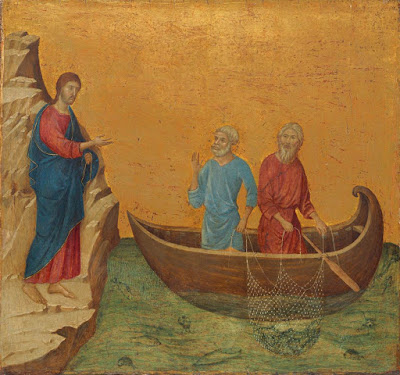
Calling of Peter and Andrew

Duccio di Buoninsegna [Web Gallery of Art]

Readings (New American Bible: Philippines, USA)

Readings (Jerusalem Bible: Australia, England & Wales, India [optional], Ireland, New Zealand, Pakistan, Scotland, South Africa)

Gospel Mark 1:14-20 (New Revised  Standard Version, Anglicised CatholicEdition) 

Now after John was arrested, Jesus came to Galilee, proclaiming the good news of God, and saying, ‘The time is fulfilled, and the kingdom of God has come near; repent, and believe in the good news.’

As Jesus passed along the Sea of Galilee, he saw Simon and his brother Andrew casting a net into the lake—for they were fishermen. And Jesus said to them, ‘Follow me and I will make you fish for people.’ And immediately they left their nets and followed him. As he went a little farther, he saw James son of Zebedee and his brother John, who were in their boat mending the nets. Immediately he called them; and they left their father Zebedee in the boat with the hired men, and followed him.

Speaking in Rome to members of ecclesial movements on the evening of Saturday 17 May 2013, the Vigil of Pentecost, Pope Francis told this story:

One day in particular, though, was very important to me: 21 September 1953. I was almost 17. It was ‘Students’ Day’, for us the first day of spring — for you the first day of autumn. Before going to the celebration I passed through the parish I normally attended, I found a priest that I did not know and I felt the need to go to confession. For me this was an experience of encounter: I found that someone was waiting for me. Yet I do not know what happened, I can’t remember, I do not know why that particular priest was there whom I did not know, or why I felt this desire to confess, but the truth is that someone was waiting for me. He had been waiting for me for some time. After making my confession I felt something had changed. I was not the same. I had heard something like a voice, or a call. I was convinced that I should become a priest.

What is striking is that the young Jorge Mario Bergoglio experienced God’s call to the priesthood unexpectedly and within the context of confession. In today’s Gospel the call of Simon and Peter, of James and John to follow Jesus is within the context of a call to conversion: repent, and believe in the good news. 

In the First Reading God sends a very reluctant Jonah to Nineveh to call the people there to repentance. And the people of Nineveh believed God; they proclaimed a fast, and everyone, great and small, put on sackcloth.

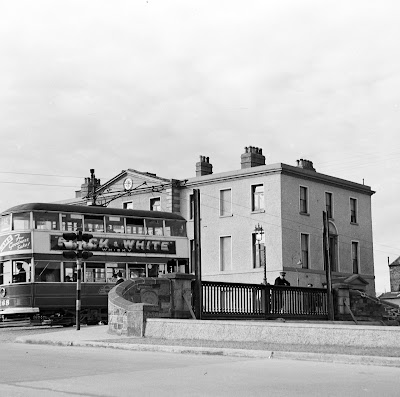
An old photo of Portobello Bridge, Dublin [Wikipedia]

Last Monday on  Nationwide on RTÉ, Ireland’s national radio and TV service, a young Irish Dominican friar, Fr David Barron OP, told how he remembered the very moment when he decided to give up his job in banking, in which he was very happy, to become a Dominican priest: One evening, coming on the bus from Trinity (Dublin University) into Rathmines, coming over Portobello Bridge, I still remember, I finally gave in and said, ‘I’ll give it a go’ [11:17 – 11:29 in the video].

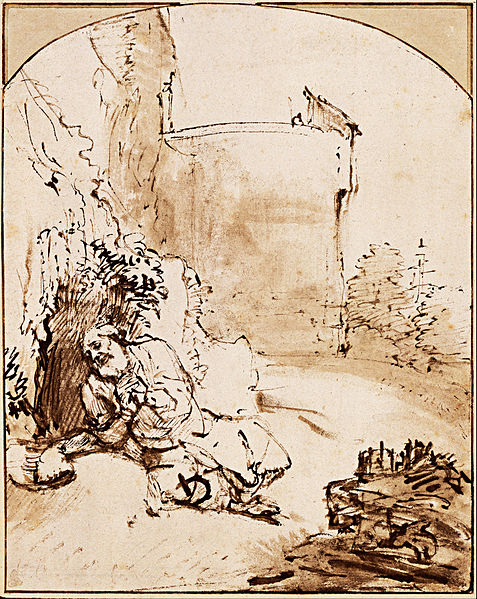
The Prophet Jonah Before the Walls of Jericho

Rembrandt [Wikipedia Commons]

The First Reading, from the Book of Jonah, shows the people of Nineveh, from the King down, believing the reluctant prophet and then fasting and repenting.

In the Gospel Jesus preaches, Repent, and believe in the good news. It is in the context of that proclamation to the people in Galilee that Jesus invites Simon and Andrew, James and John, to follow him. Each of the four could make the words of Pope Francis their own: For me this was an experience of encounter: I found that someone was waiting for me. Yet I do not know what happened . . . I was not the same. I had heard something like a voice, or a call. That call was to lead the four of them to leave everything to follow him, a decision that was to bring three of them to martyrdom. The young Jorge Mario Bergoglio could not have had the slightest idea that listening to God’s call would lead him to Rome.

About 16 years ago I did a mission appeal in a parish in England where the then recently appointed parish priest had inherited a filthy rectory/presbytery/convento from his predecessor. He had managed by then to clean up only his own bedroom. He could not invite me to stay at his place because the guest room was filthy and so had me put up by a neighbouring parish priest.

The people of Nineveh cleaned up the ‘room’ of their inner heart by turning away from sin and allowed the word of God to enter. The Gospel suggests that the two sets of fishermen-brothers had done the same and were able to hear and respond to the call of Jesus there and then.

May we do likewise, with God’s grace, especially through the sacrament of reconciliation / penance / confession.

Jesus calls each of us through baptism into an intimate, personal relationship with him. He eventually reveals to us, within that relationship, the specific vocation to which he invites us – to marriage, to the priesthood, to religious life, to remaining single. We can only hear that specific invitation from Jesus if we constantly repent of our sins and accept his loving forgiveness and mercy.

Posted in: Sunday Reflections Tagged: confession, Dominicans, Duccio di Buoninsegna, Pope Francis, Priesthood, Rembrandt, Sunday Reflections, Vocation

‘Jesus said to them,”Come and see”.’ Sunday Reflections, 2nd Sunday in Ordinary Time, Year B

January 10, 2018 by Father Sean Coyle

From The Gospel of John, directed by Philip Saville

Readings (New American Bible: Philippines, USA)

Readings (Jerusalem Bible: Australia, England & Wales, India [optional], Ireland, New Zealand, Pakistan, Scotland, South Africa)

Gospel John 1:35-42 (New Revised  Standard Version, Anglicised CatholicEdition) 

The next day John again was standing with two of his disciples, and as he watched Jesus walk by, he exclaimed, ‘Look, here is the Lamb of God!’ The two disciples heard him say this, and they followed Jesus. When Jesus turned and saw them following, he said to them, ‘What are you looking for?’ They said to him, ‘Rabbi’ (which translated means Teacher), ‘where are you staying?’ He said to them, ‘Come and see.’ They came and saw where he was staying, and they remained with him that day. It was about four o’clock in the afternoon. One of the two who heard John speak and followed him was Andrew, Simon Peter’s brother. He first found his brother Simon and said to him, ‘We have found the Messiah’ (which is translated Anointed. He brought Simon to Jesus, who looked at him and said, ‘You are Simon son of John. You are to be called Cephas’ (which is translated Peter).

St Andrew the Apostle, El Greco [Web Gallery of Art]

God calls each of us to our particular vocation in life in a unique way. Pope Francis has told us, for example, that it was on the occasion of going to confession when he was 17 that he saw clearly that God was calling him to be a priest. A couple at whose wedding I officiated some years ago were members of the same Catholic organisation in the university they attended. They became an ‘item’, as they say in the Philippines, when they were the only members of the group to turn up at the appointed time for an outing. While waiting for the others to arrive they discovered that they were more than just casual friends. Now they are happily married with four children.

I’m always amused by the Second Reading from the Office of Readings for the feast of St Anthony the Abbot, 17 January. St Athanasius tells us: He went into the church. It happened that the gospel was then being read, and he heard what the Lord had said to the rich man ‘If you would be perfect, go, sell what you possess and give to the poor, and you will have treasure in heaven; and come, follow me.’

The young man Anthony, whose parents had died about six months previously, took these words to heart and went to live in the desert. He became, without planning it, the ‘Father of Monasticism’ in the Church. And perhaps if he had not been late for Mass that day the Gospel might not have struck him as it did. He was to be ‘later’ than most in another sense in that he was 105 when he died, a remarkable age to live to now but even more remarkable in the fourth century! Unlike the married couple above whose punctuality led them to discover God’s call for them, it was through being late for Mass that Anthony discovered what God had in mind for him.

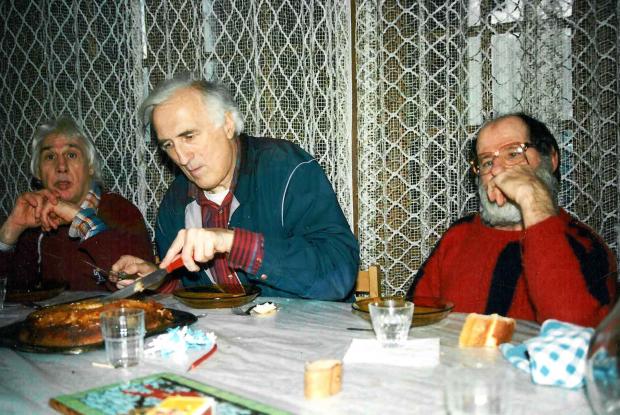
Raphaël Simi, Jean Vanier and Philippe Seux, 2014

In 1964 Jean Vanier invited two men with learning disabilities, Raphael Simi and Philippe Seux, who had been living in institutions, to live with him in a small cottage that he bought and renovated in France. Having done so he realized that he had made a commitment to these two men and that his commitment involved remaining single. He had no intention of founding a movement but, in God’s plan, that’s what came about: L’Arche. Raphaël and Philippe are now considered, with Jean, co-founders of L’Arche.

Fr Hans Urs von Balthasar, a great Swiss theologian much admired by St John Paul II, in reflecting on today’s Gospel from the First Chapter of St John, links it to an incident in the last chapter, John 21: 15 ff [starting at 0:55 in the video below].

Fr von Balthasar writes: In the last chapter of the book Peter will be the foundation stone to such a degree that he will also have to undergird ecclesial love: ‘Simon, do you love me more than these?’

John 21:15-17 was the gospel read at the Pope’s Mass in Manila Cathedral on 16 January 2015 with priests, religious, consecrated persons and seminarians. This passage shows what is at the heart of every call from God, whether to marriage, to the priesthood, to the consecrated life, to the single life. The call is above all to an intimate relationship with Jesus. Pope Francis highlighted this in his homily: For us priests and consecrated persons, conversion to the newness of the Gospel entails a daily encounter with the Lord in prayer. The saints teach us that this is the source of all apostolic zeal! For religious, living the newness of the Gospel also means finding ever anew in community life and community apostolates the incentive for an ever closer union with the Lord in perfect charity. For all of us, it means living lives that reflect the poverty of Christ, whose entire life was focused on doing the will of the Father and serving others.

Pope Francis also said, The poor are at the center of the Gospel, are at heart of the Gospel; if we take away the poor from the Gospel we can’t understand the whole message of Jesus Christ.

Living the Gospel within the context of a deep personal relationship with Jesus the Risen Lord involves seeing reality through the eyes of those with little in life. Pope Francis showed this in a beautiful way by an unplanned – at least it wasn’t on the official schedule – to a group of very poor children at TNK in Manila, near the Cathedral. (‘Tulay ng Kabataan’ means ‘A Bridge to Children’).

Posted in: Sunday Reflections Tagged: El Greco, Jean Vanier, Manila, Pope Francis, Sunday Reflections, Tulay ng Kabataan

‘The seed of eternal life.’ Sunday Reflections, The Baptism of the Lord, Year B

January 6, 2018 by Father Sean Coyle

Baptistry, St Mark’s, Venice [Web Gallery of Art]

Readings (New American Bible: Philippines, USA)

Readings (Jerusalem Bible: Australia, England & Wales, India [optional], Ireland, New Zealand, Pakistan, Scotland, South Africa)

Gospel Mark 1:7-11 (New Revised  Standard Version, Anglicised CatholicEdition) 

John the Baptist proclaimed, ‘The one who is more powerful than I is coming after me; I am not worthy to stoop down and untie the thong of his sandals. I have baptized you with water; but he will baptize you with the Holy Spirit.’

In those days Jesus came from Nazareth of Galilee and was baptized by John in the Jordan. And just as he was coming up out of the water, he saw the heavens torn apart and the Spirit descending like a dove on him. And a voice came from heaven, ‘You are my Son, the Beloved; with you I am well pleased.’

In countries where the Baptism of the Lord is celebrated this year on Monday 8 January, eg the Philippines and the USA, there is only one reading before the Gospel and the Creed is omitted.

Feast of the Baptism of the Lord 2013

FEAST OF THE BAPTISM OF THE LORD

MASS AND ADMINISTRATION OF THE SACRAMENT OF BAPTISM

HOMILY OF HIS HOLINESS BENEDICT XVI

Sistine Chapel, Sunday, 8 January 2012

[I have highlighted parts of the Pope’s homily]

Dear Brothers and Sisters,

It is always a joy to celebrate this Holy Mass with the baptism of children on the Feast of the Baptism of the Lord. I greet you all with affection, dear parents, godparents and all of you, relatives and friends! You have come here — you said so aloud — so that your newborn babies may receive the gift of God’s grace, the seed of eternal life. You, parents, have desired this. You thought of Baptism even before your child was born. Your duty as Christian parents made you think immediately of the sacrament that marks entry into divine life and into the community of the Church. We can say that this was your first educational decision as witnesses of the faith to your children: it is a fundamental decision!

The parents’ task, helped by the godfather and godmother, is to raise their son or daughter. Raising children is very demanding and at times taxes our human capability, which is always limited. However, educating becomes a marvellous mission if it is carried out in collaboration with God who is the first and true educator of every human being.

In the First Reading, we heard from the Book of the Prophet Isaiah, God addresses his people precisely as a teacher. He puts the Israelites on their guard against the danger of quenching their thirst and appeasing their hunger at the wrong sources: “Why”, he says, “do you spend your money for that which is not bread, and your labour for that which does not satisfy?” (Is 55:2). God wants to give us good things to drink and to eat, things that do us good; whereas at times we use our resources mistakenly, we use them for things that are useless, indeed, even harmful. Above all, God wants to give us himself and his Word. He knows that in distancing ourselves from him we will soon run into difficulty — like the Prodigal Son of the parable — and, especially, that we will lose our human dignity. And for this reason he assures us that he is infinite mercy, that his thoughts and ways are unlike ours — fortunately! — and that we can always return to him, to the Father’s house. Thereafter he assures us that if we receive his Word it will bear good fruits in our life, like the rain that waters the earth (cf. Is 55:10-11).

We responded to these words which the Lord has addressed to us through the Prophet Isaiah with the refrain of the Psalm: We will “draw water joyfully from the springs of salvation”. As adults, we have striven to draw from the good springs for our own good and for the good of those entrusted to our responsibility, and you in particular, dear parents and godparents, for the good of these children.

And what are “the springs of salvation”? They are the Word of God and the sacraments. Adults are the first who should nourish themselves at these sources, so as to be able to guide those who are younger in their development. Parents must give much, but in order to give they need in turn to receive, otherwise they are drained, they dry up. Parents are not the spring, just as we priests are not the spring. Rather, we are like channels through which the life-giving sap of God’s love must flow. If we cut ourselves off from his spring, we ourselves are the first to feel the negative effects and are no longer able to educate others. For this reason we have committed ourselves by saying: We will “draw water joyfully from the springs of salvation”.

The Baptism of Christ, El Greco [Web Gallery of Art]

The Baptism of Christ, El Greco [Web Gallery of Art]

And we now come to the Second Reading and to the Gospel. They say that the first and principal education takes place through witness. The Gospel speaks of John the Baptist. John was a great educator of his disciples, because he led them to the encounter with Jesus to whom he bore witness. He did not exalt himself, he did not wish to keep his disciples bound to him. Yet John was a great prophet, his fame was very great. When Jesus arrived John drew back and pointed to him: “After me comes he who is mightier than I…. I have baptized you with water; but he will baptize you with the Holy Spirit” (Mk 1:7-8).

The true teacher does not bind people to himself, he is not possessive. He wants his son or daughter, or disciple, to learn to know the truth and to establish a personal relationship with it. The educator does his duty fully, he assures his attentive and faithful presence because his objective is that the person being educated listen to the voice of truth speaking to his heart and follow it on a personal journey.

Let us return once again to the witness. In the Second Reading, the Apostle John writes: “And the Spirit is the witness” (1 Jn 5:7). He is referring to the Holy Spirit, the Spirit of God, who bears witness to Jesus, testifying that he is the Christ, the Son of God. This is also apparent in the scene of the Baptism in the River Jordan: the Holy Spirit descends upon Jesus as a dove to reveal that he is the Only-Begotten Son of the eternal Father (cf. Mk 1:10). In his Gospel too, John underlines this aspect where Jesus says to the disciples: “When the Counselor comes, whom I shall send to you from the Father, even the Spirit of truth, who proceeds from the Father, he will bear witness to me; and you also are witnesses, because you have been with me from the beginning” (Jn 15:26-27). This is a great comfort to us in the work of educating in faith, because we know that we are not alone and that our witness is sustained by the Holy Spirit.

It is very important for you parents, and also for the godparents, to believe strongly in the presence and in the action of the Holy Spirit, to invoke him and to welcome him within you, through prayer and through the sacraments. It is he, in fact, who illumines the mind and warms the heart of the educator so that he or she can pass on the knowledge and love of Jesus. Prayer is the first condition for teaching because by praying we prepare ourselves to leave the initiative to God, to entrust children to him, who knows them before and better than we, and who knows perfectly what their true good is. And at the same time, when we pray we listen to God’s inspiration in order to do our part well, which in any case is our duty and which we are bound to do. The sacraments, especially the Eucharist and Penance, enable us to carry out our educational action in union with Christ, in communion with him and continuously renewed by his forgiveness. Prayer and the sacraments obtain for us that light of truth thanks to which we are able to be at once tender and strong, gentle and firm, silent and communicative at the right time, admonishing and correcting in the right way.

Dear friends, let us therefore all invoke the Holy Spirit together so that he may come down upon these children in abundance, consecrate them in the image of Jesus Christ and always go with them on their journey through life. Let us entrust them to the motherly guidance of Mary Most Holy, so that they may grow in age, wisdom and grace and become true Christians, faithful and joyful witnesses of God’s love. Amen.

A Catholic baptism [Wikipedia]

May each of us thank God today for our parents and godparents who brought us to be baptized so that we might receive ‘the seed of eternal life’.

Posted in: Sunday Reflections Tagged: Baptism, Baptism of Jesus, El Greco, Pope Benedict XVI, St John the Baptist, Sunday Reflections

‘We have come to pay him homage.’ Sunday Reflections, The Epiphany, Years ABC

January 5, 2018 by Father Sean Coyle

The Adoration of the Magi, Luís Tristán de Escamilla [Web Gallery of Art]

Readings (New American Bible: Philippines, USA)

Readings (Jerusalem Bible: Australia, England & Wales, India [optional], Ireland, New Zealand, Pakistan, Scotland, South Africa)

Gospel Matthew 2:1-12 (New Revised  Standard Version, Anglicised CatholicEdition) 

In the time of King Herod, after Jesus was born in Bethlehem of Judea, wise men from the East came to Jerusalem, asking, ‘Where is the child who has been born king of the Jews? For we observed his star at its rising, and have come to pay him homage.’ When King Herod heard this, he was frightened, and all Jerusalem with him; and calling together all the chief priests and scribes of the people, he inquired of them where the Messiah was to be born. They told him, ‘In Bethlehem of Judea; for so it has been written by the prophet:

“And you, Bethlehem, in the land of Judah,
    are by no means least among the rulers of Judah;
for from you shall come a ruler
    who is to shepherd my people Israel.”’

Then Herod secretly called for the wise men and learned from them the exact time when the star had appeared. Then he sent them to Bethlehem, saying, ‘Go and search diligently for the child; and when you have found him, bring me word so that I may also go and pay him homage.’ When they had heard the king, they set out; and there, ahead of them, went the star that they had seen at its rising, until it stopped over the place where the child was. When they saw that the star had stopped, they were overwhelmed with joy. On entering the house, they saw the child with Mary his mother; and they knelt down and paid him homage. Then, opening their treasure-chests, they offered him gifts of gold, frankincense, and myrrh. And having been warned in a dream not to return to Herod, they left for their own country by another road.

In countries where the Epiphany is a Holyday of Obligation it is celebrated on Saturday 6 January. Otherwise it is celebrated on Sunday 7 January this year. The Vigil Mass has its own antiphons and prayers but uses the readings above.

Adoration of the Magi, Blessed Fra Angelico [Web Gallery of Art]

While based in Britain from 2000 till 2002 I was able to spend Christmas with my brother and his family in Dublin, a short flight from England, in 2000 and 2001. During the holiday in 2001 I saw a documentary on RTÉ, Ireland’s national broadcasting service, about Filipino nurses in Ireland. These began to arrive in 2000, initially at the invitation of the Irish government to work in government hospitals. Very quickly there was an ‘invasion’ of Filipino nurses and carers, now to be found in hospitals and nursing homes in every part of the country.

One of the nurses interviewed told how many Filipinos, knowing that the Irish celebrate Christmas on the 25th, unlike the Philippines where the culmination of the feast is the family meal, the noche buena, on the night of the 24th, offered to work on Christmas Day so that their Irish companions could be with their families. This also helped to dull the pain of being away from their own families.

I was moved to tears at the testimony of one nurse, from Mindanao as I recall, speaking about her job and her first Christmas in Ireland in 2000. She spoke very highly of her employers, of her working conditions and of her accommodation, which she compared with that of the Holy Family on the first Christmas night. She spoke of Jesus, Mary and Joseph in this situation as if they were members of her own family, as in a very deep sense they are, or we of their family.

Here was a young woman from the East powerfully proclaiming, without being aware of it, that the Word became flesh and lived among us. The fact that she wasn’t aware of it, that she was speaking about her ‘next door neighbours’, made her proclamation of faith all the more powerful. She would have known many in her own place, and very likely knew from her own experience, something of what Joseph and Mary went through in Bethlehem. Her faith in the Word who became flesh and lived among us wasn’t something in her head but part of her very being.

For much of the last century thousands of Catholic priests, religious Sisters and Brothers left Europe and North America to preach and live the Gospel in the nations of Africa, Asia and South America. Some of the countries and regions from which they left, eg, Belgium, the Netherlands, Ireland, Quebec, have to a great extent lost or even rejected the Catholic Christian faith. The Jewish people had, in faith, awaited the coming of the Messiah for many centuries. But when He came it was uneducated shepherds who first recognised him and later Simeon and Anna, two devout and elderly Jews who spent lengthy periods in prayer in the Temple.

Today’s feast highlights wise men from the east, not ‘believers’ in the Jewish sense, led by God’s special grace to Bethlehem to bring gifts in response to that grace, explaining, We . . . have come to pay him homage.They reveal to us that God calls people from every part of the world to do the same and to bring others with them.

Will nurses from the Philippines and from Kerala in India, migrants from Korea and Vietnam, from the east, bring the gift of faith in Jesus Christ once again to the many people in Western Europe and North America who no longer know him in any real sense? Will they by the lives they lead as working immigrants gently invite those in the West who have lost the precious gift of our Catholic Christian faith to once again come to pay him homage?

We Three Kings of Orient Are

The Madrigal Singers, University of the Philippines

Posted in: Sunday Reflections Tagged: Epiphany, Fra Angelico, Luís Tristán de Escamilla, Sunday Reflections, The Madrigal Singers

‘And the favour of God was upon him.’ Sunday Reflections, Feast of the Holy Family; Mary, Mother of God

December 29, 2017 by Father Sean Coyle

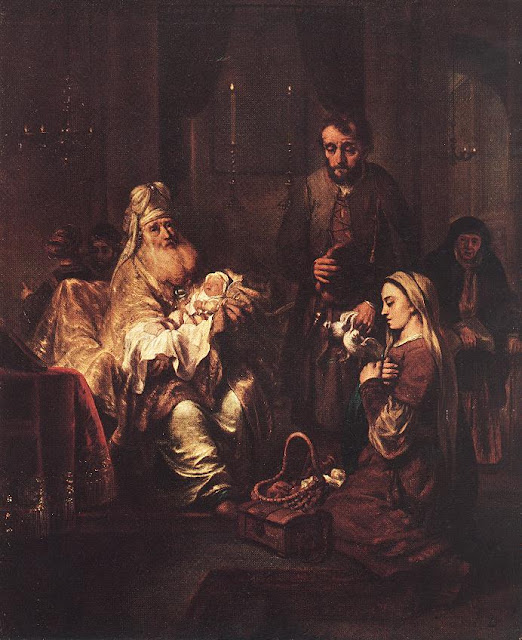
Presentation in the Temple

Gerbrand van de Eeckhout [Web Gallery of Art]

Readings (New American Bible: Philippines, USA)

Readings (Jerusalem Bible: Australia, England & Wales, India [optional], Ireland, New Zealand, Pakistan, Scotland, South Africa)

Gospel Luke 2:22-40 [2:22, 39-40] (NewRevised  Standard Version, AnglicisedCatholic Edition) 

When the time came for their purification according to the law of Moses, they brought him up to Jerusalem to present him to the Lord [ (as it is written in the law of the Lord, ‘Every firstborn male shall be designated as holy to the Lord’), and they offered a sacrifice according to what is stated in the law of the Lord, ‘a pair of turtle-doves or two young pigeons.’

Now there was a man in Jerusalem whose name was Simeon; this man was righteous and devout, looking forward to the consolation of Israel, and the Holy Spirit rested on him. It had been revealed to him by the Holy Spirit that he would not see death before he had seen the Lord’s Messiah. Guided by the Spirit, Simeon came into the temple; and when the parents brought in the child Jesus, to do for him what was customary under the law, Simeon took him in his arms and praised God, saying,

‘Master, now you are dismissing your servant in peace,
    according to your word;
for my eyes have seen your salvation,
     which you have prepared in the presence of all peoples,
a light for revelation to the Gentiles
    and for glory to your people Israel.’

And the child’s father and mother were amazed at what was being said about him. Then Simeon blessed them and said to his mother Mary, ‘This child is destined for the falling and the rising of many in Israel, and to be a sign that will be opposed so that the inner thoughts of many will be revealed—and a sword will pierce your own soul too.’

There was also a prophet, Anna the daughter of Phanuel, of the tribe of Asher. She was of a great age, having lived with her husband for seven years after her marriage, then as a widow to the age of eighty-four. She never left the temple but worshipped there with fasting and prayer night and day. At that moment she came, and began to praise God and to speak about the child to all who were looking for the redemption of Jerusalem.]

When they had finished everything required by the law of the Lord, they returned to Galilee, to their own town of Nazareth. The child grew and became strong, filled with wisdom; and the favour of God was upon him.

Note that there are alternative First Readings, Responsorial Psalms and Second Readings. There are also longer and shorter versions of the Gospel.

[Family Theater Productions]

Before Christmas we listened to the words of St Matthew: Now the birth of Jesus the Messiah took place in this way. When his mother Mary had been engaged to Joseph, but before they lived together, she was found to be with child from the Holy Spirit. Her husband Joseph, being a righteous man and unwilling to expose her to public disgrace, planned to dismiss her quietly. But just when he had resolved to do this, an angel of the Lord appeared to him in a dream and said, ‘Joseph, son of David, do not be afraid to take Mary as your wife, for the child conceived in her is from the Holy Spirit. She will bear a son, and you are to name him Jesus, for he will save his people from their sins’ (Matthew 1:18-21). 

Joseph, by obeying God’s messenger and by naming the Son his wife Mary bore, became the legal father of Jesus. The Church honours him above all as the Husband of Mary. St John XXIII added the words and blessed Joseph, her Spouse to the Roman Canon, now also known as the First Eucharistic Prayer, while Pope Francis has included that phrase in the other three main Eucharistic Prayers. It was as the Husband of Mary that St Joseph took care of her and of Jesus. It was St Joseph whom Jesus knew as Dad/Papa/Tatay. It was from St Joseph that Jesus, God who became Man, learned, in his humanity, to grow into manhood.

St Joseph submitted his whole being, as did his wife Mary, to doing God’s will. Jesus was flesh of her flesh, but not of his. Yet he loved Jesus as if he was his own son, first of all by loving his mother.

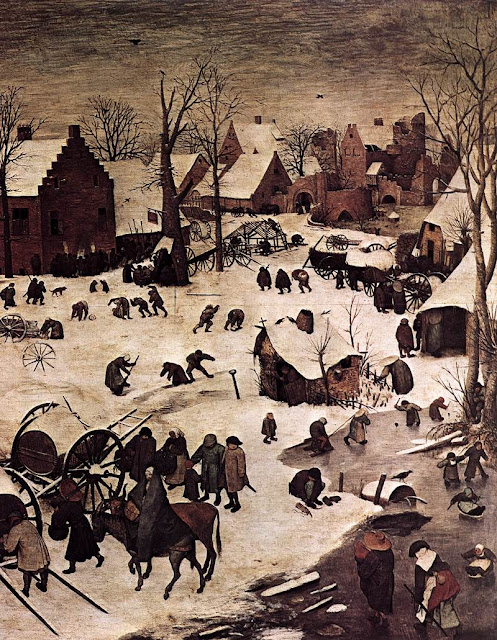
The Census at Bethlehem (detail)

Pieter Bruegel the Elder [Web Gallery of Art]

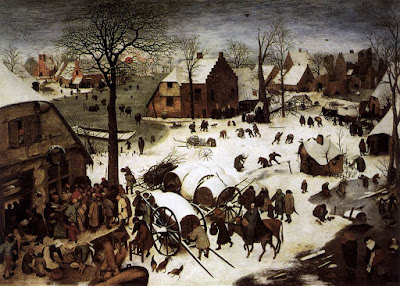
Peter Bruegel the Elder, maybe the first major painter to focus on the lives of ordinary people, captures the quiet responsibility of St Joseph, leading the donkey on which the heavily pregnant Mary is riding. The picture above is a detail of the full painting:

Bruegel has transposed Bethlehem to a village in the Netherlands in the middle of winter. He captures the reality that the Holy Family were ‘nobodies’. None of the people around notices them. They too are caught up in the red tape of their day, having to travel long distances to have their names registered.

Gerbrand van den Eeckhout in the Presentation in the Temple shows St Joseph as a man who is somewhat shy, not wanting to be in the limelight, but standing protectively over Mary as she kneels before Jesus held in the arms of Simeon, with Anna the Prophetess in the background. St Joseph here reminds me very much of my own father.


And in the video of the Presentation what strikes me is that St Joseph is the one carrying Jesus. But before he hands the infant to Simeon he quietly asks Mary’s permission to do so. Mary hands Jesus back to Joseph after receiving him from Simeon and it is St Joseph, as head of the Holy Family, who presents the infant to the priest who offers him to God. The priest has no idea who this child of poor parents really is.


On 17 November 2014 Pope Francis said: It is necessary to insist on the fundamental pillars that govern a nation: its intangible assets. The family is the foundation of co-existence and a guarantee against social fragmentation. Children have a right to grow up in a family with a father and a mother capable of creating a suitable environment for the child’s growth and emotional development. This is why, in the Apostolic Exhortation Evangelii Gaudium, I stressed the ‘indispensable’ contribution of marriage to society, a contribution which ‘transcends the feelings and momentary needs of the couple’ (n. 66). And this is why I am grateful to you for the emphasis that your colloquium has placed on the benefits that marriage can provide children, the spouses themselves, and society.


There have always been children who have grown up without one or both parents. In the Bible they are seen as young persons in need of special care from the wider community. I have known many single parents, some of them widowed, raising their children lovingly and heroically. But this is not the norm.


Incredibly, many within the last three or four decades have come to dismiss the importance of husband/father and wife/mother, have come to dismiss the conception and birth of children in the way that God intended.

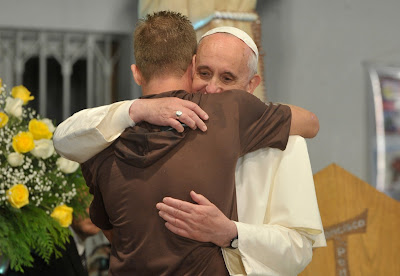
Pope Francis with recovering drug addict, Brazil 2013 [Wikipedia]

Though without a family of my own I have for many years experienced the title ‘Father’ as a call to be one in a number of senses: a ‘spiritual father’ who leads others to our Heavenly Father through his Son Jesus Christ, and a father-figure to young persons who may have lost their father or who may even have been abused by their father or by other fatherly figures in whom they should have been able to trust.

As a man, I see today’s Feast of the Holy Family to be a call especially to us men to be like St Joseph, to be responsible, to be loving; if married to love our wives above all, if not, to be like fathers to young persons who come into our lives in whatever way and for whatever reason.

As a priest I am grateful to God for calling me not only to be ‘Father’ but to be a father to many in the sense that St Joseph was truly a father to Jesus.

Parents tell their 6 kids that another is on the way!

Solemnity of Mary, the Holy Mother of God


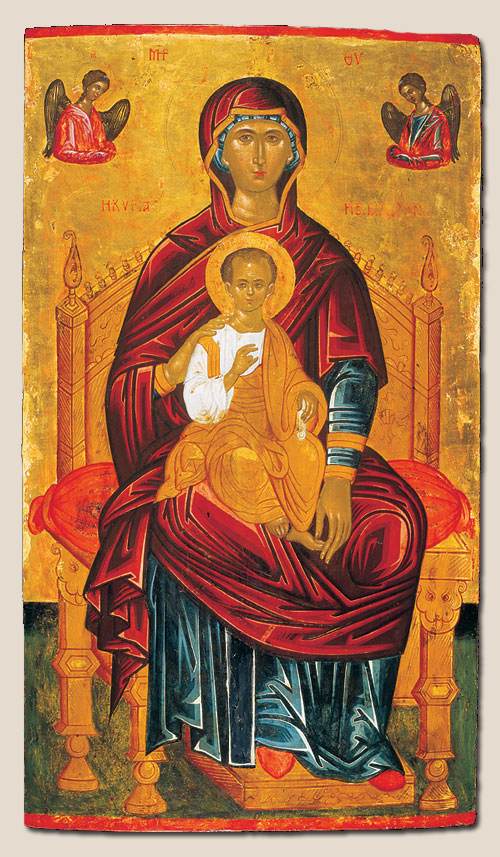
The Mother of God Enthroned, Andreas Ritzos [Web Gallery of Art]

The first day of 2018 is observed by the Church as the Solemnity of Mary, the Holy Mother of God. It is also the last day of the Octave of Christmas and World Day of Peace. In some countries, eg the Philippines, it is a Holy Day of Obligation. In others, eg Ireland, it is not.

Readings (New American Bible: Philippines, USA)

Readings (Jerusalem Bible: Australia, England & Wales, India [optional], Ireland, New Zealand, Pakistan, Scotland, South Africa)

Gospel Luke 2:16-21 (NewRevised  Standard Version, AnglicisedCatholic Edition) 

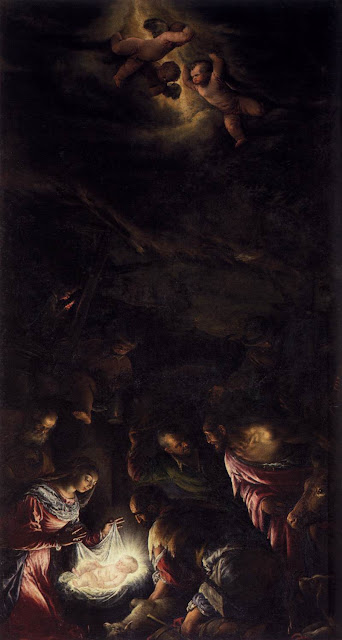
So the shepherds went with haste and found Mary and Joseph, and the child lying in the manger. When they saw this, they made known what had been told them about this child; and all who heard it were amazed at what the shepherds told them. But Mary treasured all these words and pondered them in her heart. The shepherds returned, glorifying and praising God for all they had heard and seen, as it had been told them.

After eight days had passed, it was time to circumcise the child; and he was called Jesus, the name given by the angel before he was conceived in the womb.

Adoration of the Shepherds, Jacopo Bassano [Web Gallery of Art]

MESSAGE OF HIS HOLINESS POPE
FRANCIS

FOR THE CELEBRATION OF THE 
51st WORLD DAY OF PEACE

1 JANUARY 2018

Migrants and refugees: men and women in search of peace

Happy New Year!

Manigong Bagong Taon!

Athbhliain Faoi Mhaise!

Posted in: Sunday Reflections Tagged: Andreas Ritzos, Gerbrand van de Eeckhout, Jacopo Bassano, Pieter Bruegel the Elder, Pope Francis, Sunday Reflections, The Holy Family, Web Gallery of Art

‘Both Son of God and Son of Man together had one name.’ Sunday Reflections, 4th Sunday of Advent and Christmas

December 20, 2017 by Father Sean Coyle

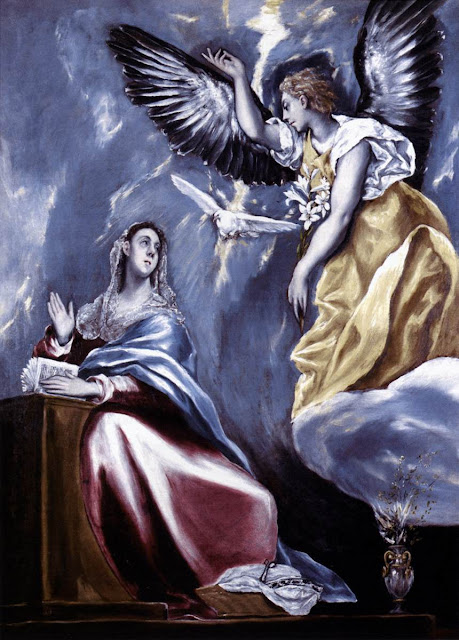
The Annunciation, El Greco [Web Gallery of Art]

Readings (New American Bible: Philippines, USA)

Readings (Jerusalem Bible: Australia, England & Wales, India [optional], Ireland, New Zealand, Pakistan, Scotland, South Africa)

Gospel Luke 1:26-38 (New Revised  Standard Version, Anglicised CatholicEdition) 

In the sixth month the angel Gabriel was sent by God to a town in Galilee called Nazareth, to a virgin engaged to a man whose name was Joseph, of the house of David. The virgin’s name was Mary. And he came to her and said, ‘Greetings, favoured one! The Lord is with you.’ But she was much perplexed by his words and pondered what sort of greeting this might be. The angel said to her, ‘Do not be afraid, Mary, for you have found favour with God. And now, you will conceive in your womb and bear a son, and you will name him Jesus. He will be great, and will be called the Son of the Most High, and the Lord God will give to him the throne of his ancestor David. He will reign over the house of Jacob for ever, and of his kingdom there will be no end.’ Mary said to the angel, ‘How can this be, since I am a virgin?’  The angel said to her, ‘The Holy Spirit will come upon you, and the power of the Most High will overshadow you; therefore the child to be born will be holy; he will be called Son of God. And now, your relative Elizabeth in her old age has also conceived a son; and this is the sixth month for her who was said to be barren. For nothing will be impossible with God.’ Then Mary said, ‘Here am I, the servant of the Lord; let it be with me according to your word.’ Then the angel departed from her.

The Annunciation, Gerard David [Web Gallery of Art]

The Incarnation

by St John of the Cross

Then He summoned an archangel, 

Saint Gabriel: and when he came, 

Sent him forth to find a maiden, 

     Mary was her name.


Only through her consenting love 

Could the mystery be preferred 

That the Trinity in human 

     Flesh might clothe the Word.


Though the three Persons worked the wonder 

It only happened to the One. 

So was the Word made incarnation 

     In Mary’s womb, a son.


So He who only had a Father 

Now had a Mother undefiled, 

Though not as ordinary maids 

     Had she conceived the Child.


By Mary, and with her own flesh 

He was clothed in His own frame: 

Both Son of God and Son of Man 

     Together had one name.   

                  [Translation by Roy Campbell]

In both paintings above Mary has the word of God, the Hebrew Bible, what we Christians call the Old Testament, open in front of her. And when she says, let it be with me according to your word, she is accepting the Word. The opening words of St John’s Gospel, read at the Mass During the Day on Christmas Day and read at the end of every Mass in the Extraordinary Form, tells us who the Word is: In the beginning was the Word, and the Word was with God, and the Word was God. Further on, in Verse 14, St John writes those magnificent words that are at the centre of our faith: And the Word became flesh and lived among us.

The Catechism of the Catholic Church quotes what St John of the Cross said about this: In giving us his Son, his only Word (for he possesses no other), he spoke everything to us at once in this sole Word – and he has no more to say. . . because what he spoke before to the prophets in parts, he has now spoken all at once by giving us the All Who is His Son. Any person questioning God or desiring some vision or revelation would be guilty not only of foolish behavior but also of offending him, by not fixing his eyes entirely upon Christ and by living with the desire for some other novelty.
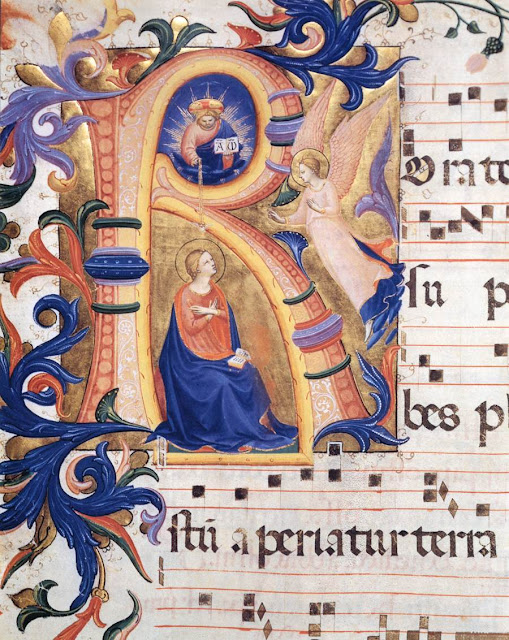
The Annunciation in an Initial R, Fra Angelico [Web Gallery of Art]

‘Silence’ is not what most of us associate with the days coming up to Christmas. But the Church invites us to enter into an inner silence during these days, difficult though that may be. The above is on a parchment, part of a Missal, which in the old days included the readings during Mass. Fra Angelico, a Dominican friar, was declared ‘Blessed’ by St John Paul II in 1982. This work again invites us into contemplation of the wondrous event of the Annunciation, the moment of the Incarnation when God became Man in the womb of Mary.

Julian of Vézelay (c.1080 – 1165), a French Benedictine monk, reflects on the silence into which Jesus entered, the silence that Mary bore in our heart, the silence that God invites us to enter at this time:

There came a deep silence. Everything was still. The voices of prophets and apostles were hushed, since the prophets had already delivered their message, while the time for the apostles’ preaching had yet to come. Between these two proclamations a period of silence intervened, and in the midst of this silence the Father’s almighty Word leaped down from his royal throne. There is a beautiful fitness here: in the intervening silence the Mediator between God and the human race also intervened, coming as a human being to human beings, as mortal to mortals, to save the dead from death.

I pray that the Word of the Lord may come again today to those who are silent, and that we may hear what the Lord God says to us in our hearts. Let us silence the desires and importunings of the flesh and the vainglorious fantasies of our imagination, so that we can freely hear what the Spirit is saying. Let our ears be attuned to the voice that is heard above the vault of heaven, for the Spirit of life is always speaking to our souls; as scripture says, a voice is heard above the firmament which hangs over our heads. But as long as we fix our attention on other things, we do not hear what the Spirit is saying to us.

Collect


Pour forth, we beseech you, O Lord,

your grace into our hearts,

that we, to whom the Incarnation of Christ your Son

was made known by the message of an Angel,

may by his Passion and Cross

be brought to the glory of the Resurrection.

Who lives and reigns with you in the unity of the Holy Spirit,

one God, for ever and ever.

  1. The angel Gabriel from heaven came
    His wings as drifted snow his eyes as flame
    ‘All hail’ said he ‘thou lowly maiden Mary,
    Most highly favored lady,’ Gloria!
  1. ‘For know a blessed mother thou shalt be,
    All generations laud and honor thee,
    Thy Son shall be Emanuel, by seers foretold
    Most highly favored lady,’ Gloria!
  1. Then gentle Mary meekly bowed her head
    ‘To me be as it pleaseth God,’ she said,
    ‘My soul shall laud and magnify his holy name.’
    Most highly favored lady. Gloria!
  1. Of her, Emmanuel, the Christ was born
    In Bethlehem, all on a Christmas morn
    And Christian folk throughout the world will ever say:
    ‘Most highly favored lady,’ Gloria!

The Nativity (Christmas) 
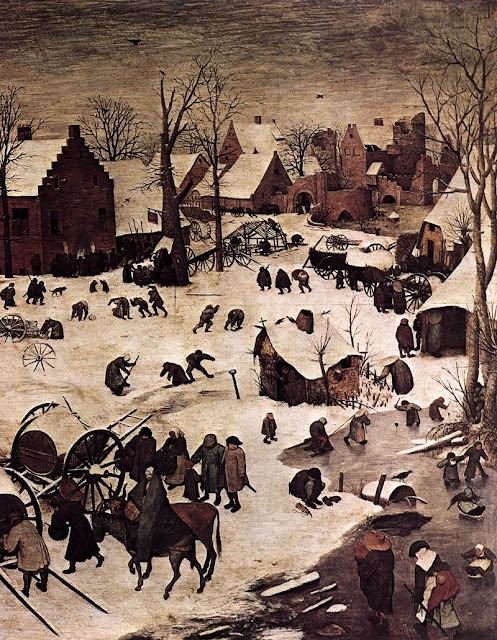
The Census at Bethlehem (detail)

Pieter Bruegel the Elder [Web Gallery of Art]

This was the moment when even energetic Romans

Could find nothing better to do

Than counting heads in remote provinces.

BC : AD

By U.A. Fanthorpe

This was the moment when Before

Turned into After, and the future’s

Uninvented timekeepers presented arms.


This was the moment when nothing

Happened. Only dull peace

Sprawled boringly over the earth.


This was the moment when even energetic Romans

Could find nothing better to do

Than counting heads in remote provinces.


And this was the moment

When a few farm workers and three

Members of an obscure Persian sect

Walked haphazard by starlight straight

Into the kingdom of heaven.

The Solemnity of the Nativity of the Lord has four different Mass formularies, each with its own prayer and readings. Any of the four fulfills our obligation to attend Mass. These are:

Vigil Mass, celebrated ‘either before or after First Vespers (Evening Prayer) of the Nativity’; that means starting between 5pm and 7pm.

Mass During the Night, known before as ‘Midnight Mass’. In many parts of the world it does begin at midnight but here in the Philippines since the 1980s it begins earlier, usually at 8:30pm or 9pm.

Mass at Dawn.

Mass During the Day.

When you click on ‘Readings’ below from the New American Bible you will find links to the readings for each of the four Masses. The readings from the Jerusalem Bible for the four Masses are all on one page.

Readings (New American Bible: Philippines, USA)

Readings (Jerusalem Bible: Australia, England & Wales, India [optional], Ireland, New Zealand, Pakistan, Scotland, South Africa)

Posted in: Sunday Reflections Tagged: Advent, Annunciation, Christmas, El Greco, Gerard David, Harry Belafonte, Jester Hairston, Sunday Reflections

‘Strange blessings never in Paradise.’ Sunday Reflections, 3rd Sunday of Advent, Year B

December 14, 2017 by Father Sean Coyle

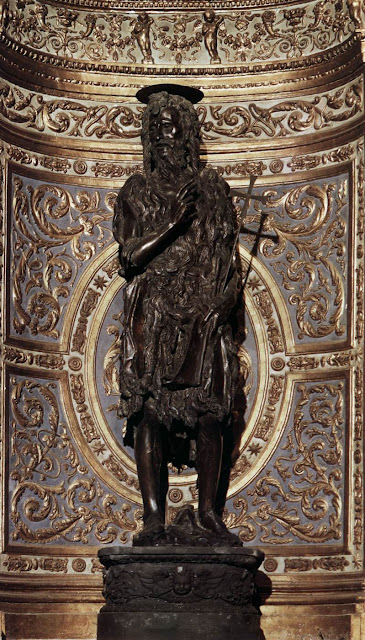
St John the Baptist, Donatello [Web Gallery of Art]

Readings (New American Bible: Philippines, USA)

Readings (Jerusalem Bible: Australia, England & Wales, India [optional], Ireland, New Zealand, Pakistan, Scotland, South Africa)
Gospel John 1:6-8, 19-28 (New Revised Standard Version, Anglicised Catholic Edition) 

There was a man sent from God, whose name was John. He came as a witness to testify to the light, so that all might believe through him. He himself was not the light, but he came to testify to the light.

This is the testimony given by John when the Jews sent priests and Levites from Jerusalem to ask him, ‘Who are you?’ He confessed and did not deny it, but confessed, ‘I am not the Messiah.’ And they asked him, ‘What then? Are you Elijah?’ He said, ‘I am not.’ ‘Are you the prophet?’ He answered, ‘No.’ Then they said to him, ‘Who are you? Let us have an answer for those who sent us. What do you say about yourself?’ He said,

‘I am the voice of one crying out in the wilderness,
“Make straight the way of the Lord”’,

as the prophet Isaiah said.

Now they had been sent from the Pharisees. They asked him, ‘Why then are you baptizing if you are neither the Messiah, nor Elijah, nor the prophet?’ John answered them, ‘I baptize with water. Among you stands one whom you do not know, the one who is coming after me; I am not worthy to untie the thong of his sandal.’ This took place in Bethany across the Jordan where John was baptizing.

Mary, Queen of Heaven

Master of the Legend of St Lucy [Web Gallery of Art]

In the Philippines the Misas de Gallo, also known as Simbang Gabi or Aguinaldo Masses, the novena of pre-dawn Masses leading up to Christmas, will begin on Saturday the 16th. For the last 15 years I have celebrated these in the chapel of St Joseph, Espinos Village, Bacolod City. But this year, as I am now based in Ireland, I won’t have to get up at 3:30am in order to start Mass at 4:30am. These are votive Masses in honour of our Blessed Mother and in thanksgiving for the gift of our faith. The Spanish word ‘Aguinaldo’ means ‘gift’ and in this context refers to the gift of faith.
The Church over the centuries has reflected on gifts we have received from God that we could not have received had our First Parents never sinned. A song included among poems for Advent and Christmas in the Breviary published by the hierarchies of Australia, England & Wales, and Ireland is one of those reflections, Adam lay y-bounden. In the Breviary it is given the title O Felix Culpa, ‘O Happy Fault‘.
This particular song marvels at the fact that but for the reality of the sin of Adam we would never have had Our Lady as Queen of Heaven.
The poem reflects part of the Exultet, the Easter Proclamation: O certe necessarium Adae peccatum, /quod Christo morte deletum est! O truly necessary sin of Adam,/destroyed completely by the Death of Christ. O felix culpa,/quae talem ac tantum meruit habere Redemptionem! O happy fault/that earned so great, so glorious a Redeemer.
At Easter we proclaim the great reality that God has given us a Redeemer and that he is now risen from the dead.
Coming up to Christmas we reflect on the birth of our Redeemer through the consent of Mary, his and our Mother. Mary is part of God’s eternal plan and if we sideline her we distort that reality, as we also do if we put her in the centre and sideline her Son. In the painting above Mary, while being honoured as Queen of Heaven by the angels and saints is adoring God with her whole being, inviting us to do the same. The song too invites us to sing Deo gratias! Thanks be to God!
That is what the Church invites us to do every time we celebrate the Eucharist, the Thanksgiving. It invites Filipinos in particular at this time of the Aguinaldo Masses to thank God for the great gift of faith and to share it with others. One way in which Filipinos have been doing that is introducing this centuries-old practice to other countries, adapting the custom to local circumstances.

O Felix Culpa (O Happy Fault)

Adam lay y-bounden

Adam lay y-bounden,

Bounden in a bond;

Four thousand winter,

Thought he not too long.

And all was for an apple,

An apple that he took.

As clerkes finden written

 In theiré book.

Ne had the apple taken been,

The apple taken been,

Ne hadde never our Lady,

A been heaven’s queen.

Blessed be the time

That apple taken was,

Therefore we may singen.

Deo gratias!

This song from England dates from the 15th century. The text here is an adaptation of the original Middle English and the musical setting is by Boris Ord.

Scottish poet Edwin Muir’s One Foot in Eden, included in the Breviary for Lent and Easter, also reflects on the theme of felix culpa. 

What had Eden ever to say
Of hope and faith and pity and love
Until was buried all its day
And memory found its treasure trove?
Strange blessings never in Paradise.


Gaudete Antiphona at introitum  Entrance Antiphon (Philippians 4:4-6)


Gaudete in Domino semper: iterum dico, gaudete.

Rejoice in the Lord always; again I say, rejoice. 

Modestia vestra nota sit omnibus hominibus:

Let your gentleness be known to everyone: 

Dominus enim prope est. 

for the Lord is near.

Nihil solliciti sitis:

Do not worry about anything 

sed in omni oratione petitiones vestre innotescant apud Deum.

but in everything by prayer and supplication with thanksgiving let your requests be maked known to God.


Ps. 84 [85]:2 Benedixisti, Domine, terram tuam: avertisti captivitatem Jacob.

Lord, you were faorable to your land; you restored the fortunes of Jacob.

Gloria Patri et Filio et Spiritui Sancto.

Glory to the Father, and to the Son, and to the Holy Spirit.


Gaudete in Domino semper: iterum dico, gaudete.

Rejoice in the Lord always; again I say, rejoice. 

Modestia vestra nota sit omnibus hominibus:

Let your gentleness be known to everyone: 

Dominus enim prope est. 

for the Lord is near.

Nihil solliciti sitis:

Do not worry about anything 

sed in omni oratione petitiones vestrre innotescant apud Deum.

but in everything by prayer and supplication with thanksgiving let your requests be maked known to God.


The text in bold above is the Entrance Antiphon in the Ordinary Form of the Mass (the ‘New Mass’). The longer text is the Entrance Antiphon in the Extraordinary Form (the ‘Old Mass’).


Posted in: Sunday Reflections Tagged: Advent, Donatello, Edwin Muir, Master of the Legend of St Lucy, Sunday Reflections
1 2 … 18 Next »

Recent Posts

  • ‘I do choose. Be made clean!’ Sunday Reflections, 6th Sunday in Ordinary Time, Year B
  • ‘They brought to him all who were sick.’ Sunday Reflections, 5th Sunday in Ordinary Time, Year B
  • ‘He taught them as one having authority.’ Sunday Reflections, 4th Sunday in Ordinary Time, Year B
  • Columban Fr Donal O’Farrell RIP
  • Columban Fr Matthew Reilly RIP

Archives

  • February 2018
  • January 2018
  • December 2017
  • November 2017
  • October 2017
  • September 2017
  • August 2017
  • July 2017
  • June 2017
  • May 2017
  • April 2017
  • March 2017
  • February 2017
  • January 2017
  • December 2016
  • November 2016
  • October 2016
  • September 2016
  • August 2016
  • July 2016
  • June 2016
  • May 2016
  • April 2016
  • March 2016
  • February 2016
  • January 2016
  • December 2015
  • November 2015
  • October 2015
  • September 2015
  • August 2015
  • July 2015
  • June 2015
  • May 2015
  • April 2015
  • March 2015
  • February 2015
  • January 2015
  • December 2014
  • November 2014
  • October 2014
  • September 2014
  • August 2014
  • July 2014
  • June 2014
  • May 2014
  • April 2014

Copyright © 2026 The Pilgrims' Inn.

Hotel WordPress Theme by themehall.com