The Pilgrims' Inn

  • Welcome to The Pilgrims’ Inn
‘Both Son of God and Son of Man together had one name.’ Sunday Reflections, 4th Sunday of Advent and Christmas
Advent

‘Both Son of God and Son of Man together had one name.’ Sunday Reflections, 4th Sunday of Advent and Christmas

December 20, 2017 by Father Sean Coyle

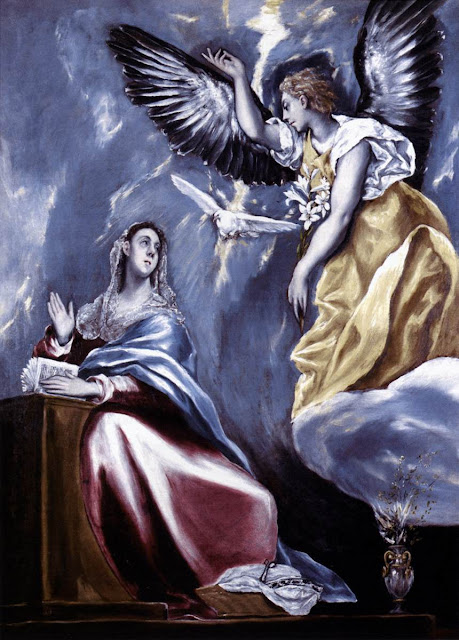
The Annunciation, El Greco [Web Gallery of Art]

Readings (New American Bible: Philippines, USA)

Readings (Jerusalem Bible: Australia, England & Wales, India [optional], Ireland, New Zealand, Pakistan, Scotland, South Africa)

Gospel Luke 1:26-38 (New Revised  Standard Version, Anglicised CatholicEdition) 

In the sixth month the angel Gabriel was sent by God to a town in Galilee called Nazareth, to a virgin engaged to a man whose name was Joseph, of the house of David. The virgin’s name was Mary. And he came to her and said, ‘Greetings, favoured one! The Lord is with you.’ But she was much perplexed by his words and pondered what sort of greeting this might be. The angel said to her, ‘Do not be afraid, Mary, for you have found favour with God. And now, you will conceive in your womb and bear a son, and you will name him Jesus. He will be great, and will be called the Son of the Most High, and the Lord God will give to him the throne of his ancestor David. He will reign over the house of Jacob for ever, and of his kingdom there will be no end.’ Mary said to the angel, ‘How can this be, since I am a virgin?’  The angel said to her, ‘The Holy Spirit will come upon you, and the power of the Most High will overshadow you; therefore the child to be born will be holy; he will be called Son of God. And now, your relative Elizabeth in her old age has also conceived a son; and this is the sixth month for her who was said to be barren. For nothing will be impossible with God.’ Then Mary said, ‘Here am I, the servant of the Lord; let it be with me according to your word.’ Then the angel departed from her.

The Annunciation, Gerard David [Web Gallery of Art]

The Incarnation

by St John of the Cross

Then He summoned an archangel, 

Saint Gabriel: and when he came, 

Sent him forth to find a maiden, 

     Mary was her name.


Only through her consenting love 

Could the mystery be preferred 

That the Trinity in human 

     Flesh might clothe the Word.


Though the three Persons worked the wonder 

It only happened to the One. 

So was the Word made incarnation 

     In Mary’s womb, a son.


So He who only had a Father 

Now had a Mother undefiled, 

Though not as ordinary maids 

     Had she conceived the Child.


By Mary, and with her own flesh 

He was clothed in His own frame: 

Both Son of God and Son of Man 

     Together had one name.   

                  [Translation by Roy Campbell]

In both paintings above Mary has the word of God, the Hebrew Bible, what we Christians call the Old Testament, open in front of her. And when she says, let it be with me according to your word, she is accepting the Word. The opening words of St John’s Gospel, read at the Mass During the Day on Christmas Day and read at the end of every Mass in the Extraordinary Form, tells us who the Word is: In the beginning was the Word, and the Word was with God, and the Word was God. Further on, in Verse 14, St John writes those magnificent words that are at the centre of our faith: And the Word became flesh and lived among us.

The Catechism of the Catholic Church quotes what St John of the Cross said about this: In giving us his Son, his only Word (for he possesses no other), he spoke everything to us at once in this sole Word – and he has no more to say. . . because what he spoke before to the prophets in parts, he has now spoken all at once by giving us the All Who is His Son. Any person questioning God or desiring some vision or revelation would be guilty not only of foolish behavior but also of offending him, by not fixing his eyes entirely upon Christ and by living with the desire for some other novelty.
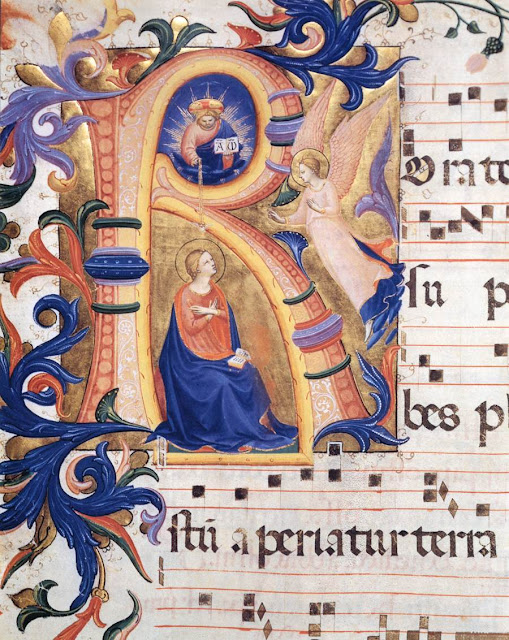
The Annunciation in an Initial R, Fra Angelico [Web Gallery of Art]

‘Silence’ is not what most of us associate with the days coming up to Christmas. But the Church invites us to enter into an inner silence during these days, difficult though that may be. The above is on a parchment, part of a Missal, which in the old days included the readings during Mass. Fra Angelico, a Dominican friar, was declared ‘Blessed’ by St John Paul II in 1982. This work again invites us into contemplation of the wondrous event of the Annunciation, the moment of the Incarnation when God became Man in the womb of Mary.

Julian of Vézelay (c.1080 – 1165), a French Benedictine monk, reflects on the silence into which Jesus entered, the silence that Mary bore in our heart, the silence that God invites us to enter at this time:

There came a deep silence. Everything was still. The voices of prophets and apostles were hushed, since the prophets had already delivered their message, while the time for the apostles’ preaching had yet to come. Between these two proclamations a period of silence intervened, and in the midst of this silence the Father’s almighty Word leaped down from his royal throne. There is a beautiful fitness here: in the intervening silence the Mediator between God and the human race also intervened, coming as a human being to human beings, as mortal to mortals, to save the dead from death.

I pray that the Word of the Lord may come again today to those who are silent, and that we may hear what the Lord God says to us in our hearts. Let us silence the desires and importunings of the flesh and the vainglorious fantasies of our imagination, so that we can freely hear what the Spirit is saying. Let our ears be attuned to the voice that is heard above the vault of heaven, for the Spirit of life is always speaking to our souls; as scripture says, a voice is heard above the firmament which hangs over our heads. But as long as we fix our attention on other things, we do not hear what the Spirit is saying to us.

Collect


Pour forth, we beseech you, O Lord,

your grace into our hearts,

that we, to whom the Incarnation of Christ your Son

was made known by the message of an Angel,

may by his Passion and Cross

be brought to the glory of the Resurrection.

Who lives and reigns with you in the unity of the Holy Spirit,

one God, for ever and ever.

  1. The angel Gabriel from heaven came
    His wings as drifted snow his eyes as flame
    ‘All hail’ said he ‘thou lowly maiden Mary,
    Most highly favored lady,’ Gloria!
  1. ‘For know a blessed mother thou shalt be,
    All generations laud and honor thee,
    Thy Son shall be Emanuel, by seers foretold
    Most highly favored lady,’ Gloria!
  1. Then gentle Mary meekly bowed her head
    ‘To me be as it pleaseth God,’ she said,
    ‘My soul shall laud and magnify his holy name.’
    Most highly favored lady. Gloria!
  1. Of her, Emmanuel, the Christ was born
    In Bethlehem, all on a Christmas morn
    And Christian folk throughout the world will ever say:
    ‘Most highly favored lady,’ Gloria!

The Nativity (Christmas) 
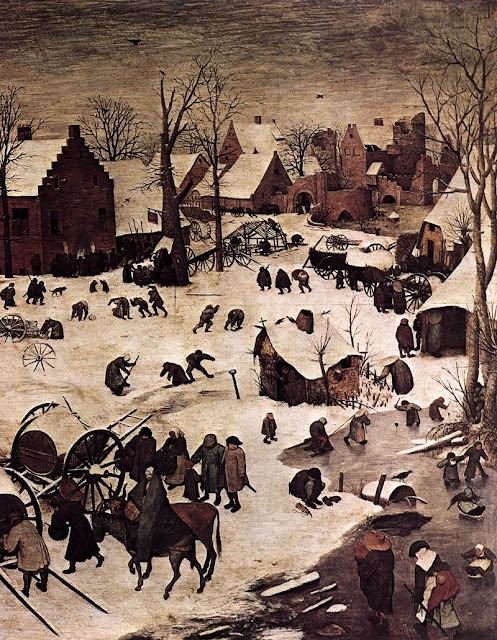
The Census at Bethlehem (detail)

Pieter Bruegel the Elder [Web Gallery of Art]

This was the moment when even energetic Romans

Could find nothing better to do

Than counting heads in remote provinces.

BC : AD

By U.A. Fanthorpe

This was the moment when Before

Turned into After, and the future’s

Uninvented timekeepers presented arms.


This was the moment when nothing

Happened. Only dull peace

Sprawled boringly over the earth.


This was the moment when even energetic Romans

Could find nothing better to do

Than counting heads in remote provinces.


And this was the moment

When a few farm workers and three

Members of an obscure Persian sect

Walked haphazard by starlight straight

Into the kingdom of heaven.

The Solemnity of the Nativity of the Lord has four different Mass formularies, each with its own prayer and readings. Any of the four fulfills our obligation to attend Mass. These are:

Vigil Mass, celebrated ‘either before or after First Vespers (Evening Prayer) of the Nativity’; that means starting between 5pm and 7pm.

Mass During the Night, known before as ‘Midnight Mass’. In many parts of the world it does begin at midnight but here in the Philippines since the 1980s it begins earlier, usually at 8:30pm or 9pm.

Mass at Dawn.

Mass During the Day.

When you click on ‘Readings’ below from the New American Bible you will find links to the readings for each of the four Masses. The readings from the Jerusalem Bible for the four Masses are all on one page.

Readings (New American Bible: Philippines, USA)

Readings (Jerusalem Bible: Australia, England & Wales, India [optional], Ireland, New Zealand, Pakistan, Scotland, South Africa)
Posted in: Sunday Reflections Tagged: Advent, Annunciation, Christmas, El Greco, Gerard David, Harry Belafonte, Jester Hairston, Sunday Reflections

‘Strange blessings never in Paradise.’ Sunday Reflections, 3rd Sunday of Advent, Year B

December 14, 2017 by Father Sean Coyle

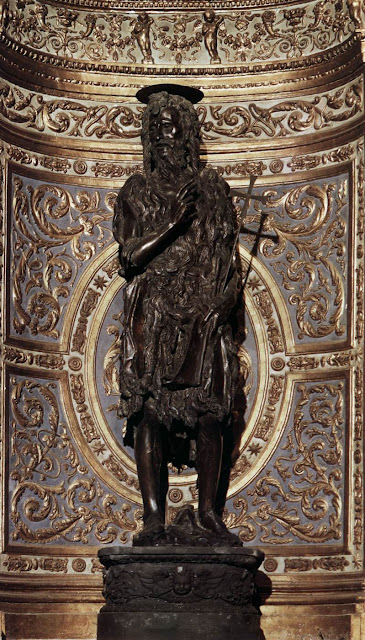
St John the Baptist, Donatello [Web Gallery of Art]

Readings (New American Bible: Philippines, USA)

Readings (Jerusalem Bible: Australia, England & Wales, India [optional], Ireland, New Zealand, Pakistan, Scotland, South Africa)
Gospel John 1:6-8, 19-28 (New Revised Standard Version, Anglicised Catholic Edition) 

There was a man sent from God, whose name was John. He came as a witness to testify to the light, so that all might believe through him. He himself was not the light, but he came to testify to the light.

This is the testimony given by John when the Jews sent priests and Levites from Jerusalem to ask him, ‘Who are you?’ He confessed and did not deny it, but confessed, ‘I am not the Messiah.’ And they asked him, ‘What then? Are you Elijah?’ He said, ‘I am not.’ ‘Are you the prophet?’ He answered, ‘No.’ Then they said to him, ‘Who are you? Let us have an answer for those who sent us. What do you say about yourself?’ He said,

‘I am the voice of one crying out in the wilderness,
“Make straight the way of the Lord”’,

as the prophet Isaiah said.

Now they had been sent from the Pharisees. They asked him, ‘Why then are you baptizing if you are neither the Messiah, nor Elijah, nor the prophet?’ John answered them, ‘I baptize with water. Among you stands one whom you do not know, the one who is coming after me; I am not worthy to untie the thong of his sandal.’ This took place in Bethany across the Jordan where John was baptizing.

Mary, Queen of Heaven

Master of the Legend of St Lucy [Web Gallery of Art]

In the Philippines the Misas de Gallo, also known as Simbang Gabi or Aguinaldo Masses, the novena of pre-dawn Masses leading up to Christmas, will begin on Saturday the 16th. For the last 15 years I have celebrated these in the chapel of St Joseph, Espinos Village, Bacolod City. But this year, as I am now based in Ireland, I won’t have to get up at 3:30am in order to start Mass at 4:30am. These are votive Masses in honour of our Blessed Mother and in thanksgiving for the gift of our faith. The Spanish word ‘Aguinaldo’ means ‘gift’ and in this context refers to the gift of faith.
The Church over the centuries has reflected on gifts we have received from God that we could not have received had our First Parents never sinned. A song included among poems for Advent and Christmas in the Breviary published by the hierarchies of Australia, England & Wales, and Ireland is one of those reflections, Adam lay y-bounden. In the Breviary it is given the title O Felix Culpa, ‘O Happy Fault‘.
This particular song marvels at the fact that but for the reality of the sin of Adam we would never have had Our Lady as Queen of Heaven.
The poem reflects part of the Exultet, the Easter Proclamation: O certe necessarium Adae peccatum, /quod Christo morte deletum est! O truly necessary sin of Adam,/destroyed completely by the Death of Christ. O felix culpa,/quae talem ac tantum meruit habere Redemptionem! O happy fault/that earned so great, so glorious a Redeemer.
At Easter we proclaim the great reality that God has given us a Redeemer and that he is now risen from the dead.
Coming up to Christmas we reflect on the birth of our Redeemer through the consent of Mary, his and our Mother. Mary is part of God’s eternal plan and if we sideline her we distort that reality, as we also do if we put her in the centre and sideline her Son. In the painting above Mary, while being honoured as Queen of Heaven by the angels and saints is adoring God with her whole being, inviting us to do the same. The song too invites us to sing Deo gratias! Thanks be to God!
That is what the Church invites us to do every time we celebrate the Eucharist, the Thanksgiving. It invites Filipinos in particular at this time of the Aguinaldo Masses to thank God for the great gift of faith and to share it with others. One way in which Filipinos have been doing that is introducing this centuries-old practice to other countries, adapting the custom to local circumstances.

O Felix Culpa (O Happy Fault)

Adam lay y-bounden

Adam lay y-bounden,

Bounden in a bond;

Four thousand winter,

Thought he not too long.

And all was for an apple,

An apple that he took.

As clerkes finden written

 In theiré book.

Ne had the apple taken been,

The apple taken been,

Ne hadde never our Lady,

A been heaven’s queen.

Blessed be the time

That apple taken was,

Therefore we may singen.

Deo gratias!

This song from England dates from the 15th century. The text here is an adaptation of the original Middle English and the musical setting is by Boris Ord.

Scottish poet Edwin Muir’s One Foot in Eden, included in the Breviary for Lent and Easter, also reflects on the theme of felix culpa. 

What had Eden ever to say
Of hope and faith and pity and love
Until was buried all its day
And memory found its treasure trove?
Strange blessings never in Paradise.


Gaudete Antiphona at introitum  Entrance Antiphon (Philippians 4:4-6)


Gaudete in Domino semper: iterum dico, gaudete.

Rejoice in the Lord always; again I say, rejoice. 

Modestia vestra nota sit omnibus hominibus:

Let your gentleness be known to everyone: 

Dominus enim prope est. 

for the Lord is near.

Nihil solliciti sitis:

Do not worry about anything 

sed in omni oratione petitiones vestre innotescant apud Deum.

but in everything by prayer and supplication with thanksgiving let your requests be maked known to God.


Ps. 84 [85]:2 Benedixisti, Domine, terram tuam: avertisti captivitatem Jacob.

Lord, you were faorable to your land; you restored the fortunes of Jacob.

Gloria Patri et Filio et Spiritui Sancto.

Glory to the Father, and to the Son, and to the Holy Spirit.


Gaudete in Domino semper: iterum dico, gaudete.

Rejoice in the Lord always; again I say, rejoice. 

Modestia vestra nota sit omnibus hominibus:

Let your gentleness be known to everyone: 

Dominus enim prope est. 

for the Lord is near.

Nihil solliciti sitis:

Do not worry about anything 

sed in omni oratione petitiones vestrre innotescant apud Deum.

but in everything by prayer and supplication with thanksgiving let your requests be maked known to God.


The text in bold above is the Entrance Antiphon in the Ordinary Form of the Mass (the ‘New Mass’). The longer text is the Entrance Antiphon in the Extraordinary Form (the ‘Old Mass’).


Posted in: Sunday Reflections Tagged: Advent, Donatello, Edwin Muir, Master of the Legend of St Lucy, Sunday Reflections

‘If this is the end, then I’m ready for it.’ Sunday Reflections, 1st Sunday of Advent, Year B

December 7, 2017 by Father Sean Coyle

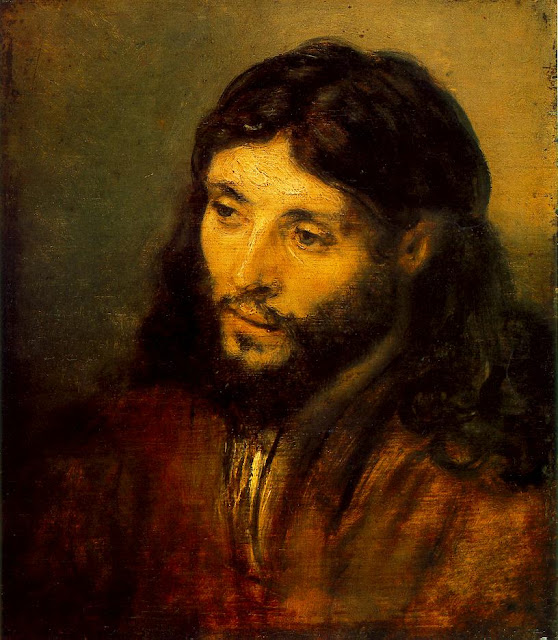
Young Jew as Christ, Rembrandt [Web Gallery of Art]

Readings (New American Bible: Philippines, USA)

Readings (Jerusalem Bible: Australia, England & Wales, India [optional], Ireland, New Zealand, Pakistan, Scotland, South Africa)
Gospel Mark 13:33-37 (New Revised  Standard Version, Anglicised CatholicEdition) 

Jesus said to his disciples:

‘Beware, keep alert; for you do not know when the time will come. It is like a man going on a journey, when he leaves home and puts his slaves in charge, each with his work, and commands the doorkeeper to be on the watch. Therefore, keep awake—for you do not know when the master of the house will come, in the evening, or at midnight, or at cockcrow, or at dawn, or else he may find you asleep when he comes suddenly. And what I say to you I say to all: Keep awake.’

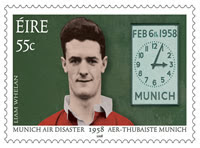
Liam Whelan  (1 April 1935 – 5 February 1958)

If this is the end, then I’m ready for it. 

These were the last words of Liam Whelan who died in a plane crash at Munich Airport on 6 February 1958 along with other members of the Manchester United football (soccer) team as they were returning from a match in Belgrade. About seven years ago I learned from a friend named Brendan whom I have known for more than 50 years that, when they were both aged 14 or so, Liam rescued him when he got into difficulties in a swimming pool in their area. And last year I discovered that another friend, who was a classmate of mine for five years in secondary school and for two years in the seminary, also named Liam, that this talented young footballer had been a neighbour of his and that even when he had achieved fame as a professional footballer he would still play knockabout football on the street with the local boys whenever he would come home.

The average age of Manchester United’s players at the time of the accident was only 22. These young men were earning only £15 a week, about 25 percent more than a tradesman could earn. Endorsements could bring in a little more income for a few talented players whose career would end for most at 35, if not earlier. 

There was snow on the ground at Munich Airport and the plane made three attempts to take off. Harry Gregg, the goalkeeper for Manchester United and who also played in that position for Northern Ireland’s international team, was sitting near Liam Whelan. He survived uninjured and helped save a number of people from death. He has often told the story of Liam Whelan’s last words: If this is the end, then I’m ready for it.

Clearly young Liam had his life focused on what was most important. He was ready to meet death. I have often spoken about him at Mass and in giving retreats. 

Those who knew him describe Liam Whelan as ‘a devout Catholic’. I know that he sent his mother some money for her to go to Lourdes. 1 February 1958 was the centennial of the first apparition of our Blessed Mother to St Bernadette. Mrs Whelan, a widow since 1943 when Liam was 8, used the money instead towards a beautiful statue of Our Lady of Lourdes over the grave of her son. I pass it each time I visit my parents’ grave.

Liam Whelan’s grave (right)

I vividly remember the dark, late afternoon I heard about the crash from a street-singer whom I knew by sight and who was running around agitatedly telling people of the crash. I didn’t know whether to believe him or not but the news on the radio confirmed that it really had happened. It was the first time in my life to experience what has been called a ‘public-private moment’, a public happening, usually a tragedy, that becomes a very personal one for those who learn of it, one that is seared in the memory and often in the heart.

Liam Whelan grew up in the next parish to my own and I remember going to Christ the King Church the evening his remains were brought there. I was outside the church with countless others. An article by John Scally in the February 2008 issue of The Word, the magazine of the Divine Word Missionaries in Ireland that is no longer published, described what many experienced: Their funerals were like no other. Most funerals are a burial of someone or something already gone. These young deaths pointed in exactly the opposite direction and were therefore the more poignant. Normally we bury the past but in burying Liam Whelan and his colleagues, in some deep and gnawing way we buried the future.

I still feel some pain at the deaths of Liam Whelan and his colleagues nearly 60 years after they died but the story of Liam’s preparedness for his sudden death is one that continues to inspire me.

Liam’s last words, If this is the end, then I’m ready for it, are a perfect response to today’s gospel. Jesus is not trying to frighten us but he is telling us starkly to be prepared always for the moment of our death, to do everything with that in mind. Advent is a time when we prepare not only to celebrate the birth of Jesus at Christmas, but to become much more aware of his daily coming into our lives, and to prepare, as individuals and as a Christian community to welcome him when he returns at the end of time in a way that we won’t be ashamed.

What would we say if he asked us in the Philippines where I spent most of my life, for example, Have children who have been abused had their court cases finished quickly? I have heard that young Maria, who has gone to the court five or six times for a hearing, something that is quite upsetting for her, has been told on each occasion that the defence lawyer isn’t yet ready.

What would we say if Jesus said, I have been told that many forests have been cut down for profit and that this has resulted in many deaths in Leyte, for example, in 1991 and 2003. Is this true?

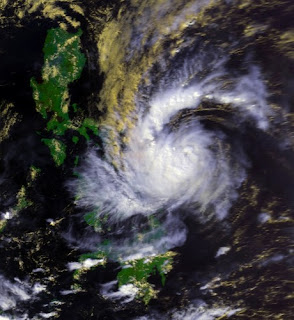
Tropical Storm Thelma (Uring) [Wikipedia]

More than 5,000 died in a flash flood in Ormoc City, Leyte, on 5 November 1991. Deforestation was blamed as a primary cause of the devastation.

The gospel this Sunday is, literally, a ‘wake up call’. Beware, keep alert . . . Therefore, keep awake . . . And what I say to you I say to all: Keep awake.

May the response of Liam Whelan, a young professional footballer who took these words to heart, inspire us and give us a desire to be always prepared to meet the Lord, in this life and in the next: If this is the end, then I’m ready for it.

This was recorded on St Columban’s Day, 23 November 2011, in the Abbey of St Columban, Bobbio, Italy, where the saint died and is buried.

Antiphona ad introitum  Entrance Antiphon  Cf Ps 24 [25]:1-3

Ad te levavi animam meam, Deus meus,

To you, I lift up my soul, O my God.

in te confido, non erubescam.

In you, I have trusted, let me not be put to shame.

Neque irrideant me inimici mei, 

Nor let my enemies exult over me;

etenim universi qui te exspectant non confundentur.

and let none who hope in you be put to shame.

Ps 24 [24]:4. Vias tuas, Domine, demonstri mihi; et semitas tuas edoce me.

Make me to know your ways, O Lord; teach me your paths.

Ad te levavi animam meam, Deus meus,

To you, I lift up my soul, O my God.

in te confido, non erubescam.

In you, I have trusted, let me not be put to shame.

Neque irrideant me inimici mei, 

Nor let my enemies exult over me;

etenim universi qui te exspectant non confundentur.

and let none who hope in you be put to shame.

The longer version is sung or recited when the Extraordinary Form of the Mass is celebrated.

Posted in: Sunday Reflections Tagged: Advent, deforestation, Liam Whelan, Ormoc City, Rembrandt, Sunday Reflections

‘Be on guard . . . be alert at all times.’ Sunday Reflections, First Sunday of Advent, Year C

November 26, 2015 by Father Sean Coyle

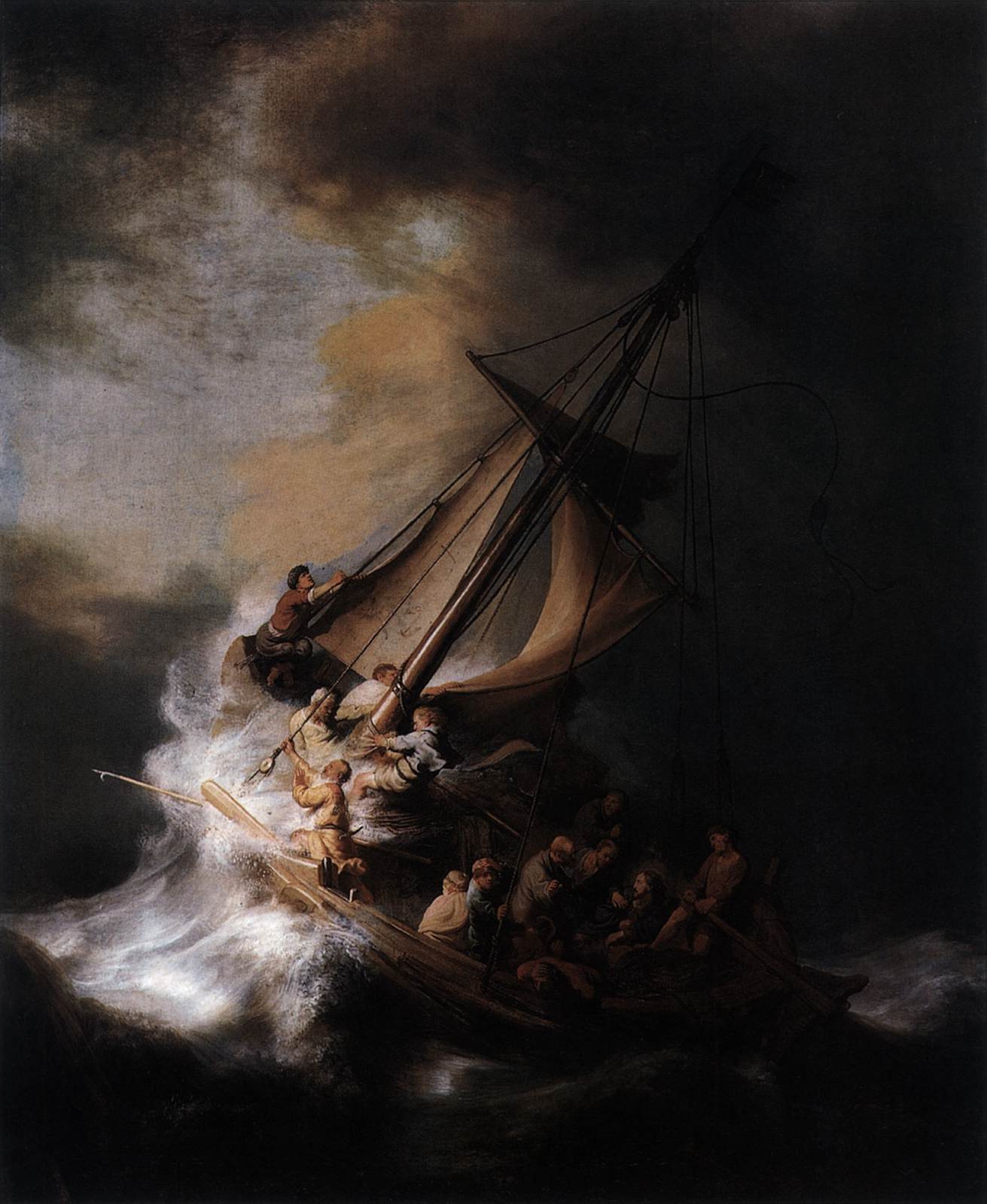
Christ in the Storm on the Sea of Galilee, Rembrandt, 1633

Isabella Stewart Gardner Museum, Boston [Web Gallery of Art]

We begin Year C, which highlights St Luke’s Gospel.

Readings (New American Bible: Philippines, USA)

Readings (Jerusalem Bible: Australia, England & Wales, India [optional], Ireland, New Zealand, Pakistan, Scotland, South Africa)

Gospel Luke 21:25-28, 34-36 (New Revised Standard Version, Catholic Edition, Canada) 

Jesus said to his disciples:

“There will be signs in the sun, the moon, and the stars, and on the earth distress among nations confused by the roaring of the sea and the waves. People will faint from fear and foreboding of what is coming upon the world, for the powers of the heavens will be shaken.  Then they will see ‘the Son of Man coming in a cloud’ with power and great glory. Now when these things begin to take place, stand up and raise your heads, because your redemption is drawing near.”


 “Be on guard so that your hearts are not weighed down with dissipation and drunkenness and the worries of this life, and that day does not catch you unexpectedly, like a trap. For it will come upon all who live on the face of the whole earth. Be alert at all times, praying that you may have the strength to escape all these things that will take place, and to stand before the Son of Man.”

Conditor Alme Siderum (Creator of the Stars of Night)

An ancient Advent hymn sung by the Christendom College Choir & Schola Gregoriana

Here is Pope Benedict’s Angelus Talk on the First Sunday of Advent, 29 November 2009.

Dear Brothers and Sisters,

This Sunday, by the grace of God, a new Liturgical Year opens, of course, with Advent, a Season of preparation for the birth of the Lord. The Second Vatican Council, in the Constitution on the Liturgy, affirms that the Church “in the course of the year… unfolds the whole mystery of Christ from the Incarnation and Nativity to the Ascension, to Pentecost and the expectation of the blessed hope of the Coming of the Lord”. In this way, “recalling the mysteries of the redemption, she opens up to the faithful the riches of her Lord’s powers and merits, so that these are in some way made present for all time; the faithful lay hold of them and are filled with saving grace” (Sacrosanctum Concilium, n. 102). The Council insists on the fact that the centre of the Liturgy is Christ, around whom the Blessed Virgin Mary, closest to him, and then the martyrs and the other saints who “sing God’s perfect praise in Heaven and intercede for us” (ibid., n. 104) revolve like the planets around the sun.

This is the reality of the Liturgical Year seen, so to speak, “from God’s perspective”. And from the perspective, let us say, of humankind, of history and of society what importance can it have? The answer is suggested to us precisely by the journey through Advent on which we are setting out today. The contemporary world above all needs hope; the developing peoples need it, but so do those that are economically advanced. We are becoming increasingly aware that we are all on one boat and together must save each other. Seeing so much false security collapse, we realize that what we need most is a trustworthy hope. This is found in Christ alone. As the Letter to the Hebrews says, he “is the same yesterday and today and for ever (Heb 13: 8). The Lord Jesus came in the past, comes in the present and will come in the future. He embraces all the dimensions of time, because he died and rose; he is “the Living One”. While he shares our human precariousness, he remains forever and offers us the stability of God himself. He is “flesh” like us and “rock” like God. Whoever yearns for freedom, justice, and peace may rise again and raise his head, for in Christ liberation is drawing near (cf. Lk 21: 28) as we read in today’s Gospel. We can therefore say that Jesus Christ is not only relevant to Christians, or only to believers, but to all men and women, for Christ, who is the centre of faith, is also the foundation of hope. And every human being is constantly in need of hope.

Dear brothers and sisters, the Virgin Mary fully embodies a humanity that lives in hope based on faith in the living God. She is the Virgin of Advent: she is firmly established in the present, in the “today” of salvation. In her heart she gathers up all past promises, and encompasses the future. Let us learn from her in order to truly enter this Season of grace and to accept, with joy and responsibility, the coming of God in our personal and social lives.

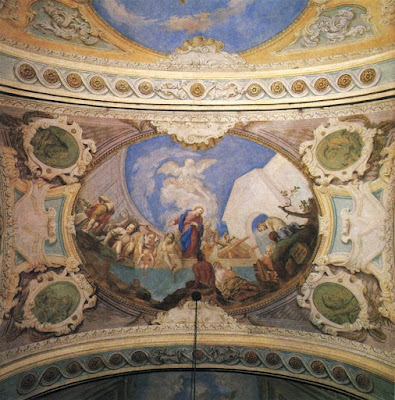
Christ Healing the Sick, István Dorffmeister, 1779

Fresco, St Joseph Chapel, Balf, Hungary [Web Gallery of Art]

After the Angelus the Pope added these words for World AIDS Day, which is observed on 1 December.

The first of December is World AIDS Day. My thoughts and prayers go to every person afflicted by this illness, especially the children, the poorest and those who are rejected. The Church never ceases to do her utmost to combat AIDS, through her institutions and personnel dedicated to this mission. I urge everyone to make his/her own contribution, with prayer and practical attention, to ensure that all who are affected by the HIV virus may experience the presence of the Lord who gives comfort and hope. Lastly, by redoubling and coordinating our efforts I hope it will be possible to eradicate this disease.

+++


Antiphona ad introitum  Entrance Antiphon Cf Ps 24[25]:1-3

Ad te Domine levavi animam meam,

To you, I lift up my soul, O my God, 

Deus meus in te confido, non erubescam.

In you, I have trusted; let me not be put to shame. 

Neque irrideant me inimici mei. 

Nor let my enemies exult over me;

etenim universi qui te exspectant, non confundentur.

and let none who hope in you be put to shame.

Ps. Vias tuas, Domine, demonstra mihi: et semitas tuas edoce me.

Your ways, 0 Lord, make known to me; teach me your paths. 

Gloria Patri, et Filio, et Spiritui Sancto. 

Glory be to the Father and to the Son, and to the Holy Spirit.

Sicut erat in principio, et nunc, et semper, et in saecula saeculorum. Amen.

As it was in the beginning, is now, and ever shall be, world without end. Amen.

Ad te Domine levavi animam meam,

To you, I lift up my soul, O my God, 

Deus meus in te confido, non erubescam.

In you, I have trusted; let me not be put to shame. 

Neque irrideant me inimici mei. 

Nor let my enemies exult over me;

etenim universi qui te exspectant, non confundentur.

and let none who hope in you be put to shame.

The text in bold is used in the Ordinary Form of the Mass. The longer text is used in the Extraordinary Form and may be used in the Ordinary Form.

Sonata K213 by Domenico Scarlatti played by Gabriel Guillén in St Joseph Chapel, Balf, Hungary, where the fresco of Christ Healing the Sick (above) is located.

Posted in: Sunday Reflections, uncategorized Tagged: Advent, Pope Benedict XVI, Sunday Reflections

Recent Posts

  • ‘I do choose. Be made clean!’ Sunday Reflections, 6th Sunday in Ordinary Time, Year B
  • ‘They brought to him all who were sick.’ Sunday Reflections, 5th Sunday in Ordinary Time, Year B
  • ‘He taught them as one having authority.’ Sunday Reflections, 4th Sunday in Ordinary Time, Year B
  • Columban Fr Donal O’Farrell RIP
  • Columban Fr Matthew Reilly RIP

Archives

  • February 2018
  • January 2018
  • December 2017
  • November 2017
  • October 2017
  • September 2017
  • August 2017
  • July 2017
  • June 2017
  • May 2017
  • April 2017
  • March 2017
  • February 2017
  • January 2017
  • December 2016
  • November 2016
  • October 2016
  • September 2016
  • August 2016
  • July 2016
  • June 2016
  • May 2016
  • April 2016
  • March 2016
  • February 2016
  • January 2016
  • December 2015
  • November 2015
  • October 2015
  • September 2015
  • August 2015
  • July 2015
  • June 2015
  • May 2015
  • April 2015
  • March 2015
  • February 2015
  • January 2015
  • December 2014
  • November 2014
  • October 2014
  • September 2014
  • August 2014
  • July 2014
  • June 2014
  • May 2014
  • April 2014

Copyright © 2026 The Pilgrims' Inn.

Hotel WordPress Theme by themehall.com