The Pilgrims' Inn

  • Welcome to The Pilgrims’ Inn
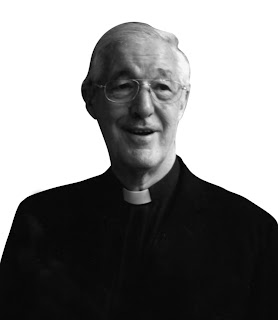
Columban Fr Joseph Shiels RIP

Philippines

Columban Fr Joseph Shiels RIP

October 6, 2015 by Father Sean Coyle

Fr Joseph Matthew Shiels

(1930 – 2015)

Fr Joseph M. Shiels died in the Nursing Home at St Columban’s, Dalgan Park, Navan, Ireland, on Sunday 4 October 2015.

Born in Paisley, Scotland, on 3 March 1930, he was educated at St Charles Parochial School, Paisley, Waterside Boys PES, Derry, and St Columb’s College, Derry. He came to St Columban’s, Dalgan Park, in 1947 and was ordained priest on 21 December 1953.

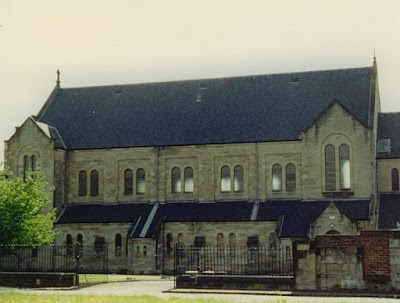
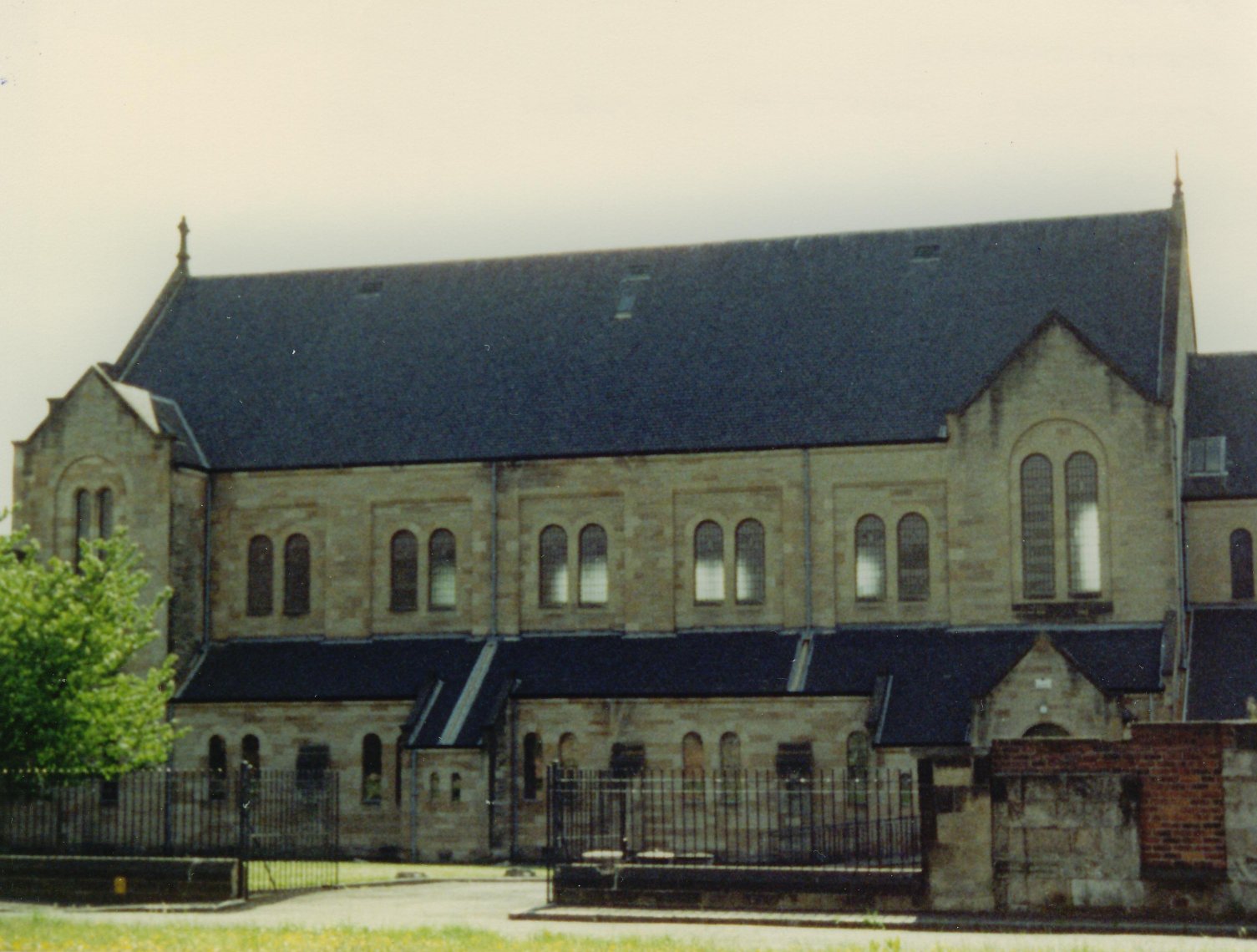
St Mirin Catholic Cathedral, Paisley [Wikipedia]

He was appointed to the southern island of Mindanao in the Philippines. After language studies, he served in Ozamis, Clarin (both in Misamis Occidental), Lanipao (Lanao del Norte) and later in Tangub (Misamis Occidental). After his first vacation he served from 1962 to 1970 in Lopez-Jaena (Misamis Occidental) where he helped the poor local farmers to increase their income considerably by planting the Lakatan variety of bananas in the spaces between their coconut trees.

From 1972 to 1976 he served in the parishes of Aloran, and Jimenez (both in Misamis Occidental).

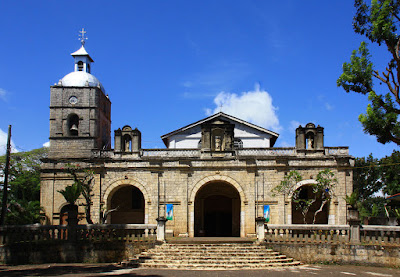
St John the Baptist Church, Jimenez [Wikipedia]

In 1977 he undertook studies in Pastoral Counselling in Chicago. On his return to the Philippines in the 1980s, he served in Pagadian City, and then in Marawi City, followed by Lianga (Surigao del Sur), Linamon, Suarez and Buru-un (all in Lanao del Norte), in the Diocese of Iligan, until 2003. On returning to Ireland he lived in Derry and served as acting-Parish Priest in the Parish of Desertmartin.

Desertmartin, County Derry [Wikipedia]

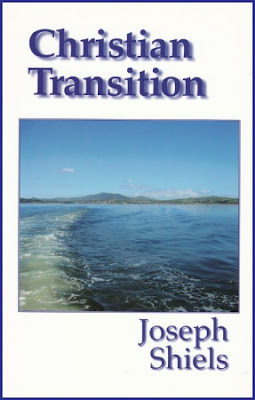
While in Derry, Father Joe researched and published his book Christian Transition, (Gracewing, Herefordshire 2007). He was always an independent thinker who liked to interpret events, and enjoyed a good discussion. He found pastoral work fulfilling and was happy to help out in Derry as long as his health permitted.

 May he rest in peace.

Posted in: Obituaries Tagged: Columbans, Dalgan Park, Derry, Desertmartin, Fr Joseph Shiels, Mindanao, Paisley, Philippines, Priests

Since we are travellers and pilgrims in the world, let us ever ponder on the end of the road, that is of our life, for the end of our roadway is our home (St Columban, 8th sermon).

July 13, 2015 by Father Sean Coyle

Columban Fr Patrick Meehan RIP

Fr Patrick Meehan

(1925 – 2015)
 
Fr Patrick (Paddy) Meehan was born on 24 August 1925 in Innishammon, Smithboro, County Monaghan, Ireland. His father died when he was only four years of age, a baby sister died in 1931 and his mother died when he was seven. Now the youngest of three surviving children, Paddy was reared by an uncle and aunt who moved into their home and small farm.
Smithboro, County Monaghan
 
A scholarship got him a place in St Macartan’s College and in 1943 he was one of the seven in a class of thirteen who choose to study for the priesthood.
 
St Macartan’s College
 
He entered St Columban’s College, Dalgan Park, Ireland, in 1943 and was ordained priest on 21 December 1949. He was appointed to post-graduate studies in theology at Dunboyne House, a house of higher studies at St Patrick’s, Maynooth, the national seminary, in 1950-’51 and then to the seminary staff at St Columban’s, Nebraska, and later to Milton, MA, USA until 1964.
 
He was appointed to the Philippines in 1964. After language studies in Ozamis, he served as Pastor in Clarin, then assistant in Pagadian, and later Pastor of Dumingag. In 1972 he served in Lanipao and Maranding in the Diocese of Iligan and then as Chancellor of the Diocese of Pagadian from 1974 to 1981 and spent a three-year period in San Miguel.
 
Lala, Lanao del Norte [Wikipedia]
[Lanipao is in the Municipality of Lala]
 
This was followed by an appoinment to promotion work in the US Region, from the Columban house in Bayside, Queens, NYC, from 1981 to 1986. Returning to the Philippines he served briefly in Marihatag, Diocese of Tandag, and then in Linamon, Corpus Christi Parish and St Michael’s Parish, Iligan City, all in the Diocese of Iligan. 
 
St Michael’s Cathedral, Iligan City [Wikipedia]
 
From 1992 to 1998 he was once again on promotion work in the USA, from the Omaha and New York houses.
 
In 1998, he ‘retired’ to Ireland but was very happy to serve in pastoral work, in his home Diocese of Clogher as long as his health permitted. He was admitted to the Dalgan Nursing Home in April 2008. 
 
Father Paddy was a kind, pleasant, humble man, who never flaunted his considerable learning, but was a steady, good-humoured presence in many difficult areas of Mindanao. He once concluded a note on his life quoting the psalm: ‘The mercies of the Lord I will sing for ever.’ And added: ‘Given the chance, I probably wouldn’t do it differently, only better.’
 
Father Paddy died peacefully in the Nursing Home in St Columban’s, Dalgan Park, on Thursday, 18 June, 2015. May God reward his caring and generous spirit. 
 
+++
 
Father Paddy lost his father when he was only four and his mother three years later. One of Monaghan’s most famous sons was the poet and novelist Patrick Kavanagh (1904 – 1967) who wrote the poem below.
 
 
In Memory Of My Mother 

I do not think of you lying in the wet clay
Of a Monaghan graveyard; I see
You walking down a lane among the poplars
On your way to the station, or happily

Going to second Mass on a summer Sunday –
You meet me and you say:
'Don't forget to see about the cattle – '
Among your earthiest words the angels stray.

And I think of you walking along a headland
Of green oats in June,
So full of repose, so rich with life –
And I see us meeting at the end of a town

On a fair day by accident, after
The bargains are all made and we can walk
Together through the shops and stalls and markets
Free in the oriental streets of thought.

O you are not lying in the wet clay,
For it is a harvest evening now and we
Are piling up the ricks against the moonlight
And you smile up at us – eternally.

May Father Paddy, his father and mother, his deceased Columban confreres and
all his loved ones 'smile up at us – eternally.'

Posted in: Obituaries Tagged: Columbans, Fr Patrick Meehan, Monaghan, Philippines

‘Give her something to eat.’ Sunday Reflections, 13th Sunday in Ordinary Time, Year B

June 22, 2015 by Father Sean Coyle

‘Give her something to eat.’ Sunday Reflections, 13th Sunday in Ordinary Time, Year B


Raising of the Daughter of Jairus, Paolo Veronese,  c.1546
Musée du Louvre, Paris  [Web Gallery of Art]

Readings (New American Bible: Philippines, USA)

Readings(Jerusalem Bible: Australia, England & Wales, India [optional], Ireland, New Zealand, Pakistan, Scotland, South Africa)

Gospel Mark 5:21-43 (New Revised Standard Version, Catholic Edition, Canada) 

When Jesus had crossed again in the boat to the other side, a great crowd gathered around him; and he was by the sea.  Then one of the leaders of the synagogue named Jairus came and, when he saw him, fell at his feet and begged him repeatedly, “My little daughter is at the point of death. Come and lay your hands on her, so that she may be made well, and live.” So he went with him.

And a large crowd followed him and pressed in on him. Now there was a woman who had been suffering from hemorrhages for twelve years. She had endured much under many physicians, and had spent all that she had; and she was no better, but rather grew worse. She had heard about Jesus, and came up behind him in the crowd and touched his cloak, for she said, “If I but touch his clothes, I will be made well.” Immediately her hemorrhage stopped; and she felt in her body that she was healed of her disease. Immediately aware that power had gone forth from him, Jesus turned about in the crowd and said, “Who touched my clothes?” And his disciples said to him, “You see the crowd pressing in on you; how can you say, ‘Who touched me?’” He looked all around to see who had done it. But the woman, knowing what had happened to her, came in fear and trembling, fell down before him, and told him the whole truth. He said to her, “Daughter, your faith has made you well; go in peace, and be healed of your disease.”

While he was still speaking, some people came from the leader’s house to say, “Your daughter is dead. Why trouble the teacher any further?” But overhearing[ what they said, Jesus said to the leader of the synagogue, “Do not fear, only believe.” He allowed no one to follow him except Peter, James, and John, the brother of James. When they came to the house of the leader of the synagogue, he saw a commotion, people weeping and wailing loudly. When he had entered, he said to them, “Why do you make a commotion and weep? The child is not dead but sleeping.”  And they laughed at him. Then he put them all outside, and took the child’s father and mother and those who were with him, and went in where the child was. He took her by the hand and said to her, “Talitha cum,” which means, “Little girl, get up!” And immediately the girl got up and began to walk about (she was twelve years of age). At this they were overcome with amazement. He strictly ordered them that no one should know this, and told them to give her something to eat.


Forest Landscape with Two of Christ’s Miracles
David Vinckboons, 1600-10
Metropolitan Museum of Art, New York [Web Museum of Art]

Because I will be on a pilgrimage to Malta from 24 to 30 June I am posting this early. This reflection, slightly edited, is what I posted three years ago for the same Sunday.

Lyn was someone I met when she was about 15. Three years later, when she was only halfway through her four-year college course, she quit to marry Roberto. (I’m not using their real names). Lyn was madly in love with Roberto, who had a good job and came from a relatively wealthy family.  Lyn’s family could not be described as poor either. I celebrated the wedding Mass and attended the reception in a classy hotel. In the Philippines it’s the groom’s father who pays for the reception. the young couple went to live in Manila, where Roberto was from. About a year later a daughter, whom I’ll call Gloria, was born. She had a mental disability. Another daughter, ‘Gabriela’, arrived a year or two later.

Then tragedy struck. Roberto discovered that his kidneys weren’t working properly and that he needed dialysis. Over the next couple of years Roberto and Lyn spent practically all they had on this and it ended in Roberto’s death. Meanwhile, Lyn’s parents both had serious illnesses and had to spend most of their resources on treatment.

Lyn returned to her own city with her two young daughters. She couldn’t find a job and had no qualifications since she hadn’t finished in college. With much embarrassment she came to see me and asked if I could give her an ‘allowance’. She was able to survive the next few years with help from her siblings and friends and eventually remarried.

I’ve met so many ‘Lyns’ in the Philippines who are like the woman in today’s gospel, who have spent all their resources on doctors and medicine and are still sick. I’ve met families who have pawned their little bit of land in order to enable an aged parent to have surgery that ultimately leaves the whole family impoverished and the person on whom  they had spent the money, out of a perhaps misplaced love, ending up in the cemetery.

Most Filipinos have little access to good health care. Even those who have government health insurance have to come up with ready cash if they go to hospital, unlike in Ireland or the United Kingdom. They are eventually reimbursed but have to pay interest on money they have borrowed in the meantime. I’ve heard people in Ireland and in the UK complain about the poor health services they have and their complaints are often justified. I have also heard many unsolicited words of praise for nurses from the Philippines working in hospitals in those countries.

Bu the sad reality is that most of these nurses, if they were still in the Philippines, would not have access to the kind of care they provide in Ireland and the UK. They would be like the woman in the gospel.

I met a Filipina in Reykjavík in 2000 who told me that she had had a kidney transplant in Denmark, paid for by the taxpayers of Iceland, a country of only 300,000 people or so. Had she been at home she would probably have ended up like Roberto.

Twenty-two years ago in a parish in Mindanao I buried Eileen, like the daughter of Jairus,  a 12-year-old. Again, poverty was a significant factor in her illness and death, despite the efforts of the doctors and nurses in the small government hospital where she died.

So the two stories interwoven by St Mark are stories that many Filipinos have lived or are living.

But sometimes persons experience healing. I once gave a recollection day to a group of 11- and 12-year old children in a Catholic school in Cebu City. We reflected on the story of Jesus staying behind in the Temple when he was 12 and that of the daughter of Jairus, also 12. Before the afternoon session a group of the boys and girls came to tell me that Maria, one of their classmates, had a bad toothache and asked if we could pray with her. Maybe Jesus would heal her as he had healed ‘Talitha’. They thought that that was the name of the girl in the gospel! We prayed with Maria – and her toothache disappeared. The children were delighted.

St Mark gives us illustrations of the humanity of Jesus more than do St Matthew and St Luke when they recount the same stories. Scholars tell us that St Mark’s was the first gospel to be written and that the other two drew on his in writing theirs. St Matthew omits the detail of Jesus perceiving in himself that power had gone forth from him. This shows us that Jesus wasn’t a ‘magician’. When he healed a sick person he gave of himself.

St Matthew leaves out another beautiful detail about the humanity of our Saviour. Jesus says to the people in the house, Give her something to eat. I can imagine the joy of everyone, including Jesus. I picture him with a smile on his face, a smile that reflects his joy – and his awareness that the girl’s family had forgotten the very practical detail that she was starving, as is anyone who has come through a serious illness. This detail of St Mark brings home to me the great reality that St John expressed in his gospel and that we pray in the Angelus, The Word became flesh and lived among us (John 1:14).

Posted in: Sunday Reflections Tagged: Daughter of Jairus, Filipino nurses, healing, Philippines, Sunday Reflections

‘This is my body . . .’ Sunday Reflections, Corpus Christi, Year B

May 29, 2015 by Father Sean Coyle


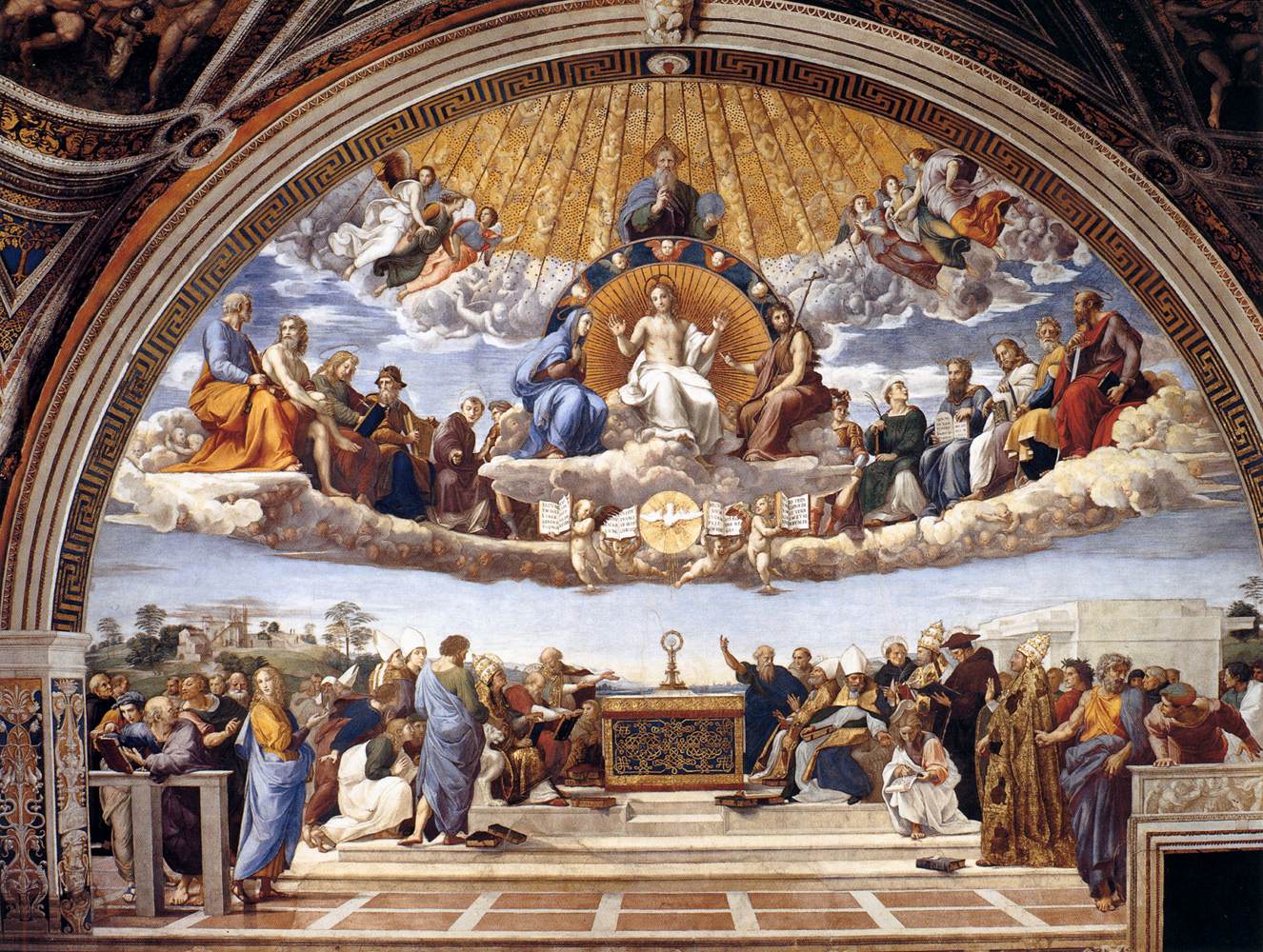
La Disputà (Disputation of the Holy Sacrament), Raffaello Sanzio, painted 1510-11
Stanza della Segnatura, Palazzi Pontifici, Vatican 
[Web Gallery of Art]
 
You will find a description of this magnificent fresco here and a video on its restorationhere.
 
The Solemnity of the Body and Blood of Christ


Readings (New American Bible: Philippines, USA) 

 
Readings (Jerusalem Bible: Australia, England &Wales, India [optional], Ireland, New Zealand, Pakistan, Scotland, South Africa) 
 
Gospel Mark 14:12-16, 22-26 (New Revised Standard Version – Catholic Edition, Canada)
 
On the first day of Unleavened Bread, when the Passover lamb is sacrificed, his disciples said to Jesus, “Where do you want us to go and make the preparations for you to eat the Passover?” So he sent two of his disciples, saying to them, “Go into the city, and a man carrying a jar of water will meet you; follow him, and wherever he enters, say to the owner of the house, ‘The Teacher asks, Where is my guest room where I may eat the Passover with my disciples?’ He will show you a large room upstairs, furnished and ready. Make preparations for us there.” So the disciples set out and went to the city, and found everything as he had told them; and they prepared the Passover meal.
Pope Francis leads his first Corpus Christi procession in Rome
 
‘As a primary school student, each Saturday I would play with my friends in our village but also made time for one hour’s adoration before the Blessed Sacrament in the local church. It was the custom in our village to have exposition of the Blessed Sacrament on Saturday afternoon and the Catholics would spend some time in prayer in the church.  I feel that my personal relationship with God has its origin in those hours before the Blessed Sacrament.’  [Emphasis added].
 
John Wang Zongshe is one of two young Chinese men who came to Manila four uears ago to prepare to be Columban priests, the first candidates from that country. The original missionof the Columbans was China. John tells his vocation story, Life-giving Connections, in Misyononline.com, the online magazine I edit for the Columbans here in the Philippines.John is from a village that is one-third Catholic. but his companion Joseph Li Jiangang is from a village where all 800 inhabitants are Catholic.  Joseph, like John became involved actively in the life of the Church when he was young, as he writes in his vocation story, A Church with Room for All: The Franciscan Missionaries of Mary worked in our village and ran a medical clinic. In junior high school, one Sister got us together for religious education during our summer holidays, and at the age of eleven I began to know more about God.  I was born after the Cultural Revolution (1966-1976) when so much religious practice had ceased. I used to sit at the back of the church when I went alone, but when I joined the youth group we would sit at the front. As a youth I went of my own free will to church.

 
At that time, I was timid and afraid to read in public. I became an altar server and at twelve I was leading the congregation in half an hour of prayers before Mass. I liked that and on returning from school I’d drop my bag and head for the church.[Emphasis added].


Joseph, John and Emmannuel Trocino, a Columban seminarian from Negros Occidental, on a visit three years ago to Australian Columban Fr Brian Gore at San Columbano Mission Center, Himamaylan City, Negros Occidental, under the watchful eye of St Columban. Joseph and John have since discovered that God isn’t calling them to be Columban priests. Emmannuel is currently in Peru on his two-year First Mission Assignment as part of his preparation for the priesthood.

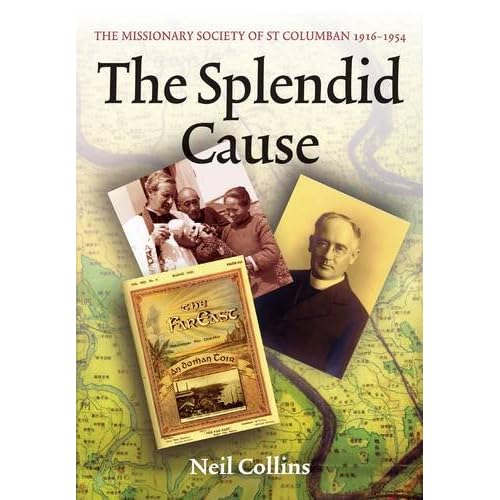
The first Columbans went to China in 1920 to bring the Gospel to the millions there who had never heard of Jesus Christ. Fr Paddy O’Connor, one of the first students to join the Columbans and who was ordained in 1923, wrote a poem called The Splendid Cause, which became the Columban anthem for many years, in which he used the line To bring to the nations the sweet, white Host
. For Father O’Connor the Eucharist was at the heart of mission. 
The Splendid Cause is also the title of a history of the Columbans from 1916 to 1954 by Columban Fr Neil Collins, who was one of the speakers at the 50th International Eucharistic Congress held in Dublin from 10 to 17 June 2012. St Columbanus (Columban), the patron saint of the Society of St Columban,  was one of the patron saints of the Congress.
 
Recent polls and studies in Ireland indicate a great loss of faith, even though 84 percent in the 2011 census in the Republic of Ireland identified themselves as Catholics. (About 75 percent in the whole of Ireland would call themselves Catholics). Only about one third attend Mass every Sunday and a large percentage, especially of those who don’t go to Mass regularly, don’t believe that the bread and wine brought up at the offertory of the Mass become the Body and Blood of Christ at the Consecration. If they receive Holy Communion they believe they are receiving only a symbol.
 
It was a great love for the Mass and a desire to bring the Catholic Christian faith to the people of China that led two young Irish diocesan priests nearly 100 years ago, Fr Edward J. Galvin, later first Bishop of Hanyang, China, and Fr John Blowick to start what initially was ‘The Maynooth Mission to China’ and later became the Society of St Columban.
 
No Irish Columban has been ordained in the Third Millenium of Christianity nor are there any candidates at present. But the first two  seminarians from China, a country where the Church is still being harassed, a country from which Bishop Galvin and all other Columbans were expelled 60 years ago, some after having spent time in prison, have now joined us.
 
We just don’t know God’s plans. But absolutely central to the spirituality of Bishop Galvin was doing God’s will. He cared little for the trappings of the office of bishop but insisted on his episcopal motto being Fiat voluntas tua, ‘Your will be done’. He would surely be delighted that the call of John and John was awakened in communities focuses on the Eucharist.
 
The Columbans came to Manila in 1929 at the request of Archbishop Michael O’Doherty, an Irishman. One of the speakers at the Eucharistic Congress is his current successor, Manila-born Archbishop Luis Antonio Tagle. He also spoke at the 49th International Eucharistic Congress in Quebec City, Canada, in 2008.
 
Please pray that as the Church celebrates the Feast of Corpus Christ, the Body of Christ, which it has done already on Thursday in countries where it is still a holyday of obligation, and that there will be a renewal and deepening of faith in Ireland, a faith centred on the Eucharist, and that the Catholics of China, the Philippines and other countries where Irish missionaries have preached and lived the Gospel, may help re-evangelise the country that produced such missionary giants as St Columban 1,500 years ago and Edward Galvin and John Blowick a 100 years ago.
Lauda Sion Salvatorem
Sequence for Mass on the Solemnity of Corpus Christi
 
English Version
 
Sion, lift up thy voice and sing:
Praise thy Savior and thy King,
Praise with hymns thy shepherd true.
All thou canst, do thou endeavour:
Yet thy praise can equal never
Such as merits thy great King.
See today before us laid
The living and life-giving Bread,
Theme for praise and joy profound.
The same which at the sacred board
Was, by our incarnate Lord,
Giv’n to His Apostles round.
Let the praise be loud and high:
Sweet and tranquil be the joy
Felt today in every breast.
On this festival divine
Which records the origin
Of the glorious Eucharist.
On this table of the King,
Our new Paschal offering
Brings to end the olden rite.
Here, for empty shadows fled,
Is reality instead,
Here, instead of darkness, light.
His own act, at supper seated
Christ ordain’d to be repeated
In His memory divine;
Wherefore now, with adoration,
We, the host of our salvation,
Consecrate from bread and wine.
Hear, what holy Church maintaineth,
That the bread its substance changeth
Into Flesh, the wine to Blood.
Doth it pass thy comprehending?
Faith, the law of sight transcending
Leaps to things not understood.
Here beneath these signs are hidden
Priceless things, to sense forbidden,
Signs, not things, are all we see.
Flesh from bread, and Blood from wine,
Yet is Christ in either sign,
All entire, confessed to be.
They, who of Him here partake,
Sever not, nor rend, nor break:
But, entire, their Lord receive.
Whether one or thousands eat:
All receive the self-same meat:
Nor the less for others leave.
Both the wicked and the good
Eat of this celestial Food:
But with ends how opposite!
Here ‘t is life: and there ‘t is death:
The same, yet issuing to each
In a difference infinite.
Nor a single doubt retain,
When they break the Host in twain,
But that in each part remains
What was in the whole before.
Since the simple sign alone
Suffers change in state or form:
The signified remaining one
And the same for evermore.
Lo! bread of the Angels broken,
For us pilgrims food, and token
Of the promise by Christ spoken,
Children’s meat, to dogs denied.
Shewn in Isaac’s dedication,
In the manna’s preparation:
In the Paschal immolation,
In old types pre-signified.
Jesu, shepherd of the sheep:
Thou thy flock in safety keep,
Living bread, thy life supply:
Strengthen us, or else we die,
Fill us with celestial grace.
Thou, who feedest us below:
Source of all we have or know:
Grant that with Thy Saints above,
Sitting at the feast of love,
We may see Thee face to face.
Amen. Alleluia.
 
Young Jew as Christ, Rembrandt, c.1656
Staatliche Museen, Berlin [Web Gallery of Art]
 
In regions where Corpus Christi is celebrated on the previous Thursday the Tenth Sunday in Ordinary Time, Year B, is observed. Here are links to the readings in the New Revised Standard Version – Catholic Edition, the translation used in the English Lectionary in Canada.
 
Genesis 3:9-15.
 
2 Corinthians 4:13-5:1.
 
Mark 3:19-35.
 
Then Jesus went home; and the crowd came together again, so that they could not even eat. When his family heard it, they went out to restrain him, for people were saying, “He has gone out of his mind.” And the scribes who came down from Jerusalem said, “He has Beelzebul, and by the ruler of the demons he casts out demons.” And he called them to him, and spoke to them in parables, “How can Satan cast out Satan? If a kingdom is divided against itself, that kingdom cannot stand. And if a house is divided against itself, that house will not be able to stand. And if Satan has risen up against himself and is divided, he cannot stand, but his end has come. But no one can enter a strong man’s house and plunder his property without first tying up the strong man; then indeed the house can be plundered.
 
“Truly I tell you, people will be forgiven for their sins and whatever blasphemies they utter; but whoever blasphemes against the Holy Spirit can never have forgiveness, but is guilty of an eternal sin”— for they had said, “He has an unclean spirit.”

Then his mother and his brothers came; and standing outside, they sent to him and called him. A crowd was sitting around him; and they said to him, “Your mother and your brothers and sisters are outside, asking for you.” And he replied, “Who are my mother and my brothers?” And looking at those who sat around him, he said, “Here are my mother and my brothers! Whoever does the will of God is my brother and sister and mother.”


Posted in: Sunday Reflections Tagged: China, Columbans, Corpus Christi, Philippines, St Columban, Sunday Reflections

‘Go into all the world and proclaim the good news to the whole creation.’ Solemnity of the Ascension of the Lord, Year B

May 15, 2015 by Father Sean Coyle

Pentecost El Greco, painted 1596-1600

Museo del Prado, Madrid [Web Gallery of Art]

 
Readings (New American Bible: Philippines, USA)
 
Vigil Mass 
 
Mass during the Day
 
Readings (Jerusalem Bible: Australia, England & Wales, India [optional], Ireland, New Zealand, Pakistan, Scotland, South Africa) [This page gives the readings for both the Vigil Mass and the Mass during the Day]


Liturgical Note. Pentecost, like Easter and some other solemnities, has a Vigil, properly so-called. This is not an ‘anticipated Mass’ but a Vigil Mass in its own right, with its own set of prayers and readings. It fulfils our Sunday obligation. There may be an extended Liturgy of the Word,er similar to the Easter Vigil, with all the Old Testament readings used. 

 
The prayers and readings of the Mass During the Day should not be used for the Vigil Mass, nor those of the Vigil Mass for the Mass During the Day. 


Gospel John 20:19-23 (New Revised Standard Version – Catholic Edition, Canada)
 
When it was evening on that day, the first day of the week, and the doors of the house where the disciples had met were locked for fear of the Jews, Jesus came and stood among them and said, “Peace be with you.”#8221; After he said this, he showed them his hands and his side. Then the disciples rejoiced when they saw the Lord. Jesus said to them again, “Peace be with you. As the Father has sent me, so I send you.” When he had said this, he breathed on them and said to them, “Receive the Holy Spirit. If you forgive the sins of any, they are forgiven them; if you retain the sins of any, they are retained.”


Alternative Gospel


Gospel John 15:26-27; 16:12-15 (New Revised Standard Version – Catholic Edition, Canada)

 
Jesus said to his disciples:
 
“When the Advocate comes, whom I will send to you from the Father, the Spirit of truth who comes from the Father, he will testify on my behalf. You also are to testify because you have been with me from the beginning.
 
 “I still have many things to say to you, but you cannot bear them now. When the Spirit of truth comes, he will guide you into all the truth; for he will not speak on his own, but will speak whatever he hears, and he will declare to you the things that are to come. He will glorify me, because he will take what is mine and declare it to you. All that the Father has is mine. For this reason I said that he will take what is mine and declare it to you.”


Fr Ralph W. Beiting (1 January 1924 – 24 August 2012) street preaching in July 2011

 
I’m quite happy to live in the present and to look forward to the future without worrying too much. That is all grace from God. There is, however, one event in my life that I would, perhaps, like to relive, if that were possible, which it’s not. It was the summer of 1969, less than two years after my ordination in Ireland, when I was studying in a college north of New York City where I was also one of the chaplains.
 
One day during Lent of that year while walking across the campus to class I met Betty, a student who was in some classes with me, and asked her what she was doing for Easter. I was just making small talk. But when she told me that she and some other students were going to work in a parish in rural Kentucky as volunteers for that week I got interested – and ended up going with them. I spent most of Easter week in Lancaster, Kentucky, cleaning up buildings, getting them ready for summer programmes such as Bible classes and summer camps for local children. The parish priest, Fr Ralph Beiting, had many projects and invited students, most at college level bu some still in high school, to come during the summer for a week, two weeks, a month or longer, to help run the Bible schools in the four towns in his parish, to staff the two camps for children to spend a five-day vacation in, to do house-to-house visitation in pairs, and some other things. He had also founded the Christian Appalachian Project to help the development of this predominantly poor corner of the USA, and an area where there was only a handful of Catholics. There were still remnants of anti-Catholicism.
 
Fr Beiting used to go around preaching in towns during the summer, accompanied by seminarians and other male college students. They’d park their truck at a place where people could gather and he’d preach basic Christian truths from the back of the lorry. He was following an old Protestant tradition in the area but one that was dying out. On one occasion he was driven out at gunpoint but next day turned up again, not to preach but simply to show himself.
 
This great diocesan priest had the great gift of organising and inspiring young people in the service of the Gospel. These gifts of his helped me to discover a gift I was unaware of – the ability to listen to people. When I went back to Kentucky for six weeks in the summer of 1969 he asked me to divide my time between the activities in Lancaster and those in Cliffview Camp, where each week a group of local youngsters went on Monday morning and went home on Friday afternoon, with lots of activities to keep them, and the student volunteers, occupied. Cliffview is now a retreat and conference centre for the Diocese of Lexington.
 
 
Part of Cliffview as it looked in 1969.
 
Father Beiting wasn’t a person you would go to if you had a problem or wanted to talk about something. He was an ‘action man’, though a prayerful one. However, I discovered that many of the young volunteers I was working with, and some persons older than me, found in me somebody who could listen to them. I had never been aware of that ability but it was to become very important in my life as a priest. Indeed, in the case of one young volunteer who became a close friend and to whom I was to be a mentor, that ability that God gave me became helped, 12 years later, to draw her back from the brink of suicide. And in that episode I discovered that sometimes a person of deep and generous faith can also be very fragile. My friend died the following year, aged only 29, peacefully and from natural causes. Some months before her death she told me that she thought she didn’t have long to live. I had the good sense to listen to her and we spoke to each other as persons of faith as to what her death would mean. There was nothing morbid about our conversation and we went for an Italian lunch afterwards – my friend was pure Italian – and had a joyful time together.It was to be our last time to meet.
 
But what I still marvel at, and thank God for, is that ‘casual’ meeting with another student and a conversation that I didn’t see as having any importance at all. A question that expressed friendliness rather than curiosity was to receive a profound and life-long answer, not from Betty, but from the Holy Spirit.
 
Receive the Holy Spirit . . . as the Father has sent me, even so I send you.
 
Veni, Sancte Spiritus (Sequence) 
 
Veni Sancte Spiritus (Sequence for Mass on Pentecost Sunday)
 
Veni, Sancte Spiritus,
et emitte caelitus
lucis tuae radium.
Come, Holy Spirit,
send forth the heavenly
radiance of your light.
Veni, pater pauperum,
veni, dator munerum
veni, lumen cordium.
Come, father of the poor,
come giver of gifts,
come, light of the heart
Consolator optime,
dulcis hospes animae,
dulce refrigerium.
Greatest comforter,
sweet guest of the soul,
sweet consolation.
In labore requies,
in aestu temperies
in fletu solatium.
In labor, rest,
in heat, temperance,
in tears, solace.
O lux beatissima,
reple cordis intima
tuorum fidelium.
O most blessed light,
fill the inmost heart
of your faithful.
Sine tuo numine,
nihil est in homine,
nihil est innoxium.
Without your grace,
there is nothing in us,
nothing that is not harmful.
Lava quod est sordidum,
riga quod est aridum,
sana quod est saucium.
Cleanse that which is unclean,
water that which is dry,
heal that which is wounded.
Flecte quod est rigidum,
fove quod est frigidum,
rege quod est devium.
Bend that which is inflexible,
fire that which is chilled,
correct what goes astray.
a tuis fidelibus,
in te confidentibus,
sacrum septenarium.
Give to your faithful,
those who trust in you,
the sevenfold gifts.
Da virtutis meritum,
da salutis exitum,
da perenne gaudium,
Grant the reward of virtue,
grant the deliverence of salvation,
grant eternal joy.
Posted in: Sunday Reflections Tagged: Brazil, Easter, Indonesia, Ireland, Mary Jane Veloso, May devotions. Our Blessed Mother. Frank Patterson., Philippines, Pope Benedict, Sunday Reflections

Recent Posts

  • ‘I do choose. Be made clean!’ Sunday Reflections, 6th Sunday in Ordinary Time, Year B
  • ‘They brought to him all who were sick.’ Sunday Reflections, 5th Sunday in Ordinary Time, Year B
  • ‘He taught them as one having authority.’ Sunday Reflections, 4th Sunday in Ordinary Time, Year B
  • Columban Fr Donal O’Farrell RIP
  • Columban Fr Matthew Reilly RIP

Archives

  • February 2018
  • January 2018
  • December 2017
  • November 2017
  • October 2017
  • September 2017
  • August 2017
  • July 2017
  • June 2017
  • May 2017
  • April 2017
  • March 2017
  • February 2017
  • January 2017
  • December 2016
  • November 2016
  • October 2016
  • September 2016
  • August 2016
  • July 2016
  • June 2016
  • May 2016
  • April 2016
  • March 2016
  • February 2016
  • January 2016
  • December 2015
  • November 2015
  • October 2015
  • September 2015
  • August 2015
  • July 2015
  • June 2015
  • May 2015
  • April 2015
  • March 2015
  • February 2015
  • January 2015
  • December 2014
  • November 2014
  • October 2014
  • September 2014
  • August 2014
  • July 2014
  • June 2014
  • May 2014
  • April 2014

Copyright © 2026 The Pilgrims' Inn.

Hotel WordPress Theme by themehall.com