The Pilgrims' Inn

  • Welcome to The Pilgrims’ Inn
‘He taught them as one having authority.’ Sunday Reflections, 4th Sunday in Ordinary Time, Year B

Rembrandt

‘He taught them as one having authority.’ Sunday Reflections, 4th Sunday in Ordinary Time, Year B

January 28, 2018 by Father Sean Coyle

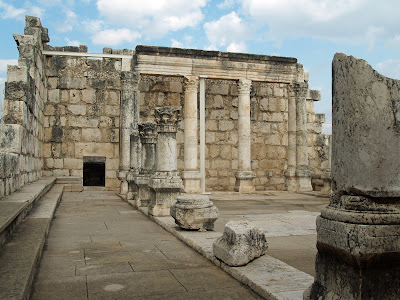
4th-century synagogue, Capernaum [Wikipedia]

Readings (New American Bible: Philippines, USA)

Readings (Jerusalem Bible: Australia, England & Wales, India [optional], Ireland, New Zealand, Pakistan, Scotland, South Africa)

Gospel Mark 1:21-28 (New Revised StandardVersion, Anglicised Catholic Edition) 

They went to Capernaum; and when the sabbath came, Jesus entered the synagogue and taught. They were astounded at his teaching, for he taught them as one having authority, and not as the scribes. Just then there was in their synagogue a man with an unclean spirit, and he cried out, ‘What have you to do with us, Jesus of Nazareth? Have you come to destroy us? I know who you are, the Holy One of God.’ But Jesus rebuked him, saying, ‘Be silent, and come out of him!’ And the unclean spirit, throwing him into convulsions and crying with a loud voice, came out of him. They were all amazed, and they kept on asking one another, ‘What is this? A new teaching—with authority! He commands even the unclean spirits, and they obey him.’ At once his fame began to spread throughout the surrounding region of Galilee.

O’Connell School’s crest and motto

(‘Ciall agus Neart’ is Irish for ‘Sense and Strength’)


For the last two years of my secondary education in O’Connell School, Dublin, the A and B sections had the same set of teachers. Heading that group was a member of the Irish Christian Brothers, now often known as Edmund Rice Brothers after their founder, Blessed Edmund Ignatius Rice, Brother Mícheál S. Ó Flaitile whom we called ‘Pancho’ after a character in a cartoon strip, The Cisco Kid, in the now defunct Irish Press.

‘Pancho’ used to take the A and B sections together for Religions, the last class in the morning. He was in his late 50s at the time while we were progressing from 16 to 18 over the course of those two years.

One day I learned a lesson for life from ‘Pancho’. He apologised to all of us in Religions class for having accused a student in the B section the previous day of having done something or other wrong. I don’t recall the particular ‘misdemeanour’. Whatever it was, it was trivial. But Brother Ó Flaitile had discovered that the student had not done what he had accused him of. Next day at the beginning of class he told us he was sorry and that the student whom he had accused had not done anything wrong. The apology was a genuine one, not of the ‘If I have hurt anyone . . .’ variety. He acknowledged that he had misjudged a student and that he had been wrong to do so.

Years later I mentioned this incident to Brother Ó Flaitile while on  a home visit from the Philippines. He said he didn’t remember it – but he smiled.

I’ve always been struck in today’s gospel by what St Mark highlights twice: They were astounded at his teaching, for he taught them as one having authority, and not as the scribes and ‘What is this? A new teaching—with authority!’

All of us had the deepest respect for ‘Pancho’, though we sometimes played tricks on him. And I think that we recognised his sanctity, though I don’t recall any of us using that word at the time. My own respect for him went even deeper that day when he apologised to us – more than 60 teenagers who were 40 years or so younger than he was.

For me Brother Ó Flaitile taught us as one having authority, the authority of his integrity, the authority of his faith in Jesus Christ, with the authority of Jesus himself who is the way, and the truth, and the life.

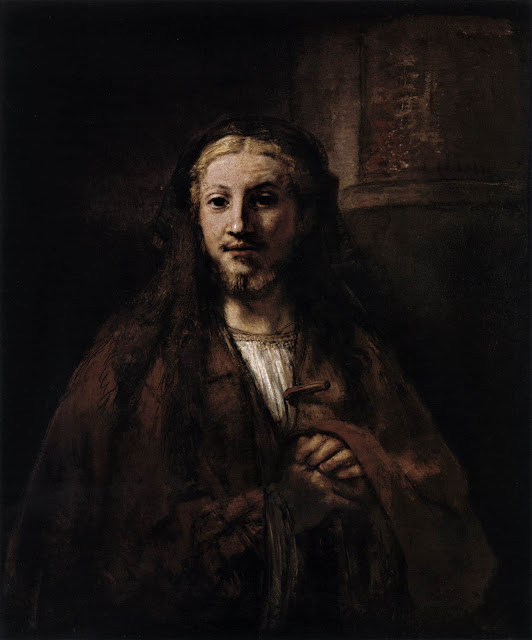
Christ with a Staff, Rembrandt [Web Gallery of Art]

A Christian’s inner authority does not come from being ‘faultless’. It comes from being rooted in Christ. The saintly Fr Willie Doyle SJ, killed in the Great War in 1917 while trying to rescue a wounded soldier, wrote to someone who had sought his advice: I am convinced from a pretty big experience that perfection, that is sanctity, is only to be won by repeated failures. If you rise again after a fall, sorry for the pain given to our Lord, humbled by it since you see better your real weakness, and determined to make another start, far more is gained than if you had gone on without a stumble.

I have no doubt that Brother Ó Flaitile grew in sanctity when he acknowledged his mistake and when he apologised to us. His words that day were for me those of one having authority and they still speak to me with the authority of Jesus himself nearly 60 years later.

Responsorial Psalm (New American Bible Lectionary)

Posted in: Sunday Reflections Tagged: authority, Brother Mícheál S. Ó Flaitile, Fr Willie Doyle SJ, O'Connell School, Rembrandt, Sunday Reflections

‘Repent . . . and follow me.’ Sunday Reflections, 3rd Sunday in Ordinary Time, Year B

January 19, 2018 by Father Sean Coyle

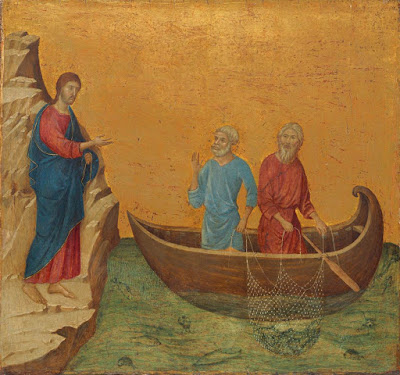
Calling of Peter and Andrew

Duccio di Buoninsegna [Web Gallery of Art]

Readings (New American Bible: Philippines, USA)

Readings (Jerusalem Bible: Australia, England & Wales, India [optional], Ireland, New Zealand, Pakistan, Scotland, South Africa)

Gospel Mark 1:14-20 (New Revised  Standard Version, Anglicised CatholicEdition) 

Now after John was arrested, Jesus came to Galilee, proclaiming the good news of God, and saying, ‘The time is fulfilled, and the kingdom of God has come near; repent, and believe in the good news.’

As Jesus passed along the Sea of Galilee, he saw Simon and his brother Andrew casting a net into the lake—for they were fishermen. And Jesus said to them, ‘Follow me and I will make you fish for people.’ And immediately they left their nets and followed him. As he went a little farther, he saw James son of Zebedee and his brother John, who were in their boat mending the nets. Immediately he called them; and they left their father Zebedee in the boat with the hired men, and followed him.

Speaking in Rome to members of ecclesial movements on the evening of Saturday 17 May 2013, the Vigil of Pentecost, Pope Francis told this story:

One day in particular, though, was very important to me: 21 September 1953. I was almost 17. It was ‘Students’ Day’, for us the first day of spring — for you the first day of autumn. Before going to the celebration I passed through the parish I normally attended, I found a priest that I did not know and I felt the need to go to confession. For me this was an experience of encounter: I found that someone was waiting for me. Yet I do not know what happened, I can’t remember, I do not know why that particular priest was there whom I did not know, or why I felt this desire to confess, but the truth is that someone was waiting for me. He had been waiting for me for some time. After making my confession I felt something had changed. I was not the same. I had heard something like a voice, or a call. I was convinced that I should become a priest.

What is striking is that the young Jorge Mario Bergoglio experienced God’s call to the priesthood unexpectedly and within the context of confession. In today’s Gospel the call of Simon and Peter, of James and John to follow Jesus is within the context of a call to conversion: repent, and believe in the good news. 

In the First Reading God sends a very reluctant Jonah to Nineveh to call the people there to repentance. And the people of Nineveh believed God; they proclaimed a fast, and everyone, great and small, put on sackcloth.

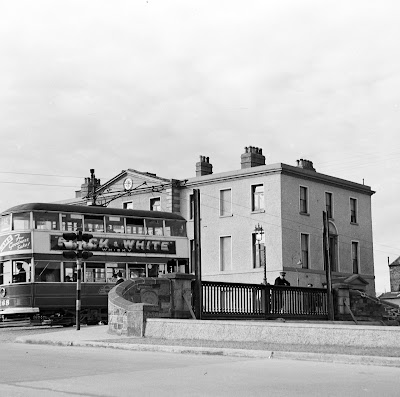
An old photo of Portobello Bridge, Dublin [Wikipedia]

Last Monday on  Nationwide on RTÉ, Ireland’s national radio and TV service, a young Irish Dominican friar, Fr David Barron OP, told how he remembered the very moment when he decided to give up his job in banking, in which he was very happy, to become a Dominican priest: One evening, coming on the bus from Trinity (Dublin University) into Rathmines, coming over Portobello Bridge, I still remember, I finally gave in and said, ‘I’ll give it a go’ [11:17 – 11:29 in the video].

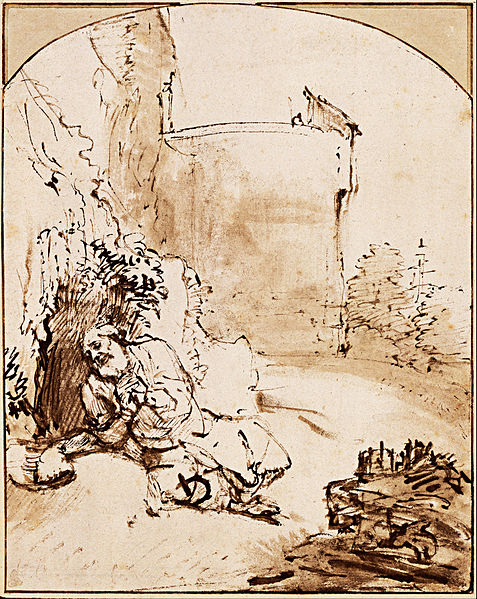
The Prophet Jonah Before the Walls of Jericho

Rembrandt [Wikipedia Commons]

The First Reading, from the Book of Jonah, shows the people of Nineveh, from the King down, believing the reluctant prophet and then fasting and repenting.

In the Gospel Jesus preaches, Repent, and believe in the good news. It is in the context of that proclamation to the people in Galilee that Jesus invites Simon and Andrew, James and John, to follow him. Each of the four could make the words of Pope Francis their own: For me this was an experience of encounter: I found that someone was waiting for me. Yet I do not know what happened . . . I was not the same. I had heard something like a voice, or a call. That call was to lead the four of them to leave everything to follow him, a decision that was to bring three of them to martyrdom. The young Jorge Mario Bergoglio could not have had the slightest idea that listening to God’s call would lead him to Rome.

About 16 years ago I did a mission appeal in a parish in England where the then recently appointed parish priest had inherited a filthy rectory/presbytery/convento from his predecessor. He had managed by then to clean up only his own bedroom. He could not invite me to stay at his place because the guest room was filthy and so had me put up by a neighbouring parish priest.

The people of Nineveh cleaned up the ‘room’ of their inner heart by turning away from sin and allowed the word of God to enter. The Gospel suggests that the two sets of fishermen-brothers had done the same and were able to hear and respond to the call of Jesus there and then.

May we do likewise, with God’s grace, especially through the sacrament of reconciliation / penance / confession.

Jesus calls each of us through baptism into an intimate, personal relationship with him. He eventually reveals to us, within that relationship, the specific vocation to which he invites us – to marriage, to the priesthood, to religious life, to remaining single. We can only hear that specific invitation from Jesus if we constantly repent of our sins and accept his loving forgiveness and mercy.

Posted in: Sunday Reflections Tagged: confession, Dominicans, Duccio di Buoninsegna, Pope Francis, Priesthood, Rembrandt, Sunday Reflections, Vocation

‘If this is the end, then I’m ready for it.’ Sunday Reflections, 1st Sunday of Advent, Year B

December 7, 2017 by Father Sean Coyle

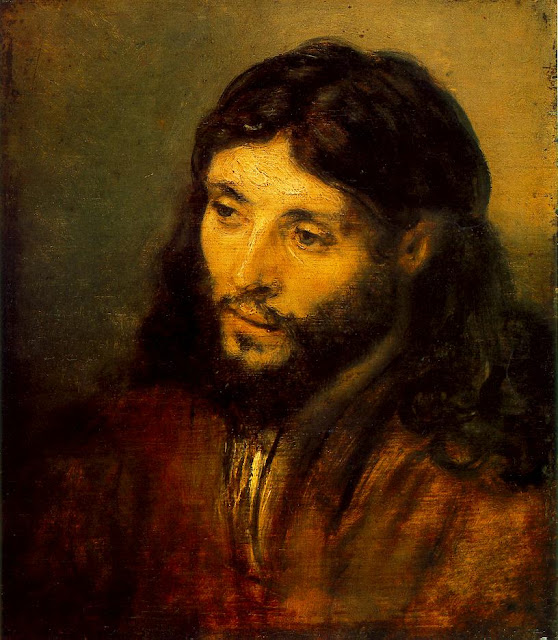
Young Jew as Christ, Rembrandt [Web Gallery of Art]

Readings (New American Bible: Philippines, USA)

Readings (Jerusalem Bible: Australia, England & Wales, India [optional], Ireland, New Zealand, Pakistan, Scotland, South Africa)

Gospel Mark 13:33-37 (New Revised  Standard Version, Anglicised CatholicEdition) 

Jesus said to his disciples:

‘Beware, keep alert; for you do not know when the time will come. It is like a man going on a journey, when he leaves home and puts his slaves in charge, each with his work, and commands the doorkeeper to be on the watch. Therefore, keep awake—for you do not know when the master of the house will come, in the evening, or at midnight, or at cockcrow, or at dawn, or else he may find you asleep when he comes suddenly. And what I say to you I say to all: Keep awake.’
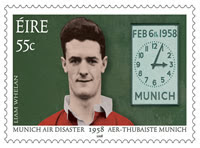
Liam Whelan  (1 April 1935 – 5 February 1958)

If this is the end, then I’m ready for it. 

These were the last words of Liam Whelan who died in a plane crash at Munich Airport on 6 February 1958 along with other members of the Manchester United football (soccer) team as they were returning from a match in Belgrade. About seven years ago I learned from a friend named Brendan whom I have known for more than 50 years that, when they were both aged 14 or so, Liam rescued him when he got into difficulties in a swimming pool in their area. And last year I discovered that another friend, who was a classmate of mine for five years in secondary school and for two years in the seminary, also named Liam, that this talented young footballer had been a neighbour of his and that even when he had achieved fame as a professional footballer he would still play knockabout football on the street with the local boys whenever he would come home.

The average age of Manchester United’s players at the time of the accident was only 22. These young men were earning only £15 a week, about 25 percent more than a tradesman could earn. Endorsements could bring in a little more income for a few talented players whose career would end for most at 35, if not earlier. 

There was snow on the ground at Munich Airport and the plane made three attempts to take off. Harry Gregg, the goalkeeper for Manchester United and who also played in that position for Northern Ireland’s international team, was sitting near Liam Whelan. He survived uninjured and helped save a number of people from death. He has often told the story of Liam Whelan’s last words: If this is the end, then I’m ready for it.

Clearly young Liam had his life focused on what was most important. He was ready to meet death. I have often spoken about him at Mass and in giving retreats. 

Those who knew him describe Liam Whelan as ‘a devout Catholic’. I know that he sent his mother some money for her to go to Lourdes. 1 February 1958 was the centennial of the first apparition of our Blessed Mother to St Bernadette. Mrs Whelan, a widow since 1943 when Liam was 8, used the money instead towards a beautiful statue of Our Lady of Lourdes over the grave of her son. I pass it each time I visit my parents’ grave.

Liam Whelan’s grave (right)

I vividly remember the dark, late afternoon I heard about the crash from a street-singer whom I knew by sight and who was running around agitatedly telling people of the crash. I didn’t know whether to believe him or not but the news on the radio confirmed that it really had happened. It was the first time in my life to experience what has been called a ‘public-private moment’, a public happening, usually a tragedy, that becomes a very personal one for those who learn of it, one that is seared in the memory and often in the heart.

Liam Whelan grew up in the next parish to my own and I remember going to Christ the King Church the evening his remains were brought there. I was outside the church with countless others. An article by John Scally in the February 2008 issue of The Word, the magazine of the Divine Word Missionaries in Ireland that is no longer published, described what many experienced: Their funerals were like no other. Most funerals are a burial of someone or something already gone. These young deaths pointed in exactly the opposite direction and were therefore the more poignant. Normally we bury the past but in burying Liam Whelan and his colleagues, in some deep and gnawing way we buried the future.

I still feel some pain at the deaths of Liam Whelan and his colleagues nearly 60 years after they died but the story of Liam’s preparedness for his sudden death is one that continues to inspire me.

Liam’s last words, If this is the end, then I’m ready for it, are a perfect response to today’s gospel. Jesus is not trying to frighten us but he is telling us starkly to be prepared always for the moment of our death, to do everything with that in mind. Advent is a time when we prepare not only to celebrate the birth of Jesus at Christmas, but to become much more aware of his daily coming into our lives, and to prepare, as individuals and as a Christian community to welcome him when he returns at the end of time in a way that we won’t be ashamed.

What would we say if he asked us in the Philippines where I spent most of my life, for example, Have children who have been abused had their court cases finished quickly? I have heard that young Maria, who has gone to the court five or six times for a hearing, something that is quite upsetting for her, has been told on each occasion that the defence lawyer isn’t yet ready.

What would we say if Jesus said, I have been told that many forests have been cut down for profit and that this has resulted in many deaths in Leyte, for example, in 1991 and 2003. Is this true?
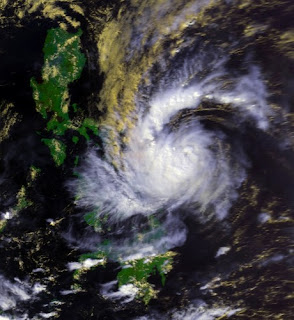
Tropical Storm Thelma (Uring) [Wikipedia]

More than 5,000 died in a flash flood in Ormoc City, Leyte, on 5 November 1991. Deforestation was blamed as a primary cause of the devastation.

The gospel this Sunday is, literally, a ‘wake up call’. Beware, keep alert . . . Therefore, keep awake . . . And what I say to you I say to all: Keep awake.

May the response of Liam Whelan, a young professional footballer who took these words to heart, inspire us and give us a desire to be always prepared to meet the Lord, in this life and in the next: If this is the end, then I’m ready for it.

This was recorded on St Columban’s Day, 23 November 2011, in the Abbey of St Columban, Bobbio, Italy, where the saint died and is buried.

Antiphona ad introitum  Entrance Antiphon  Cf Ps 24 [25]:1-3

Ad te levavi animam meam, Deus meus,

To you, I lift up my soul, O my God.

in te confido, non erubescam.

In you, I have trusted, let me not be put to shame.

Neque irrideant me inimici mei, 

Nor let my enemies exult over me;

etenim universi qui te exspectant non confundentur.

and let none who hope in you be put to shame.

Ps 24 [24]:4. Vias tuas, Domine, demonstri mihi; et semitas tuas edoce me.

Make me to know your ways, O Lord; teach me your paths.

Ad te levavi animam meam, Deus meus,

To you, I lift up my soul, O my God.

in te confido, non erubescam.

In you, I have trusted, let me not be put to shame.

Neque irrideant me inimici mei, 

Nor let my enemies exult over me;

etenim universi qui te exspectant non confundentur.

and let none who hope in you be put to shame.

The longer version is sung or recited when the Extraordinary Form of the Mass is celebrated.

Posted in: Sunday Reflections Tagged: Advent, deforestation, Liam Whelan, Ormoc City, Rembrandt, Sunday Reflections

The Immaculate Conception and the Extraordinary Jubilee of Mercy

December 7, 2015 by Father Sean Coyle

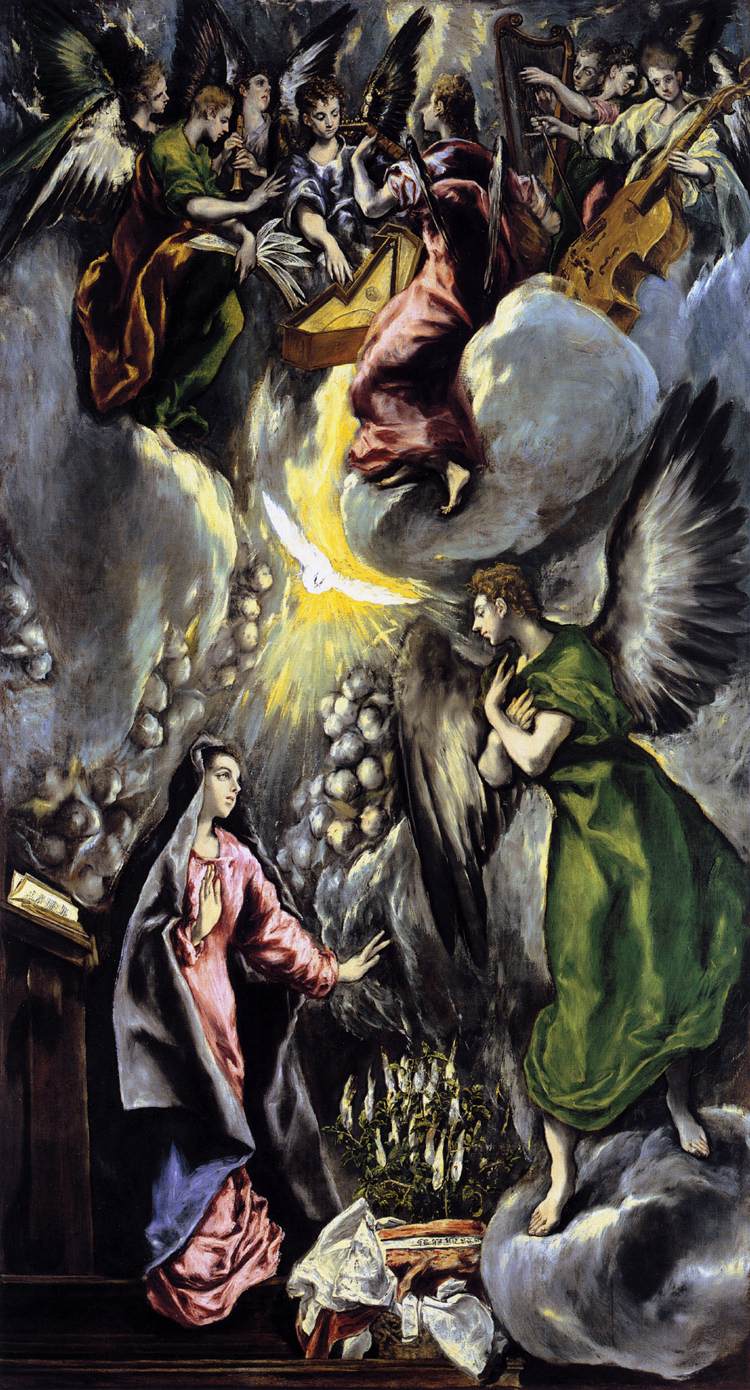
The Virgin of the Immaculate Conception

El Greco, 1608-13, Museo de Santa Cruz, Toledo, Spain [Web Gallery of Art]

Gospel Luke 1:26-38 (New Revised Standard Version, Catholic Edition) 

In the sixth month the angel Gabriel was sent by God to a town in Galilee called Nazareth, to a virgin engaged to a man whose name was Joseph, of the house of David. The virgin’s name was Mary. And he came to her and said, “Greetings, favored one! The Lord is with you.” But she was much perplexed by his words and pondered what sort of greeting this might be. The angel said to her, “Do not be afraid, Mary, for you have found favor with God. And now, you will conceive in your womb and bear a son, and you will name him Jesus. He will be great, and will be called the Son of the Most High, and the Lord God will give to him the throne of his ancestor David. He will reign over the house of Jacob forever, and of his kingdom there will be no end.” Mary said to the angel, “How can this be, since I am a virgin?” The angel said to her, “The Holy Spirit will come upon you, and the power of the Most High will overshadow you; therefore the child to be born will be holy; he will be called Son of God. And now, your relative Elizabeth in her old age has also conceived a son; and this is the sixth month for her who was said to be barren. For nothing will be impossible with God.” Then Mary said, “Here am I, the servant of the Lord; let it be with me according to your word.” Then the angel departed from her.

The Annunciation

El Greco, 1596-1600, Museo del Prado, Madrid [Web Gallery of Art]

Logo, Jubilee of Mercy

Misericordiae Vultus

BULL OF INDICTION
OF THE EXTRAORDINARY
JUBILEE OF MERCY

FRANCIS
BISHOP OF ROME
SERVANT OF THE SERVANTS OF GOD
TO ALL WHO READ THIS LETTER
GRACE, MERCY, AND PEACE

Young Jew as Christ 

Rembrandt, c.1648, Staatliche Museen, Berlin [Web Gallery of Art]

Jesus Christ is the face of the Father’s mercy. These words might well sum up the mystery of the Christian faith. Mercy has become living and visible in Jesus of Nazareth, reaching its culmination in him. The Father, ‘rich in mercy’ (Eph 2:4), after having revealed his name to Moses as ‘a God merciful and gracious, slow to anger, and abounding in steadfast love and faithfulness’ (Ex34:6), has never ceased to show, in various ways throughout history, his divine nature. In the ‘fullness of time’ (Gal 4:4), when everything had been arranged according to his plan of salvation, he sent his only Son into the world, born of the Virgin Mary, to reveal his love for us in a definitive way. Whoever sees Jesus sees the Father (cf. Jn 14:9). Jesus of Nazareth, by his words, his actions, and his entire person reveals the mercy of God.

The above are the opening words of Misericordiae Vultus, the proclamation by Pope Francis of the Extraordinary Jubilee of Mercy that starts tomorrow, the Solemnity of the Immaculate Conception, when the Pope opens the Holy Door at St Peter’s Basilica in Rome. The Jubilee Year will end on the Solemnity of Christ the King, 20 November 2016. The Vatican has a website dedicated to the Jubilee Year.

In No 24 of Misericordiae Vultus Pope Francis writes:

My thoughts now turn to the Mother of Mercy. May the sweetness of her countenance watch over us in this Holy Year, so that all of us may rediscover the joy of God’s tenderness. No one has penetrated the profound mystery of the incarnation like Mary. Her entire life was patterned after the presence of mercy made flesh. The Mother of the Crucified and Risen One has entered the sanctuary of divine mercy because she participated intimately in the mystery of His love.

Chosen to be the Mother of the Son of God, Mary, from the outset, was prepared by the love of God to be the Ark of the Covenant between God and man. She treasured divine mercy in her heart in perfect harmony with her Son Jesus. Her hymn of praise, sung at the threshold of the home of Elizabeth, was dedicated to the mercy of God which extends from ‘generation to generation’ (Lk 1:50). We too were included in those prophetic words of the Virgin Mary. This will be a source of comfort and strength to us as we cross the threshold of the Holy Year to experience the fruits of divine mercy.

At the foot of the Cross, Mary, together with John, the disciple of love, witnessed the words of forgiveness spoken by Jesus. This supreme expression of mercy towards those who crucified him show us the point to which the mercy of God can reach. Mary attests that the mercy of the Son of God knows no bounds and extends to everyone, without exception. Let us address her in the words of the Salve Regina, a prayer ever ancient and ever new, so that she may never tire of turning her merciful eyes upon us, and make us worthy to contemplate the face of mercy, her Son Jesus.

Let us address her in the words of the Salve Regina, a prayer ever ancient and ever new (Misericordiae Vultus).

The Crucifixion

El Greco, 1596-1600, Museo del Prado, Madrid [Web Gallery of Art]

At the foot of the Cross, Mary, together with John, the disciple of love, witnessed the words of forgiveness spoken by Jesus (Misericordiae Vultus).

Posted in: Pope Francis Tagged: El Greco, Extraordinary Jubilee of Mercy, Immaculate Conception, Pope Francis, Rembrandt

Pope Francis’s Prayer Intentions for December 2015

December 3, 2015 by Father Sean Coyle
Young Jew as Christ, Rembrandt, c.1648
Staatliche Museen, Berlin [Web Gallery of Art]
 
Jesus Christ is the face of the Father’s mercy. (Pope Francis)
 
Universal: EXPERIENCING GOD’S MERCY
That all may experience the mercy of God, who never tires of forgiving.
The Holy Family with Angels, Rembrandt, 1645
The Hermitage, St Petersburg [Web Gallery of Art]
 
And the Word became flesh and lived among us, and we have seen his glory, the glory as of a father’s only son, full of grace and truth. (John 1:14)
 
Evangelization: FAMILIES
That families, especially those who suffer, may find in the birth of Jesus a sign of certain hope.
Intentions and videos from the website of the Apostleship of Prayer.
Posted in: Pope Francis Tagged: Apostleship of Prayer, family, God's mercy, Pope Francis, Rembrandt, The Holy Family, Year of Mercy

‘Go therefore and make disciples of all nations . . .’ Sunday Reflections, Trinity Sunday, Year B

May 27, 2015 by Father Sean Coyle


HolyTrinity, Jusepe de Ribera, painted 1635-36 
Museo del Prado, Madrin [Web Gallery of Art]
 
Readings (New American Bible: Philippines, USA) 
 
Readings (Jerusalem Bible: Australia, England & Wales, India [optional], Ireland, New Zealand, Pakistan, Scotland, South Africa) 
 
Gospel Matthew 28:16-20 (New Revised Standard Version – Catholic Edition, Canada)
 

Now the eleven disciples went to Galilee, to the mountain to which Jesus had directed them. When they saw him, they worshiped him; but some doubted. And Jesus came and said to them, “All authority in heaven and on earth has been given to me. Go therefore and make disciples of all nations, baptizing them in the name of the Father and of the Son and of the Holy Spirit, and teaching them to obey everything that I have commanded you. And remember, I am with you always, to the end of the age.”

Holy, holy, holy! Lord God almighty!
 
From the evening of 23 May until the morning of 1 June in 2012 I was giving a retreat to a group of Canossian Sisters, also known as Daughters of Charity, Servants of the Poor. They included four novices and seven professed Sisters, including one from Malaysia.Their foundress, St Magdalene of Canossa bequeathed to the Sisters the mission of ‘making Jesus known and loved above all’. This comes from a stance of standing at the foot of the Cross with Mary.
 
During my talks each morning I shared many stories of individuals who had made Jesus known to me, usually with no awareness that they were doing so. Some were persons I knew. Some are now dead. Some I met only once in passing, never learning their names. Most were poor. I know that my stories triggered off similar memories among the Sisters of people who had made Jesus known to them as the Sisters in turn had made him known to those they were serving.
 
I saw all of this in the context of the Communion of Saints, the angels and saints in heaven, the members of the Church on earth, the souls in purgatory. The story of creation tells us that we are made in the image of God. But what the author of that first account of creation didn’t know is that God is a Community of Three Persons. Made in God’s image, we are made to be in community with others.
 
Jusepe de Ribera’s painting of the Holy Trinity above, like a number of other paintings, shows the dead Christ. The expression on the face of the Father shows suffering. It is very similar to the face of the father in Rembrandt’s The Return of the Prodigal Son, painted about thirty years later. I don’t know if Rembrandt was familiar with de Ribera’s painting.


The Blessed Trinity call us into the circle of their life through suffering. We know the suffering of Jesus. Some of the great artists show to us something of the suffering of the Father.

One of the stories I told involved two persons I met only once, a mother and her daughter aged about 13. When they first approached me outside a retreat house in Cebu City on the morning of Holy Thursday 1990. I made an excuse that I was only visiting. When I went inside I later saw the two of them sitting on the steps. The daughter had her head on her mother’s shoulder. Clearly, they were tired and hungry. When I was leaving I gave them enough to buy breakfast. The young girl looked at me with the most beautiful smile I’ve ever seen and said to me, Salamat sa Ginoo! ‘Thanks to the Lord!’ She wasn’t thanking me but inviting me to thank the Lord with her and her mother for his goodness. Through her hunger and tiredness she had come to know something of God’s bountiful love.

That young girl has been calling me into the life of the Holy Trinity for more than 25 years now. I’ve no idea what became of her. I came to the Philippines in 1971 to do my part in making disciples of all nations and have baptised many in the name of the Father and of the Son and of the Holy Spirit. But that young girl, and many others like her, have been constantly teaching me to observe all that I have commanded you and assuring me in the name of Jesus, I am with you always, to the close of the age.

Introit (Entrance Antiphon of Mass)
 
Benedíctus sit Deus Pater,
unigenitúsque Dei Fílius,
Sanctus quoque Spíritus,
quia fecit nobíscum misericórdiam suam.


Blest be God the Father, 
and the Only Begotten Son of God, 
and also the Holy Spirit,
for he has shown us his merciful love.
 
Mozart’s setting of the Latin text at the age of 12 sung by the  Meninos Cantores de Campinas, many of them around the same age as Mozart when he wrote the music. Campinas is in São Paolo State, Brazil.
 
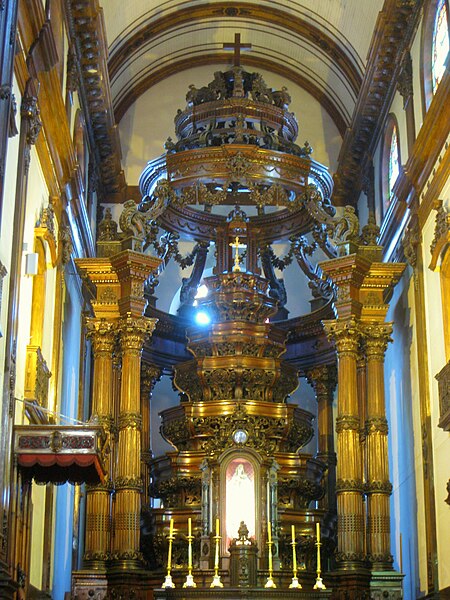
Benedictus sit Deus
 
High Altar of the Metropolitan Cathedral of the Immaculate Conception, Campinas, Brazil [Wikipedia]
Posted in: Sunday Reflections Tagged: Canossian Sisters, Jusepe de Ribera, Mozart, Rembrandt, Sunday Reflections, Trinity Sunday

Recent Posts

  • ‘I do choose. Be made clean!’ Sunday Reflections, 6th Sunday in Ordinary Time, Year B
  • ‘They brought to him all who were sick.’ Sunday Reflections, 5th Sunday in Ordinary Time, Year B
  • ‘He taught them as one having authority.’ Sunday Reflections, 4th Sunday in Ordinary Time, Year B
  • Columban Fr Donal O’Farrell RIP
  • Columban Fr Matthew Reilly RIP

Archives

  • February 2018
  • January 2018
  • December 2017
  • November 2017
  • October 2017
  • September 2017
  • August 2017
  • July 2017
  • June 2017
  • May 2017
  • April 2017
  • March 2017
  • February 2017
  • January 2017
  • December 2016
  • November 2016
  • October 2016
  • September 2016
  • August 2016
  • July 2016
  • June 2016
  • May 2016
  • April 2016
  • March 2016
  • February 2016
  • January 2016
  • December 2015
  • November 2015
  • October 2015
  • September 2015
  • August 2015
  • July 2015
  • June 2015
  • May 2015
  • April 2015
  • March 2015
  • February 2015
  • January 2015
  • December 2014
  • November 2014
  • October 2014
  • September 2014
  • August 2014
  • July 2014
  • June 2014
  • May 2014
  • April 2014

Copyright © 2026 The Pilgrims' Inn.

Hotel WordPress Theme by themehall.com