
The Pilgrims' Inn

  • Welcome to The Pilgrims’ Inn
‘If this is the end, then I’m ready for it.’ Sunday Reflections, 1st Sunday of Advent, Year B

Sunday Reflections

‘If this is the end, then I’m ready for it.’ Sunday Reflections, 1st Sunday of Advent, Year B

December 7, 2017 by Father Sean Coyle

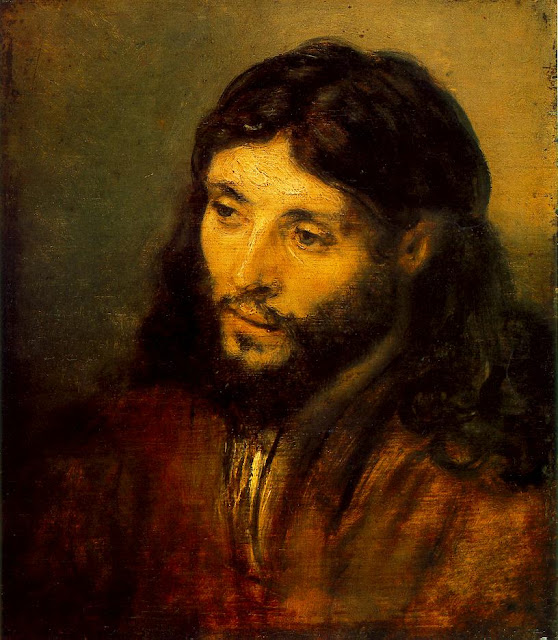
Young Jew as Christ, Rembrandt [Web Gallery of Art]

Readings (New American Bible: Philippines, USA)

Readings (Jerusalem Bible: Australia, England & Wales, India [optional], Ireland, New Zealand, Pakistan, Scotland, South Africa)

Gospel Mark 13:33-37 (New Revised  Standard Version, Anglicised CatholicEdition) 

Jesus said to his disciples:

‘Beware, keep alert; for you do not know when the time will come. It is like a man going on a journey, when he leaves home and puts his slaves in charge, each with his work, and commands the doorkeeper to be on the watch. Therefore, keep awake—for you do not know when the master of the house will come, in the evening, or at midnight, or at cockcrow, or at dawn, or else he may find you asleep when he comes suddenly. And what I say to you I say to all: Keep awake.’

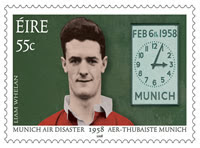
Liam Whelan  (1 April 1935 – 5 February 1958)

If this is the end, then I’m ready for it. 

These were the last words of Liam Whelan who died in a plane crash at Munich Airport on 6 February 1958 along with other members of the Manchester United football (soccer) team as they were returning from a match in Belgrade. About seven years ago I learned from a friend named Brendan whom I have known for more than 50 years that, when they were both aged 14 or so, Liam rescued him when he got into difficulties in a swimming pool in their area. And last year I discovered that another friend, who was a classmate of mine for five years in secondary school and for two years in the seminary, also named Liam, that this talented young footballer had been a neighbour of his and that even when he had achieved fame as a professional footballer he would still play knockabout football on the street with the local boys whenever he would come home.

The average age of Manchester United’s players at the time of the accident was only 22. These young men were earning only £15 a week, about 25 percent more than a tradesman could earn. Endorsements could bring in a little more income for a few talented players whose career would end for most at 35, if not earlier. 

There was snow on the ground at Munich Airport and the plane made three attempts to take off. Harry Gregg, the goalkeeper for Manchester United and who also played in that position for Northern Ireland’s international team, was sitting near Liam Whelan. He survived uninjured and helped save a number of people from death. He has often told the story of Liam Whelan’s last words: If this is the end, then I’m ready for it.

Clearly young Liam had his life focused on what was most important. He was ready to meet death. I have often spoken about him at Mass and in giving retreats. 

Those who knew him describe Liam Whelan as ‘a devout Catholic’. I know that he sent his mother some money for her to go to Lourdes. 1 February 1958 was the centennial of the first apparition of our Blessed Mother to St Bernadette. Mrs Whelan, a widow since 1943 when Liam was 8, used the money instead towards a beautiful statue of Our Lady of Lourdes over the grave of her son. I pass it each time I visit my parents’ grave.

Liam Whelan’s grave (right)

I vividly remember the dark, late afternoon I heard about the crash from a street-singer whom I knew by sight and who was running around agitatedly telling people of the crash. I didn’t know whether to believe him or not but the news on the radio confirmed that it really had happened. It was the first time in my life to experience what has been called a ‘public-private moment’, a public happening, usually a tragedy, that becomes a very personal one for those who learn of it, one that is seared in the memory and often in the heart.

Liam Whelan grew up in the next parish to my own and I remember going to Christ the King Church the evening his remains were brought there. I was outside the church with countless others. An article by John Scally in the February 2008 issue of The Word, the magazine of the Divine Word Missionaries in Ireland that is no longer published, described what many experienced: Their funerals were like no other. Most funerals are a burial of someone or something already gone. These young deaths pointed in exactly the opposite direction and were therefore the more poignant. Normally we bury the past but in burying Liam Whelan and his colleagues, in some deep and gnawing way we buried the future.

I still feel some pain at the deaths of Liam Whelan and his colleagues nearly 60 years after they died but the story of Liam’s preparedness for his sudden death is one that continues to inspire me.

Liam’s last words, If this is the end, then I’m ready for it, are a perfect response to today’s gospel. Jesus is not trying to frighten us but he is telling us starkly to be prepared always for the moment of our death, to do everything with that in mind. Advent is a time when we prepare not only to celebrate the birth of Jesus at Christmas, but to become much more aware of his daily coming into our lives, and to prepare, as individuals and as a Christian community to welcome him when he returns at the end of time in a way that we won’t be ashamed.

What would we say if he asked us in the Philippines where I spent most of my life, for example, Have children who have been abused had their court cases finished quickly? I have heard that young Maria, who has gone to the court five or six times for a hearing, something that is quite upsetting for her, has been told on each occasion that the defence lawyer isn’t yet ready.

What would we say if Jesus said, I have been told that many forests have been cut down for profit and that this has resulted in many deaths in Leyte, for example, in 1991 and 2003. Is this true?

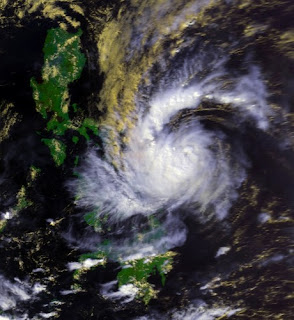
Tropical Storm Thelma (Uring) [Wikipedia]

More than 5,000 died in a flash flood in Ormoc City, Leyte, on 5 November 1991. Deforestation was blamed as a primary cause of the devastation.

The gospel this Sunday is, literally, a ‘wake up call’. Beware, keep alert . . . Therefore, keep awake . . . And what I say to you I say to all: Keep awake.

May the response of Liam Whelan, a young professional footballer who took these words to heart, inspire us and give us a desire to be always prepared to meet the Lord, in this life and in the next: If this is the end, then I’m ready for it.

This was recorded on St Columban’s Day, 23 November 2011, in the Abbey of St Columban, Bobbio, Italy, where the saint died and is buried.

Antiphona ad introitum  Entrance Antiphon  Cf Ps 24 [25]:1-3

Ad te levavi animam meam, Deus meus,

To you, I lift up my soul, O my God.

in te confido, non erubescam.

In you, I have trusted, let me not be put to shame.

Neque irrideant me inimici mei, 

Nor let my enemies exult over me;

etenim universi qui te exspectant non confundentur.

and let none who hope in you be put to shame.

Ps 24 [24]:4. Vias tuas, Domine, demonstri mihi; et semitas tuas edoce me.

Make me to know your ways, O Lord; teach me your paths.

Ad te levavi animam meam, Deus meus,

To you, I lift up my soul, O my God.

in te confido, non erubescam.

In you, I have trusted, let me not be put to shame.

Neque irrideant me inimici mei, 

Nor let my enemies exult over me;

etenim universi qui te exspectant non confundentur.

and let none who hope in you be put to shame.

The longer version is sung or recited when the Extraordinary Form of the Mass is celebrated.

Posted in: Sunday Reflections Tagged: Advent, deforestation, Liam Whelan, Ormoc City, Rembrandt, Sunday Reflections

‘Just as you did it to one . . . of my family, you did it to me.’ Sunday Reflections, Christ the King, Year A

November 24, 2017 by Father Sean Coyle

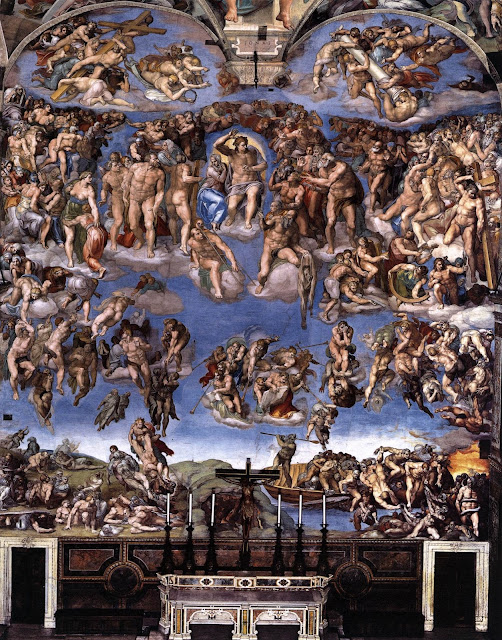
The Last Judgement, Michelangelo [Web Gallery of Art]

Readings (New American Bible: Philippines, USA)

Readings (Jerusalem Bible: Australia, England & Wales, India [optional], Ireland, New Zealand, Pakistan, Scotland, South Africa)

Gospel Matthew 25:31-46 (New Revised  Standard Version, Anglicised CatholicEdition) 

Jesus said to his disciples:

 ‘When the Son of Man comes in his glory, and all the angels with him, then he will sit on the throne of his glory. All the nations will be gathered before him, and he will separate people one from another as a shepherd separates the sheep from the goats, and he will put the sheep at his right hand and the goats at the left. Then the king will say to those at his right hand, “Come, you that are blessed by my Father, inherit the kingdom prepared for you from the foundation of the world; for I was hungry and you gave me food, I was thirsty and you gave me something to drink, I was a stranger and you welcomed me, I was naked and you gave me clothing, I was sick and you took care of me, I was in prison and you visited me.”  Then the righteous will answer him, “Lord, when was it that we saw you hungry and gave you food, or thirsty and gave you something to drink? And when was it that we saw you a stranger and welcomed you, or naked and gave you clothing? And when was it that we saw you sick or in prison and visited you?” And the king will answer them, “Truly I tell you, just as you did it to one of the least of these who are members of my family, you did it to me.” Then he will say to those at his left hand, “You that are accursed, depart from me into the eternal fire prepared for the devil and his angels; for I was hungry and you gave me no food, I was thirsty and you gave me nothing to drink, I was a stranger and you did not welcome me, naked and you did not give me clothing, sick and in prison and you did not visit me.” Then they also will answer, “Lord, when was it that we saw you hungry or thirsty or a stranger or naked or sick or in prison, and did not take care of you?” Then he will answer them, “Truly I tell you, just as you did not do it to one of the least of these, you did not do it to me.” And these will go away into eternal punishment, but the righteous into eternal life.’

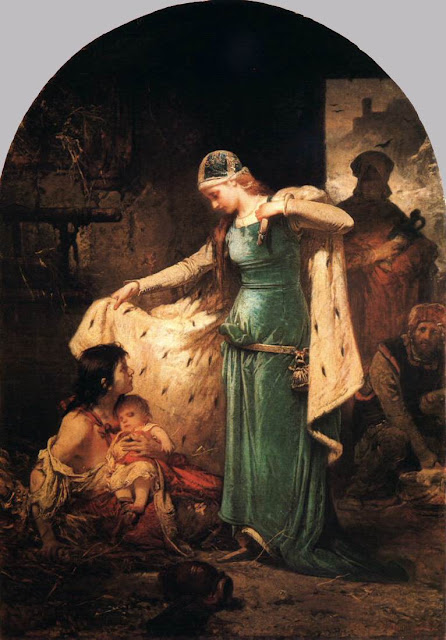
St Elizabeth of Hungary, Sándor Liezen-Mayer [Web Gallery of Art]

In November 1974 some members of the Praesidium of the Legion of Mary of which I was spiritual director came to me and told me of two starving children, a brother and sister, that they had come across on home visitation. The Legionaries were students in the college department of what was then Immaculate Conception College, Ozamiz City, where I was chaplain. At the time ICC was run by the Columban Sisters. It is now La Salle University, under the care of the De La Salle Brothers.

We arranged with the parents to take the two children to the local government hospital. When I saw Linda, as I will call her, I thought she was a malnourished eight year old. I was utterly shocked when I learned that she was twelve. Her brother, whom I’ll call Nonoy, was five. His ribs were sticking out and his stomach severely bloated. The eldest in the family, a girl aged 13 or 14, showed no signs of malnutrition. This was the first time I had ever met anyone with signs of starvation. I never discovered why the children were in such a state.

After a few days Linda began to shyly smile and slowly got a little better, due to the nourishment and attention she was getting. But Nonoy showed no signs of improvement. He died two days before Christmas, without once smiling. We buried him on Christmas Eve.

Linda was able to go home and on at least once occasion we took her on an outing. She was still very small for her age but always cheerful whenever we met her. However, the severe malnutrition had taken its toll and she died in September 1975 while I was at home in Ireland.

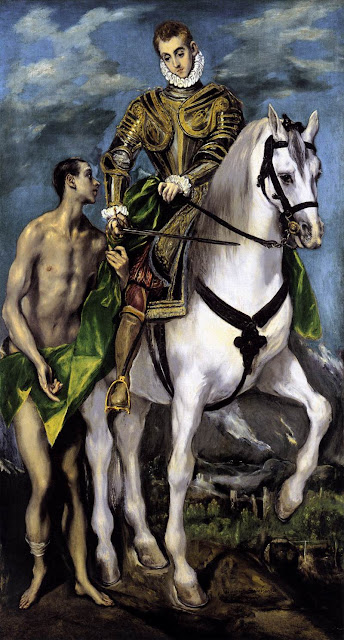
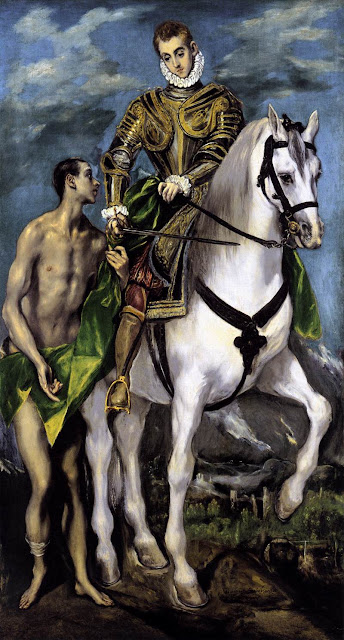
St Martin and the Beggar, El Greco [Web Gallery of Art]

 Today’s Gospel makes me both fearful and hopeful. 

Fearful, because Jesus speaks such harsh language: You that are accursed, depart from me into the eternal fire prepared for the devil and his angels. This is not ‘the Church of nice’.

Hopeful, because Linda and Nonoy will be there at the Last Judgment to speak in my behalf.

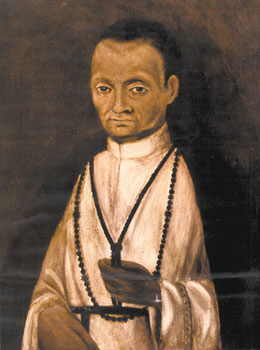
St Martin de Porres OP [Wikipedia]

This portrait was painted during his lifetime or very soon after his death, hence it is probably the most true to his appearance.

During November the Church honours three saints noted for their extraordinary love for the poor, St Martin de Porres (1579 – 1639) on the 3rd, St Martin of Tours (316 – 397) on the 11th and St Elizabeth of Hungary (1207 – 1231) on the 17th. These three gave of their very self. These exemplified in their lives what Jesus is teaching us in today’s gospel.

El Greco is one of many artists who have depicted the scene of St Martin of Tours, then a young soldier and preparing for baptism, giving half of his cloak in the depths of winter to a beggar clad only in rags. The following night, the story continues, Martin in his sleep saw Jesus Christ, surrounded by angels, and dressed in the half of the cloak he had given away. A voice bade him look at it well and say whether he knew it. He then heard Jesus say to the angels, ‘Martin, as yet only a catechumen, has covered me with his cloak.’ Sulpicius Severus, the saint’s friend and biographer, says that as a consequence of this vision Martin ‘flew to be baptized’.

Sándor Liezen-Mayer in his painting of St Elizabeth of Hungary above, shows her protecting a young mother and baby with her cloak. The saint herself was a young mother. She married at 14, bore three children and was widowed at 20. The painting reminds me of a beautiful Irish blessing, Faoi bhrat Mhuire thú/sibh (‘May thou/you be protected by the cloak of Mary’). The young saint, who was only 24 when she died, followed the example of St Francis, with the blessing of her husband, lived very simply and served the poor and the sick each day personally and ate with them at the same table.

Shrine of St Martin de Porres in Lima [Wikipedia]

St Martin de Porres, born outside of marriage and of mixed blood, learned some of the medical arts by working with a barber/surgeon in his young days. He devoted his life as a Dominican lay brother to caring for the sick, whether they were rich or poor. It was mostly the latter who came to him and whom he went looking for. Like St Francis he had a special closeness to animals and people brought these to him to be healed. He is often depicted carrying a broom, with a dog, a cat and a mouse at his feet eating from the same plate. 

These three saints from different social backgrounds wrestled with situations we wrestle with today. They spent themselves in bringing about the Kingdom of God by serving the very poorest. St Martin of Tours, who like St Elizabeth was born in Hungary, asked himself as a soldier if it was proper to engage in battle, where he would kill others. Wikipedia tells us: Regardless of whether or not he remained in the army, academic opinion holds that just before a battle with the Gauls at Borbetomagus (now Worms, Germany), Martin determined that his faith prohibited him from fighting, saying, ‘I am a soldier of Christ. I cannot fight.’ He was charged with cowardice and jailed, but in response to the charge, he volunteered to go unarmed to the front of the troops. His superiors planned to take him up on the offer, but before they could, the invaders sued for peace, the battle never occurred, and Martin was released from military service.

Conscientious objection doesn’t only concern those called to join an army. A Swedish midwife,  Ellinor Grimmark, was fired in 2014 for refusing to do abortions. This is an area where, more and more, individuals will have to make choices that may involve losing their jobs, or even worse. (This year a Swedish court ruled against Ellinor Grimmark).

The world is still overwhelmed with the needs of those trapped in poverty, victims of wars, of natural calamities. Pope Francis has spoken of the Church as being ‘a field hospital’. He has asked priests and others to know ‘the smell of the sheep’. St Elizabeth of Hungary and St Martin de Porres immersed themselves in that every day, seeing in each one they served Jesus Christ himself. And those they took care of, whether they were aware of it or not, were being served by Jesus himself through those saints and through the many others down the centuries who have been doing the same.

I am certain that Linda and Nonoy will hear Jesus say to them, Come, you that are blessed by my Father . . . I hope and pray that they and others like them who have crossed my path down the years will put in a good word for me so that I will hear Jesus say the same to me.

Christus Vincit! Christus Regnat! Christus Imperat!

Christ Conquers! Christ Rules! Christ Commands!

This very ancient Latin hymn, which is a litany, is also known as Laudes Regiae. In the video above it is sung in St Mary’s Cathedral, Tokyo.

Posted in: Sunday Reflections Tagged: Christ the King, El Greco, Michelangelo, Sándor Liezen-Mayer, St Elizabeth of Hungary, St Martin de Porres, St Martin of Tours, Sunday Reflections

‘Be on guard . . . be alert at all times.’ Sunday Reflections, First Sunday of Advent, Year C

November 26, 2015 by Father Sean Coyle

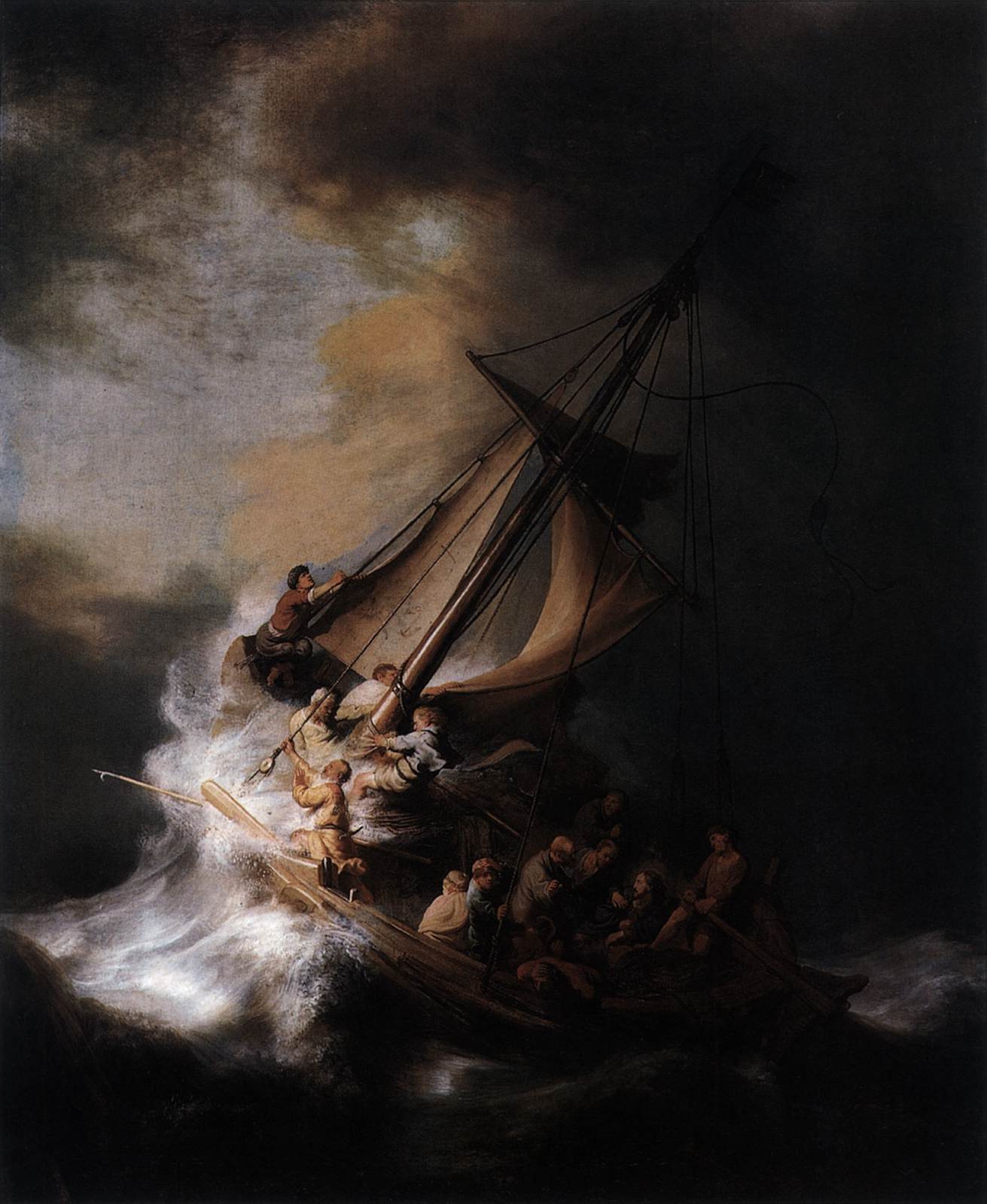
Christ in the Storm on the Sea of Galilee, Rembrandt, 1633

Isabella Stewart Gardner Museum, Boston [Web Gallery of Art]

We begin Year C, which highlights St Luke’s Gospel.

Readings (New American Bible: Philippines, USA)

Readings (Jerusalem Bible: Australia, England & Wales, India [optional], Ireland, New Zealand, Pakistan, Scotland, South Africa)

Gospel Luke 21:25-28, 34-36 (New Revised Standard Version, Catholic Edition, Canada) 

Jesus said to his disciples:

“There will be signs in the sun, the moon, and the stars, and on the earth distress among nations confused by the roaring of the sea and the waves. People will faint from fear and foreboding of what is coming upon the world, for the powers of the heavens will be shaken.  Then they will see ‘the Son of Man coming in a cloud’ with power and great glory. Now when these things begin to take place, stand up and raise your heads, because your redemption is drawing near.”


 “Be on guard so that your hearts are not weighed down with dissipation and drunkenness and the worries of this life, and that day does not catch you unexpectedly, like a trap. For it will come upon all who live on the face of the whole earth. Be alert at all times, praying that you may have the strength to escape all these things that will take place, and to stand before the Son of Man.”

Conditor Alme Siderum (Creator of the Stars of Night)

An ancient Advent hymn sung by the Christendom College Choir & Schola Gregoriana

Here is Pope Benedict’s Angelus Talk on the First Sunday of Advent, 29 November 2009.

Dear Brothers and Sisters,

This Sunday, by the grace of God, a new Liturgical Year opens, of course, with Advent, a Season of preparation for the birth of the Lord. The Second Vatican Council, in the Constitution on the Liturgy, affirms that the Church “in the course of the year… unfolds the whole mystery of Christ from the Incarnation and Nativity to the Ascension, to Pentecost and the expectation of the blessed hope of the Coming of the Lord”. In this way, “recalling the mysteries of the redemption, she opens up to the faithful the riches of her Lord’s powers and merits, so that these are in some way made present for all time; the faithful lay hold of them and are filled with saving grace” (Sacrosanctum Concilium, n. 102). The Council insists on the fact that the centre of the Liturgy is Christ, around whom the Blessed Virgin Mary, closest to him, and then the martyrs and the other saints who “sing God’s perfect praise in Heaven and intercede for us” (ibid., n. 104) revolve like the planets around the sun.

This is the reality of the Liturgical Year seen, so to speak, “from God’s perspective”. And from the perspective, let us say, of humankind, of history and of society what importance can it have? The answer is suggested to us precisely by the journey through Advent on which we are setting out today. The contemporary world above all needs hope; the developing peoples need it, but so do those that are economically advanced. We are becoming increasingly aware that we are all on one boat and together must save each other. Seeing so much false security collapse, we realize that what we need most is a trustworthy hope. This is found in Christ alone. As the Letter to the Hebrews says, he “is the same yesterday and today and for ever (Heb 13: 8). The Lord Jesus came in the past, comes in the present and will come in the future. He embraces all the dimensions of time, because he died and rose; he is “the Living One”. While he shares our human precariousness, he remains forever and offers us the stability of God himself. He is “flesh” like us and “rock” like God. Whoever yearns for freedom, justice, and peace may rise again and raise his head, for in Christ liberation is drawing near (cf. Lk 21: 28) as we read in today’s Gospel. We can therefore say that Jesus Christ is not only relevant to Christians, or only to believers, but to all men and women, for Christ, who is the centre of faith, is also the foundation of hope. And every human being is constantly in need of hope.

Dear brothers and sisters, the Virgin Mary fully embodies a humanity that lives in hope based on faith in the living God. She is the Virgin of Advent: she is firmly established in the present, in the “today” of salvation. In her heart she gathers up all past promises, and encompasses the future. Let us learn from her in order to truly enter this Season of grace and to accept, with joy and responsibility, the coming of God in our personal and social lives.

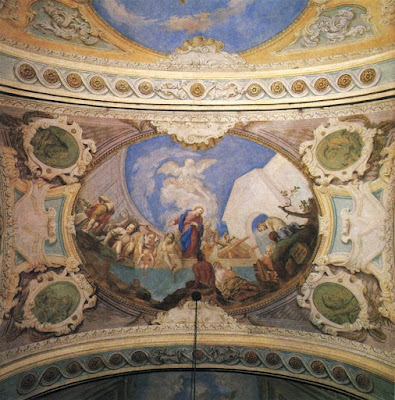
Christ Healing the Sick, István Dorffmeister, 1779

Fresco, St Joseph Chapel, Balf, Hungary [Web Gallery of Art]

After the Angelus the Pope added these words for World AIDS Day, which is observed on 1 December.

The first of December is World AIDS Day. My thoughts and prayers go to every person afflicted by this illness, especially the children, the poorest and those who are rejected. The Church never ceases to do her utmost to combat AIDS, through her institutions and personnel dedicated to this mission. I urge everyone to make his/her own contribution, with prayer and practical attention, to ensure that all who are affected by the HIV virus may experience the presence of the Lord who gives comfort and hope. Lastly, by redoubling and coordinating our efforts I hope it will be possible to eradicate this disease.

+++


Antiphona ad introitum  Entrance Antiphon Cf Ps 24[25]:1-3

Ad te Domine levavi animam meam,

To you, I lift up my soul, O my God, 

Deus meus in te confido, non erubescam.

In you, I have trusted; let me not be put to shame. 

Neque irrideant me inimici mei. 

Nor let my enemies exult over me;

etenim universi qui te exspectant, non confundentur.

and let none who hope in you be put to shame.

Ps. Vias tuas, Domine, demonstra mihi: et semitas tuas edoce me.

Your ways, 0 Lord, make known to me; teach me your paths. 

Gloria Patri, et Filio, et Spiritui Sancto. 

Glory be to the Father and to the Son, and to the Holy Spirit.

Sicut erat in principio, et nunc, et semper, et in saecula saeculorum. Amen.

As it was in the beginning, is now, and ever shall be, world without end. Amen.

Ad te Domine levavi animam meam,

To you, I lift up my soul, O my God, 

Deus meus in te confido, non erubescam.

In you, I have trusted; let me not be put to shame. 

Neque irrideant me inimici mei. 

Nor let my enemies exult over me;

etenim universi qui te exspectant, non confundentur.

and let none who hope in you be put to shame.

The text in bold is used in the Ordinary Form of the Mass. The longer text is used in the Extraordinary Form and may be used in the Ordinary Form.

Sonata K213 by Domenico Scarlatti played by Gabriel Guillén in St Joseph Chapel, Balf, Hungary, where the fresco of Christ Healing the Sick (above) is located.

Posted in: Sunday Reflections, uncategorized Tagged: Advent, Pope Benedict XVI, Sunday Reflections

‘My words will not pass away.’ Sunday Reflections, 33rd Sunday in Ordinary Time, Year B

November 13, 2015 by Father Sean Coyle

The Adoration of the Name of Jesus, El Greco, 1578-79

Chapter House, Monasterio de San Lorenzo, El Escorial, Spain [Wikipedia]

Readings (New American Bible: Philippines, USA)

Readings (Jerusalem Bible: Australia, England & Wales, India [optional], Ireland, New Zealand, Pakistan, Scotland, South Africa)

Gospel Mark 13:24-32 (New Revised Standard Version, Catholic Edition, Canada) 

Jesus said to his disciples:

 “But in those days, after that suffering,

the sun will be darkened,
and the moon will not give its light,
and the stars will be falling from heaven,
and the powers in the heavens will be shaken.

 Then they will see ‘the Son of Man coming in clouds’ with great power and glory. Then he will send out the angels, and gather his elect from the four winds, from the ends of the earth to the ends of heaven.

 “From the fig tree learn its lesson: as soon as its branch becomes tender and puts forth its leaves, you know that summer is near. So also, when you see these things taking place, you know that he is near, at the very gates. Truly I tell you, this generation will not pass away until all these things have taken place. Heaven and earth will pass away, but my words will not pass away.

“But about that day or hour no one knows, neither the angels in heaven, nor the Son, but only the Father.

In recent months refugees have been in the news almost daily, refugees from the Middle East and from Africa heading for Europe, Rohingya refugees from Bangladesh and Myanmar heading for other countries in Asia. For most of these people, many of whom have died in their efforts to find a better life, the words of Jesus in today’s Gospel, the sun will be darkened, and the moon will not give its light, are already in the past tense.

The Christians of Iraq and Syria, all of them Arabs and with 2,000 years of living the Christian faith behind them, are facing annihilation as a community because of the actions in recent years of ISIS/ISIL/IS. And the Christians of Iraq now face another blow. The Iraqi parliament recently passed a bill that would force some Christian children to become Muslims.

Kiribati

Jesus tells us in the Gospel, From the fig tree learn its lesson. He’s using a simple example from nature that everyone in Israel would have understood. In Ireland, where I’m from, when we see the daffodils in bloom we know for sure that spring is here.

The young men in the photo above and the two girls in the photo below are from Kiribati, a republic in the Pacific that consists mostly of atolls and has a population of about 100,000, more than half of them Catholics.

Kiribati

The people singing joyfully in St Theresa’s Church live on Christmas Island, Republic of Kiribati, which is different from Christmas Island, the Australian territory where many refugees are being held at present.

Fiji-based Columban Fr Frank Hoare recently visited Kiribati. He noted, Kiribati is full of children and young people as it is not unusual for couples to have ten or more children. They have a carefree energy for life.

Fr Hoare pointed out too that the leaders of the country have ‘learned its lesson from the fig tree’. The Kiribati Government bought a property of some thousands of acres from the Anglican Church in Fiji for resettlement of people in the future. The President has said that the sea will cover Kiribati by the end of this century. Government officials have asked Australia and New Zealand to accept Kiribati people as permanent refugees. So global warming is not a matter of inconvenience and of changed conditions for the I Kiribati people. It is a matter of losing their homeland and being cast adrift to find shelter in different foreign countries. This would threaten the survival of their culture. This is one example of those causing least damage to the environment being made to suffer most because if it. 

The leaders’ fears are not without reason. The country is at sea-level, with no hills. The Guardian (London) carries a report as I write this on 13 November 2015, Collapsing Greenland glacier could raise sea levels by half a metre, say scientists. This could well mean that the children of the young people of Kiribati in the photos above will be born elsewhere, their homeland no longer existing.

The Christians of Iraq and Syria and the people of Kiribati will have many descendants but they will almost certainly be living in other countries. And like some of the churches in Syria and Iraq where the Holy Sacrifice of the Mass had been celebrated for centuries, in some cases nearly as far back as the time of the Apostles, St Therese’s Church on Christmas Island, Kiribati, will have no celebration of the birth of Christ, the feast that gave its name to the island, of his Resurrection, of Pentecost. There won’t be any people around.

And there are the daily tragedies where for individuals the sun is darkened and the moon no longer gives its light.

Aleppo, Syria

The two girls in the photo in Kiribati are probably unaware of what may face them in the future. But the two girls in Aleppo know the experience of war and terror. Yet the parish priest of the Latin Catholic Parish of St Francis in Aleppo, Fr Ibrahim Alsabagh OFM, sees hope and finds Christians and Muslims Encountering God while waiting in line for a bucket of water.

Speaking at a meeting in Rimini, Italy, the Damascus-born Franciscan friar says, I am here to share the joy of the faith. He tells the people at the meeting, We are living in chaos and we are lacking everything. Alongside the real problem of security – his neighbourhood is controlled by the Syrian government but the Caliphate troops are just a short distance away – there is also the difficulty of getting hold of things due to rising costs and the scarcity of resources. But whenever a need is satisfied, we appreciate it more, even something as simple as a glass of water.

Father Ibrahim tells a story that reminds one of Jesus meeting the woman at the well – the parish happens to have a well. People queue for hours but despite this, nothing happens. Just cheery and smiling people waiting their turn. A Muslim approached me and whispered in my ear: ‘This is very strange, there is something great here among you. When I walk around the city, I see people fighting, almost killing each other over a bucket of water. But here it’s different.’ Speaking to everyone about Christ is difficult in the context in which we live. But it is through these small gestures of peace of heartfelt joy, of patience and humility that we manage to say so much to those who thirst for something great. A faith that is communicated not with grandiose speeches but simply by using the method Jesus taught us: ‘Come, follow me’.

This is the greatest wish of Father Ibrahim: We don’t know when it will all end, but it doesn’t matter when and how it will end. The important thing is to bear witness to Christ, only then will the political and humanitarian solution come. Bearing testimony to the Christian life by loving, forgiving and taking also into consideration the salvation of those who harm us.

Jesus tells us today, My words will not pass away. They live in the hearts of persons such as Father Ibrahim, in the hearts of the leaders of Kiribati, in the hearts of the young girls and the young men in Kiribati, in the hearts of the young girls in the midst of suffering Aleppo who live in the hope that there is something better.

May the words of Jesus live in the heart of each of us.

Antiphona ad Introitum

Entrance Antiphon  Jeremiah 39: 11, 12, 14

Dicit Dóminus: 

The Lord said:

Ego cógito cogitatiónes pacis, et non afflictiónis:

I think thoughts of peace and not of affliction. 

invocábitis me, et ego exáudiam vos: 

You will call upon me, and I will answer you,

et redúcam captivitátem vestram de cunctis locis.

and I will lead back your captives from every place.

Vs. Benedixísti, Dómine, terram tuam: avertísti captivitátem Jacob.

You have favored, 0 Lord, your land; you have restored the well-being of Jacob.

Gloria Patri, et Filio, et Spiritui Sancto;

Glory to the Father and to the Son and to the Holy Spirit;

et nunc, et semper et in saecula saeculorum. Amen.

as it was, is now and will be for ever. Amen

The Lord said:

Ego cógito cogitatiónes pacis, et non afflictiónis:

I think thoughts of peace and not of affliction.

invocábitis me, et ego exáudiam vos: 

You will call upon me, and I will answer you,

et redúcam captivitátem vestram de cunctis locis.

and I will lead back your captives from every place.

The text in bold is used in the Mass in the Ordinary Form while the longer version is used in the Extraordinary Form, though it may also be used in the Ordinary form.

Posted in: Sunday Reflections Tagged: Aleppo, Iraq, ISIS, Kiribati, Sunday Reflections, Syria

‘But she out of her poverty has put in everything she had, all she had to live on.’ Sunday Reflections, 32nd Sunday in Ordinary Time, Year B

November 7, 2015 by Father Sean Coyle

Readings (New American Bible: Philippines, USA)

Readings (Jerusalem Bible: Australia, England & Wales, India [optional], Ireland, New Zealand, Pakistan, Scotland, South Africa) 

Gospel Mark 12:38-44 [or 12:41-44] (New Revised Standard Version, CatholicEdition, Canada) 

[As Jesus taught, he said, “Beware of the scribes, who like to walk around in long robes, and to be greeted with respect in the marketplaces, and to have the best seats in the synagogues and places of honor at banquets! They devour widows’ houses and for the sake of appearance say long prayers. They will receive the greater condemnation.”]

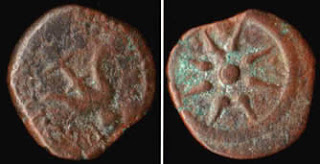
Jesus sat down opposite the treasury, and watched the crowd putting money into the treasury. Many rich people put in large sums.  A poor widow came and put in two small copper coins, which are worth a penny.  Then he called his disciples and said to them, “Truly I tell you, this poor widow has put in more than all those who are contributing to the treasury. For all of them have contributed out of their abundance; but she out of her poverty has put in everything she had, all she had to live on.”

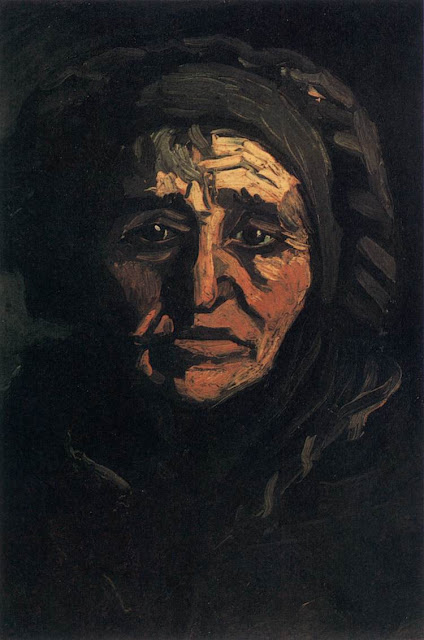
Head of a Peasant Woman with Greenish Lace Cap, Van Gogh, 1885

Rijksmuseum Kröller-Müller, Otterlo, Netherlands [Web Gallery of Art]

There are moments that remain a grace from God for a person for the rest of his life, moments when he was simply an observer rather than a participant. One such moment for me happened one night about forty years ago in Ozamiz City, Mindanao. It was quite late and I was looking out through an upstairs window in the convento (presbytery/rectory) of the Cathedral. As we say in Ireland, ‘there wasn’t a sinner’ on the cathedral plaza except for two persons. One was a man, a beggar maybe in his 30s. The other was Gregoria, known to everyone as ‘Guria’, a ‘simple’ woman and very gentle who would often wander in an out of classrooms in schools, doodle on the board and leave without having distracted anyone.

I noticed Guria, who was perhaps in her 40s, approach the man. She had two small pieces of bread, what we call pandesal here in the Philippines. She gave one to the beggar, just like St Martin of Tours when still a  soldier cutting his ample cloak in two and giving one half to a beggar. (St Martin’s feast day is on Wednesday 11 November.)

St Martin of Tours and the Beggar, El Greco, 1597-99

National Gallery of Art, Washington DC [Wikipedia]

What Guria did was pure, unselfish love. And yet she was probably unaware of this and certainly totally unaware of the fact that someone was observing her. She did not have a strong gift of reflection whereas God has given this to me and to most of us. But we don’t always use that gift.

St Mark tells us, Jesus sat down opposite the treasury, and watched the crowd putting money into the treasury. And he saw ‘Guria’ there. Perhaps she looked like the Dutch peasant woman in Van Gogh’s painting above. But it would seem that his disciples hadn’t observed her until Jesus drew their attention to her.

It is said that St Martin, after he had shared his cloak with the beggar, saw Jesus in a dream wearing that half-cloak. The reality is that Christ shows himself frequently to us, if we have eyes to see, as he showed himself to me through Guria 40 years ago, and on many other similar occasions down the years.

A bronze mite, Judea, 1st century BC [Wikipedia]

In the video below is the story of Kesz Váldez, from Cavite City, near Manila, who when still a ‘mite’ from a very impoverished background shared what he had, his ‘widow’s mite’, with other children on his seventh birthday, the first he had ever celebrated. He received the International Children’s Peace Prize in 2012.


Posted in: Sunday Reflections Tagged: 'Guria', El Greco, International Children's Peace Prize, Kesz Váldez, Ozamiz City, Sunday Reflections, Van Gogh

‘Rejoice and be glad . . .’ Sunday Reflections, All Saints’ Day and All Souls’ Day

October 30, 2015 by Father Sean Coyle

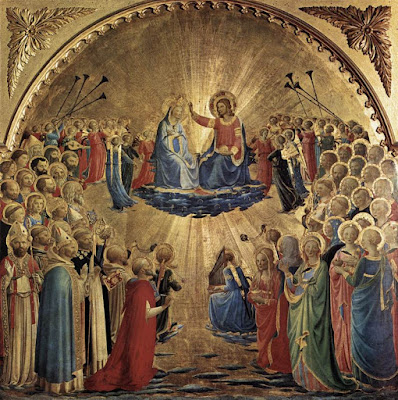
The Coronation of the Virgin, Fra Angelico, 1434-35

Galleria degli Uffizi, Florence, Italy [Web Gallery of Art]

Readings (New American Bible: Philippines, USA) 

Readings (Jerusalem Bible: Australia, England & Wales, India [optional], Ireland, New Zealand, Pakistan, Scotland, South Africa) 

Gospel Matthew 5:1-12a (New Revised Standard Version, CatholicEdition, Canada) 

When Jesus saw the crowds, he went up the mountain; and after he sat down, his disciples came to him. Then he began to speak, and taught them, saying:

“Blessed are the poor in spirit, for theirs is the kingdom of heaven.

“Blessed are those who mourn, for they will be comforted.

“Blessed are the meek, for they will inherit the earth.

“Blessed are those who hunger and thirst for righteousness, for they will be filled.

“Blessed are the merciful, for they will receive mercy.

“Blessed are the pure in heart, for they will see God.

“Blessed are the peacemakers, for they will be called children of God.

“Blessed are those who are persecuted for righteousness’ sake, for theirs is the kingdom of heaven.


“Blessed are you when people revile you and persecute you and utter all kinds of evil against you falsely on my account. Rejoice and be glad, for your reward is great in heaven.”


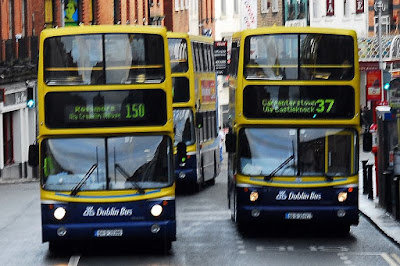
Dublin buses [Wikipedia]

When I go home to my native Dublin I use public transport all the time. I often find God’s presence in in those around me, passengers and drivers. So does Columban Sr Mary Nolan, now based in Dublin, who worked for many years in Peru and also served a term as Congregational Leader of the Missionary Sisters of St Columban. Hereshe shares such a moment on the 150 bus – and by chance Wikipedia has a photo of a 150 bus!

Coming from the city on the 150 bus recently I shared a seat with a woman whom I had never met before. Her name is Breda.  She told me she has been a widow for the past 29 years; her Dad suffers from Alzheimer’s and her Mom cares for him down in their home near Carlow.  Breda’s daughter Ashling was 11 years old when her father died.  There was another little girl four years younger who died of hepatitis at 7 months.  Ashling was traumatized but gradually came through it and did well at her studies.  She is a churchgoer, and a turning point for her was when she attended YOUTH 2000.  At that youth celebration Ashling met her future husband, a young man who is spina bifida.  They’re happily married since last year.

By the time I had heard that story my bus had arrived at St Agnes’ Road, where our convent is, and it was time to part from Breda.  I was amazed that such a happy faith-filled woman could have come through so much suffering.

The Solemnity of All Saints celebrates the countless saints whom the Church has never canonized and never will, people who have gone before us who in their lifetime, like Breda on the 150 bus in Dublin, accepted whatever life brought, sadness and joy, believing in the love of the Lord Jesus Christ for them and in doing so being an inspiration to those around them.

I think that Ashling, Breda’s daughter, attended one of the four-day faith festivals organised each summer by YOUTH 2000. The video above is a promo for this year’s.

Songs for All Saints’ Day

Here is a rousing version of For All the Saints, words by Anglican Bishop William Walsham How and music by Ralph Vaughan Williams. The video is taken from an edition of the BBC’s weekly progamme Songs of Praise, which has been running since 1961.

A poem for All Saints’ and All Souls’ Days

Lochearnhead and Glen Ogle, Scotland [Wikipedia]

I don’t know much about the faith of Scottish poet Norman MacCaig (1910 – 1996). Wikipedia tells us that he described it as ‘Zen Calvinism’ – ‘a comment typical of his half-humorous, half-serious approach to life’.

A favourite poem of mine is Country Postman. It expresses for me something of the reality of the Communion of Saints that we celebrate and remember in a special way on these two days. I’ve no idea if Norman MacCaig was thinking of the Communion of Saints when he wrote it. But it captures something of what holds us all together as a community. With email, Facebook and all the ways of communicating in ‘this digital continent’, as Pope Benedict calls it, perhaps the role of the postman has changed, though he is still vital in rural communities, not only to deliver the mail but to keep an eye on older persons living on their own, some of whom perhaps are reclusive but who still welcome him.

The poem too catches something of the fragility in all of us, especially in those who serve the broader community quietly and generously for so many years. And could Jesus, who turned water into wine at a wedding for people like those whom this mail deliverer served, turn away this poor man who died after probably celebrating a little too much?

It is persons such as MacCaig’s Country Postman whom we remember on All Souls’ Day and it is our prayers that help them move from being numbered among All Souls to being numbered among All Saints.

Country Postman

Before he was drowned, 

his drunk body bumping down the shallows 

of the Ogle Burn, he had walked 

fifteen miles every day 

bringing celebrations and disasters 

and what lies between them to

MacLarens and MacGregors 

and Mackenzies.


Now he has no news to bring 

of celebrations or disasters, 

although, after one short journey, 

he has reached 

all the clans in the world.


[‘Burn’ here means ‘creek’.]


Posted in: Sunday Reflections Tagged: All Saints' Day, All Souls' Day, Bishop William Walsham How, Fra Angelico, L'Arche, Norman MacCaig, Ralph Vaughan Williams, Sunday Reflections, YOUTH 2000

‘Because of our traditions, every one of us knows who he is.’ Sunday Reflections, 22nd Sunday in Ordinary Time, Year B

August 29, 2015 by Father Sean Coyle
Christ, El Greco, c.1606
Cathedral, Toledo, Spain [Web Gallery of Art]


Readings (New American Bible: Philippines, USA)

 
Readings (Jerusalem Bible: Australia, England & Wales, India [optional], Ireland, New Zealand, Pakistan, Scotland, South Africa)
 
Gospel Mark 7:1-8, 14-15, 21-23 (New Revised Standard Version, Catholic Edition, Canada) 
   
Now when the Pharisees and some of the scribes who had come from Jerusalem gathered around Jesus, they noticed that some of his disciples were eating with defiled hands, that is, without washing them. (For the Pharisees, and all the Jews, do not eat unless they thoroughly wash their hands, thus observing the tradition of the elders;  and they do not eat
anything from the market unless they wash it;
 and there are also many other traditions that they observe, the washing of cups, pots, and bronze kettles.) So the Pharisees and the scribes asked
him, “Why do your disciples not live
 according to the tradition of the elders, but eat with defiled hands?” He said to them, “Isaiah prophesied rightly about you hypocrites, as it is written,
‘This people honors me with their lips,
    but their hearts are far from me;
in vain do they worship me,
teaching human precepts as doctrines.’
You abandon the commandment of God and hold to human tradition.”
Then he called the crowd again and said to them, “Listen to me, all of you, and understand: there is nothing outside a person that by going in can defile, but the things that come out are what defile.”

For it is from within, from the human heart, that evil intentions come: fornication, theft, murder, adultery, avarice, wickedness, deceit, licentiousness, envy, slander, pride, folly. All these evil things come from within, and they defile a person.”

 
Silver Torah Case [Wikipedia]
 
Moses said to the people: ‘So now, Israel, give heed to the statutes and ordinances that I am teaching you to observe, so that you may live to enter and occupy the land that the Lord, the God of your ancestors, is giving you. You must neither add anything to what I command you nor take away anything from it, but keep the commandments of the Lord your God with which I am charging you.’ (First Reading).
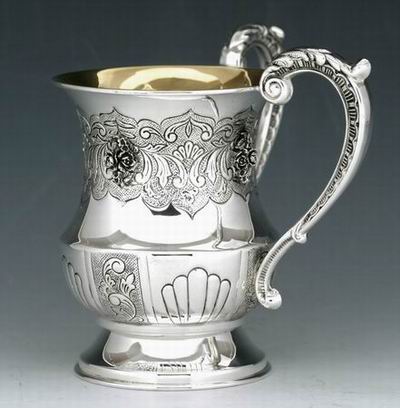
 
A silver cup for for netilat yadayim, the Jewish ritual washing of hands [Wikipedia]
 
Because of lack of time I shall use, with adaptations, some of the material I used for this Sunday three years ago.
 
 
The Indian Rupees 9,000 monthly rent mentioned in the video is the equivalent of about US$135 or Php6,000.

More than three years ago I was speaking to a Filipino seminarian who had worked in Dubai for some years. He had been quite involved in his parish at home and wanted to visit a group of Catholics from Kerala, India, who lived in a labour camp in Dubai. His friends thought he was crazy but he went anyway. He simply wanted to befriend these men whose living conditions he had heard about.

What he described was what I’ve found subsequently in videos such as the one above, which is from an Indian TV station, except that in my imagination I had pictured World War II-type wooden huts instead of big buildings not unlike apartment blocks in large cities.

The men made him most welcome. The air inside was just as the reporter in the video described. His hosts were preparing a meal outside their crowded bedroom. They didn’t see much need to wash their hands or their utensils and what they were preparing was somewhat more spicy than what Filipinos normally eat.

But the young Filipino enjoyed being with his fellow Catholics, whom he knew were his brothers. He could see clearly their living conditions and was able to understand some of their stories. But what struck him most of all was their hospitality.

The Pharisees and scribes in today’s gospel ask Jesus, Why do your disciples not live according to the tradition of the elders, but eat with hands defiled?
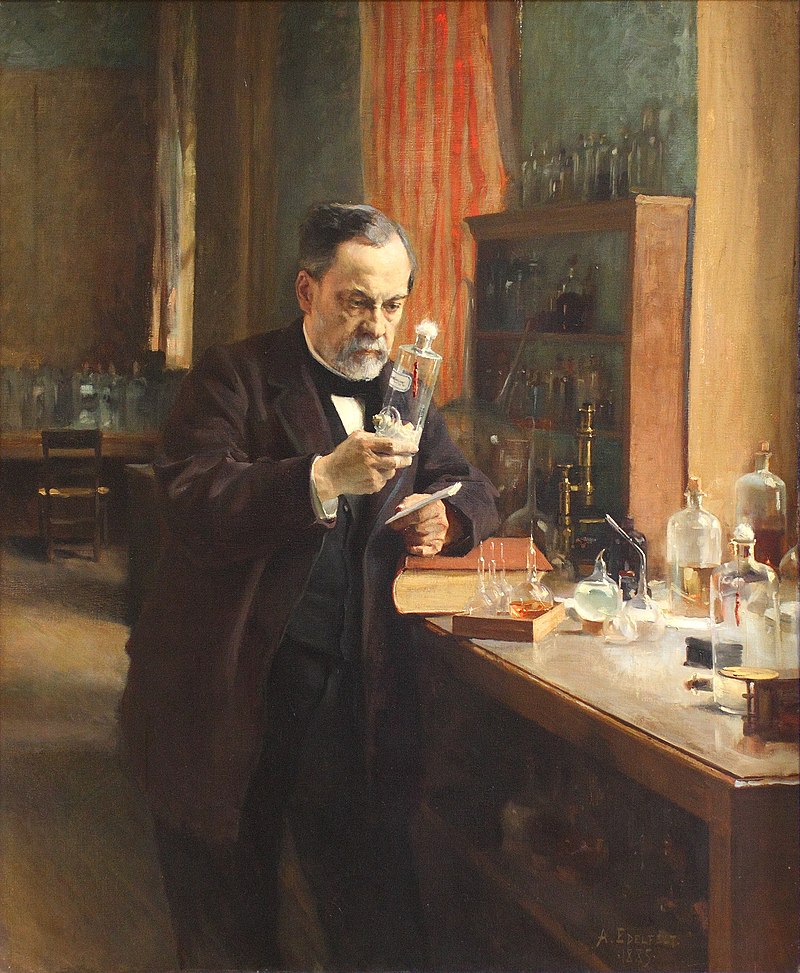
 
Louis Pasteur in his laboratory, Albert Ederfelt, 1885
[Wikipedia]
 
I don’t think that Jesus is telling us to be careless with food, in preparing it or eating it. Scientists such as Louis Pasteur have shown us the importance of doctors washing their hands and equipment before surgery, a connection that hadn’t been seen before. But what Jesus is on about, I think, is the attitude of someone who would notice that the workers from Kerala in a ‘villa’ in Dubai didn’t wash their hands before cooking and eating and would be critical of them – instead of asking why the washing facilities they shared with so many others were lacking. Someone who would fail to see the overcrowded living quarters and the underpaid workers, separated from their families, being exploited by their employers and by recruiting agencies in their own countries.

The situation my young Filipino friend came across in Dubai can be found in many countries. The term ‘OFW’ is widely used here in the Philippines. It means ‘Overseas Filipino Worker’. OFWs are often described by politicians as modern-day heroes. But too few politicians and others are asking why so many, probably a minority in the overall picture but yet a large number of individual real persons, are exploited by some agencies at home and by employers abroad. In reality, these are treated as anything but heroes.

Nor is Jesus opposing tradition or traditions. He was a faithful Jew, as were Joseph and Mary and understood their importance. Tradition and traditions, even if we don’t know their origins, are basically life-giving. The Pharisees and scribes  in today’s gospel – not all Pharisees and scribes were like these – have turned them into ways of sucking the lifeblood out of people.

Reb Tevye in the extract from Fiddler on the Roof below says, And because of our traditions, every one of us knows who he is. The exploited workers from Kerala carried with them the tradition of hospitality they had inherited from their ancestors and welcomed a stranger from the Philippines in Dubai. Despite their appalling conditions they knew who they were. They lacked freedom in so many ways but they had the freedom to be welcoming. Hospitality is one of the most cherished experiences in the Bible, in both the Old and New Testaments. It is cherished in every culture and it is at the heart of following Jesus, who showed hospitality to others, rich and poor, and who graciously accepted it from others, rich and poor. Indeed, he was sometimes criticised for eating with the poor, as he is in today’s gospel because his companions didn’t wash their hands.

I don’t know if the workers from Kerala whom my friend met had a chance to go to Mass – he did as he lived very near a church. But the Prayer after Communion today fits in with their meeting in Dubai.

Renewed by this bread from the heavenly table, 
we beseech you, Lord, 
that, being the food of charity, 
it may confirm our hearts 
and stir us to serve you in our neighbour. 
Through Christ our Lord.


Antiphona ad introitum     Entrance Antiphon  Ct Ps 85 [86]: 3, 5


Miserere mihi Domine, 
Have mercy on me, OLord,
quoniam ad te clamavi tota die:
for I cry to you all the day long.
quia tu Domine suavis ac mitis es,
O Lord, you are good and forgiving,
et copiosus in misericordia omnibus invocantibus te.
full of mercy to all who call on you.
Posted in: Sunday Reflections Tagged: Dieric Bouts the Elder, Palestrina, Sunday Reflections, Web Gallery of Art

‘Lord, to whom can we go? You have the words of eternal life.’ Sunday Reflections, 21st Sunday in Ordinary Time, Year B

August 20, 2015 by Father Sean Coyle


Saint Peter, El Greco, 1610-13 [Web Gallery of Art]
Monasterio de San Lorenzo, El Escorial, Madrid 

Simon Peter answered him, “Lord, to whom can we go? You have the words of eternal life.  We have come to believe and know that you are the Holy One of God.”


Readings (New American Bible: Philippines, USA)

Readings (Jerusalem Bible: Australia, England & Wales, India [optional], Ireland, New Zealand, Pakistan, Scotland, South Africa)

Gospel John 6:60-69 (New Revised Standard Version, Catholic Edition, Canada) 

When many of Jesus’ disciples heard it, they said, “This teaching is difficult; who can accept it?” But Jesus, being aware that his disciples were complaining about it, said to them, “Does this offend you? Then what if you were to see the Son of Man ascending to where he was before? It is the spirit that gives life; the flesh is useless. The words that I have spoken to you are spirit and life. But among you there are some who do not believe.” For Jesus knew from the first who were the ones that did not believe, and who was the one that would betray him. And he said, “For this reason I have told you that no one can come to me unless it is granted by the Father.”

Because of this many of his disciples turned back and no longer went about with him. So Jesus asked the twelve, “Do you also wish to go away?” Simon Peter answered him, “Lord, to whom can we go? You have the words of eternal life.  We have come to believe and know that you are the Holy One of God.”

Pope Francis in Palo, Leyte, Philippines, 17 January 2015 [Wikipedia] 
This Sunday’s gospel concludes the Eucharistic Discourse of Chapter 6 of St John’s Gospel. The teaching of Jesus that many of his disciples could not accept was what we heard last Sunday: “I am the living bread that came down from heaven. Whoever eats of this bread will live forever; and the bread that I will give for the life of the world is my flesh.”

The Jews then disputed among themselves, saying, “How can this man give us his flesh to eat?” So Jesus said to them, “Very truly, I tell you, unless you eat the flesh of the Son of Man and drink his blood. 

St Peter today speaks on behalf of those who stay with Jesus: Lord, to whom can we go? You have the words of eternal life.  We have come to believe and know that you are the Holy One of God.

In his Angelus audience last Sunday Pope Francis spoke these words which are very relevant to today’s gospel. I have highlightedparts of the text.

In these Sundays, the Liturgy proposes to us, from the Gospel of John, Jesus’ discourse on the Bread of Life, that is He Himself and that is also the Sacrament of the Eucharist. Today’s passage (Jn. 6, 51-58) presents the last part of that discourse, and refers to some of those among the people who are scandalized because Jesus said: “Whoever eats my flesh and drinks my blood has eternal life, and I will raise him on the last day” (Jn. 6,54).

The astonishment of those listening is understandable; in fact,Jesus uses the typical style of the prophets to provoke in the people – and also in us – questions and, in the end, to make a decision. The first of the questions is: What does “eat Jesus’ flesh and drink his blood” mean? Is it only an image, a way of saying, a symbol, or does it indicate something real? To answer this, one needs to guess what is happening in Jesus’ heart while he breaks the bread for the hungry crowd. Knowing that He must die on the cross for us, Jesus identifies Himself with that broken and shared bread, and that becomes for Him the “sign” of the Sacrifice that awaits Him. This process culminates in the Last Supper, where the bread and wine truly become His Body and His Blood.

It is the Eucharist where Jesus leaves us a precise purpose: that we can become one with Him. In fact, he says: “Whoever eats my flesh and drinks my blood remains in me and I in him” (v.56). To remain: Jesus in us and us in Him. Communion is assimilation: eating Him, we become Him. But this requires our “yes”, our adherence to the faith.

At times, during the Holy Mass, it may happen to feel this objection: “What is the purpose of the Mass? I go in Church when I feel like it, and I pray better alone.” But the Eucharist is not a private prayer or a beautiful spiritual experience, it is not a simple commemoration of what Jesus has done in the Last Supper: we say, to understand well, that the Eucharist is a “memorial”, that is, an act that actualizes and makes present the event of the death and resurrection of Jesus: the bread is truly His Body given to us; the wine is truly His Blood that has been shed.

The Eucharist is Jesus who gives Himself entirely to us. By nourishing ourselves from Him and remaining in Him through the Eucharistic Communion, if we do it with faith, it transforms our life; it transforms it into a gift to God and a gift to our brothers. To nourish ourselves from that “bread of life” means being in tune with the heart of Christ, to assimilate His choices, His thoughts, His behavior. It means entering into a dynamic of sacrificial love and become a person of peace, of forgiveness, of reconciliation of sharing in solidarity. It is the same as Jesus has done.

Jesus concludes his discourse with these words; “Whoever eats this bread will live forever” (Jn. 6,58). Yes, living in a concrete, real communion with Jesus on this earth makes us pass from death to life. The heavens begin precisely in this communion with Jesus.

In Heaven, Mary our Mother awaits us – yesterday we celebrated this mystery. May She obtain for us the grace of nourishing ourselves always with faith in Jesus, the Bread of Life.

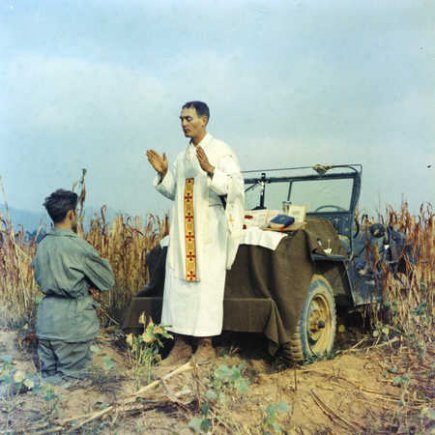
Servant of God Fr Emil Kapaun celebrating Mass during the Korean War [Wikipedia]

I came to know of Fr Emil Kapaun in my teenage years when I read a biography I came across in a public library in Dublin. I was inspired by his heroism as a chaplain in the US forces during the Korean War. I was delighted to discover that this heroic priest shared a birthday with me, 20 April, and ‘cancelled out’ another born on that date – Adolf Hitler. (St Rose of Lima, a secondary patroness of the Philippines whose feast coincides with this Sunday, is another on the ‘plus’ side!)

In the video below it is clear how Father Kapaun, who is being considered for beatification, lived the words of Pope Francis about the Eucharist: To nourish ourselves from that “bread of life” means being in tune with the heart of Christ, to assimilate His choices, His thoughts, His behavior. It means entering into a dynamic of sacrificial love and become a person of peace, of forgiveness, of reconciliation of sharing in solidarity. It is the same as Jesus has done.

In the video [5:38 – 5:56] we hear Fr Kapaun’s own voice echoing the words of St Peter in today’s gospel: We can be sure to expect that in our own lives there will come a time when we must make a choice that between being loyal to the true faith or of giving allegiance to something else which is either opposed to or not in alliance with our faith.

One cannot but be moved by the description of how Fr Kapaun saved Herbert Miller, a wounded American soldier [2:53 – 3:51]. ‘He picked me up and carried me’ . . . ‘So he carried him for 30 miles.’ It means entering into a dynamic of sacrificial love, as Pope Francis said last Sunday.

In the video below it is clear that Chaplain Kapaun utterly believed that in the celebration of the Holy Sacrifice of the Mass Jesus the Risen Lord becomes truly present among us and not just symbolically. He put thousands of miles on his jeep to bring the presence of Christ in the Eucharist to the front lines. He often celebrated Mass for them on the hood of his jeep [0:59 – 1:06].

In the prison of war camp Fr Kapaun was like a mother to all the soldiers . . . He’d help keep them clean. He’d wash their clothes. He’d lead them in prayer services. He’d celebrate Mass in secret when he could [2:27 – 2:53].

The last thing they saw him do in this life was bless the men who were taking him to his death and pray out loud, ‘Father, forgive them for they know not what they do’  [3:33 – 3:44].

The crucifix in the background to those words of Jesus that Fr Kapaun repeated was carved later in his memory by one of his companions in the camp – a Jew.

Surely this heroic priest lived the words of Pope Francis: It means entering into a dynamic of sacrificial love and become a person of peace, of forgiveness, of reconciliation of sharing in solidarity. It is the same as Jesus has done.

The life and death of Fr Emil Joseph Kapaun expressed fully the response of Simon Peter to Jesus, Lord, to whom can we go? You have the words of eternal life.  We have come to believe and know that you are the Holy One of God.

A footnote about Fr Kapaun

Fr Kapaun has a Columban connection. He wrote to the Columbans in Omaha, Nebraska, inquiring about the possibility of becoming one. However, his vocation was to be a diocesan priest. In the chapel of the central house of the Columbans in Seoul is a plaque with the names of priests who died during the Korean War as chaplains in the US forces, some of whom used to visit our house. And some of them surely knew some of the seven Columban priests who died in the Korean War and who are being proposed for beatification by the Catholic Church in Korea.

In the two videos above Fr Kapaun’s surname is pronounced in different ways: ‘capAWN’, ‘CAPE-un’, ‘cape-AWN’. As far as I know, the first is correct.

Posted in: Sunday Reflections Tagged: Fr Emil Kapaun, Holy Sacrifice of the Mass, Korean War, Pope Francis, St Peter, Sunday Reflections

‘The bread that I will give for the life of the world is my flesh.’ Sunday Reflections, 20th Sunday in Ordinary Time, Year B

August 15, 2015 by Father Sean Coyle
From The Gospel of John (2003)  Directed by Philip Saville. Jesus played by Henry Ian Cusick; narrator, Christopher Plummer.
[Today’s gospel runs from 1:31 to 2:54]


Readings (New American Bible: Philippines, USA)
 
Readings (Jerusalem
Bible: Australia, England & Wales, India [optional], Ireland, New Zealand,
Pakistan, Scotland, South Africa)
 
Gospel John 6:51-58 (New Revised Standard Version, Catholic Edition, Canada)  
 
Jesus said to the crowds:
“I am the living bread that came down from heaven. Whoever eats of this bread will live forever; and the bread that I will give for the life of the world is my flesh.”

The Jews then disputed among themselves, saying, “How can this man give us his flesh to eat?” So Jesus said to them, “Very truly, I tell you, unless you eat the flesh of the Son of Man and drink his blood, you have no life in you.  Those who eat my flesh and drink my blood have eternal life, and I will raise them up on the last day; for my flesh is true food and my blood is true drink. Those who eat my flesh and drink my blood abide in me, and I in them. Just as the living Father sent me, and I live because of the Father, so whoever eats me will live because of me. This is the bread that came down from heaven, not like that which your ancestors ate, and they died. But the one who eats this bread will live forever.”


Mass in the Trenches, The Great War (1914-18)

 
During his homily in St Peter’s Basilica on 26 April this year at the ordination Mass of 19 new priests Pope Francis said: Indeed, in being configured to Christ the eternal High Priest, and joined to the priesthood of their Bishop, they will be consecrated as true priests of the New Testament, to preach the Gospel, to shepherd God’s people, to preside at worship, and especially to celebrate the Lord’s Sacrifice.
 
In using the words ‘being configured to Christ’ Pope Francis was echoing what both St John Paul II and Pope Benedict XVI taught.
 
Pope Francis also spoke to the young men of the importance of being ministers of God’s mercy, especially through the Sacrament of Penance and the Sacrament of the Sick: Through the Sacrament of Penance you forgive sins in the name of Christ and the Church. And I, in the name of Jesus Christ the Lord and of his Spouse, the Holy Church, ask you all to never tire of being merciful. You are in the confessional to forgive, not to condemn! Imitate the Father who never tires of forgiving. With Chrism oil you will comfort the sick; in celebrating the sacred rites and raising up the prayer of praise and supplication at various hours of the day, you will become the voice of the People of God and of all humanity.
 
Sometimes being configured to Christ can mean for a priest that, like Jesus himself, he is called to the extent of living those same words in his own life, The bread that I will give for the life of the world is my flesh. One such priest was Fr William Doyle SJ whose 98th death anniversary is observed this Sunday.
 
Fr William Doyle SJ
3 March 1873 – 16 August 1917
 
I am grateful to Pat Kenny, owner of the blog Remembering Fr William Doyle SJ for the information below.


Here is an account of the death of Fr Doyle, which took place in Belgium during the Battle of Passchendaele, also known as The Third Battle of Ypres, from the biography by Alfred O’Rahilly, a university professor who later became a priest:
 
Fr. Doyle had been engaged from early morning in the front line, cheering and consoling his men, and attending to the many wounded. Soon after 3 p.m. he made his way back to the Regimental Aid Post which was in charge of a Corporal Raitt, the doctor having gone back to the rear some hours before. Whilst here word came in that an officer of the Dublins [editor’s note: Royal Dublin Fusiliers, known as the ‘Dubs’] had been badly hit, and was lying out in an exposed position. Fr. Doyle at once decided to go out to him, and left the Aid Post with his runner, Private Mclnespie, and a Lieutenant Grant. Some twenty minutes later, at about a quarter to four, Mclnespie staggered into the Aid Post and fell down in a state of collapse from shell shock. Corporal Raitt went to his assistance and after considerable difficulty managed to revive him. His first words on coming back to consciousness were: “Fr. Doyle has been killed!” Then bit by bit the whole story was told. Fr. Doyle had found the wounded officer lying far out in a shell crater. He crawled out to him, absolved and anointed him, and then, half dragging, half carrying the dying man, managed to get him within the line. Three officers came up at this moment, and Mclnespie was sent for some water. This he got and was handing it to Fr. Doyle when a shell burst in the midst of the group, killing Fr. Doyle and the three officers instantaneously, and hurling Mclnespie violently to the ground. Later in the day some of the Dublins when retiring came across the bodies of all four. Recognising Fr. Doyle, they placed him and a Private Meehan, whom they were carrying back dead, behind a portion of the Frezenberg Redoubt and covered the bodies with sods and stones.


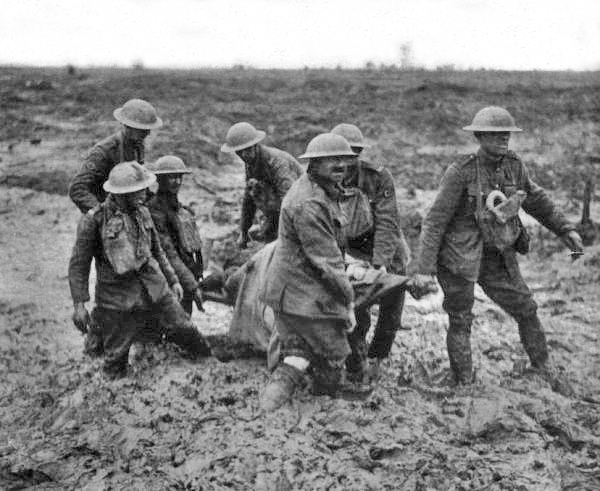
Stretcher bearers, Passchendaele [Wikipedia]
 
Christmas Midnight Mass 1916

O’Rahilly gives an account of the last Christmas Midnight Mass that Fr Doyle would celebrate, an account that shows the Irish Jesuit carrying out two of the responsibilities that Pope Francis spoke about in his homily above to those he was about to ordain: especially to celebrate the Lord’s Sacrifice and Through the Sacrament of Penance . . . to never tire of being merciful. 
 
Christmas itself Fr. Doyle had the good luck of spending in billets. He got permission from General Hickie to have Midnight Mass for his men in the Convent. The chapel was a fine large one, as in pre-war times over three hundred boarders and orphans were resident in the Convent; and by opening folding-doors the refectory was added to the chapel and thus doubled
the available room. An hour before Mass every inch of space was filled, even inside the altar rails and in the corridor, while numbers had to remain in the open. Word had in fact gone round about the Mass, and men from other battalions came to hear it, some having walked several miles from another village. 


Before the Mass there was strenuous Confession-work. “We were kept hard at work
hearing confessions all the evening till nine o’clock” writes Fr. Doyle, “the sort of Confessions you would like, the real serious business, no nonsense and no trimmings. As I was leaving the village church, a big soldier stopped me to know, like our Gardiner Street [editor’s note: where the Jesuit church in Dublin is located] friend, ‘if the Fathers would be sittin’ any more that night.’  He was soon polished off, poor chap, and then insisted on escorting me home. He was one of my old boys, and having had a couple of glasses of beer — ‘It wouldn’t scratch the back of your throat, Father, that French stuff’ — was in the mood to be complimentary. ‘We miss you sorely, Father, in the battalion’, he said, ‘we do be always talking about you’. Then in a tone of great confidence: ‘Look, Father, there isn’t a man who wouldn’t give the whole of the world, if he had
it, for your little toe! That’s the truth’. The poor fellow meant well, but ‘the stuff that would not scratch his throat’ certainly helped his imagination and eloquence. 


I reached the Convent a bit tired, intending to have a rest before Mass, but found a string of the boys awaiting my arrival, determined that they at least would not be left out in the cold. I was kept hard at it hearing Confessions till the stroke of twelve and seldom had a more fruitful or
consoling couple of hours’ work, the love of the little Babe of Bethlehem softening hearts which all the terrors of war had failed to touch.”
 
The Mass itself was a great success and brought consolation and spiritual peace to many a war-weary exile. This is what Fr. Doyle says:
 
“I sang the Mass, the girls’ choir doing the needful. One of the Tommies [editor’s note: ‘Tommy’ was the generic nickname for the ordinary British soldier], from Dolphin’s Barn, sang the Adeste beautifully with just a touch of the sweet Dublin accent to remind us of home, sweet home,
the whole congregation joining in the chorus. It was a curious contrast: the chapel packed with men and officers, almost strangely quiet and reverent (the nuns were particularly struck by this), praying .and singing most devoutly, while the big tears ran down many a rough cheek: outside the cannon boomed and the machine-guns spat out a hail of lead: peace and good will — hatred and bloodshed!
 
“It was a Midnight Mass none of us will ever forget. A good 500 men came to Holy Communion, so that I was more than rewarded for my work.”
 
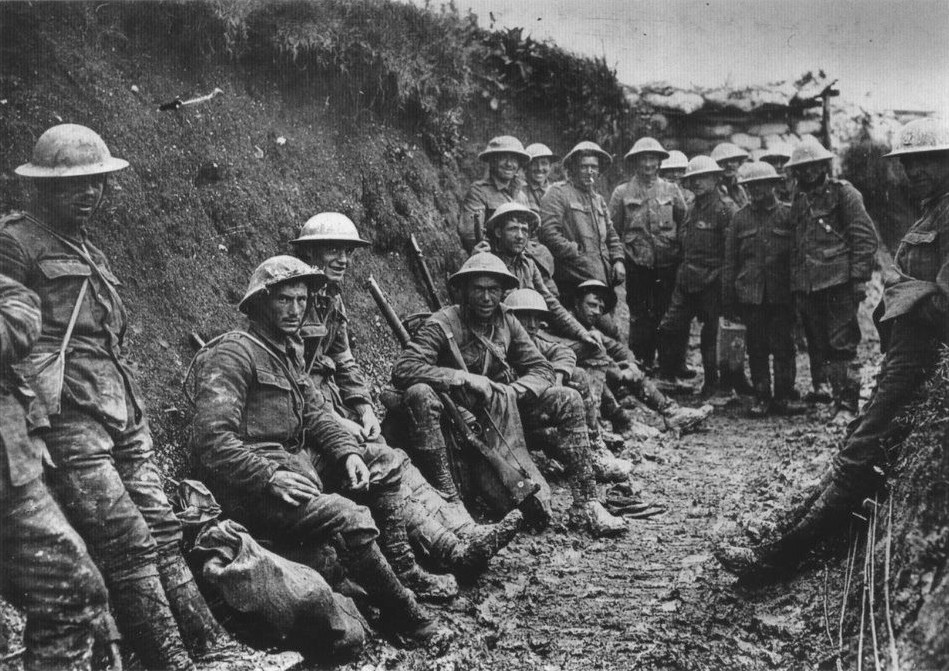
Royal Irish Rifles in trench at the Somme, France, July 1916 [Wikipedia]
 
Six days before he was killed Fr Doyle wrote to his father about an incident in which he carried out another priestly responsibility mentioned by Pope Francis in his homily: With Chrism oil you will comfort the sick.
 
A sad morning as casualties were heavy and many men came in dreadfully wounded. One man was the bravest I ever met. He was in dreadful agony, for both legs had been blown off at the knee But never a complaint fell from his lips, even while they dressed his wounds, and he tried
to make light of his injuries. Thank God, Father, he said, I am able to stick it out to the end. Is it not all for little Belgium? The Extreme Unction, as I have noticed time and again, eased his bodily pain. I am much better now and easier, God bless you, he said, as I left him to attend a dying man. He opened his eyes as I knelt beside him: Ah! Fr. Doyle, Fr. Doyle, he whispered faintly, and then motioned me to bend lower as if he had some message to give. As I did
so, he put his two arms round my neck and kissed me. It was all the poor fellow could do to show his gratitude that he had not been left to die alone and that he would have the consolation of receiving the Last Sacraments before he went to God. Sitting a little way off I saw a hideous bleeding object, a man with his face smashed by a shell, with one if not both eyes torn out. He raised his head as I spoke. Is that the priest? Thank God, I am all right now. I took his blood-covered hands in mine as I searched his face for some whole spot on which to anoint him. I think I know better now why Pilate said Behold the Man when he showed our Lord to the people.
In the afternoon, while going my rounds, I was forced to take shelter in the dug-out of a young officer belonging to another regiment. For nearly two hours I was a prisoner and found out he was a Catholic from Dublin, and had been married just a month. Was this a chance visit, or did
God send me there to prepare him for death, for I had not long left the spot when a shell burst and killed him? I carried his body out the next day and buried him in a shell hole, and once again I blessed that protecting Hand which had shielded me from his fate.
 
The trench warfare of World War I was a form of hell, where evil was present. But Jesus Christ the Risen Lord was present there too – and recognised by so many soldiers, particularly at the moment of death, through the presence of priests such as Fr Willie Doyle SJ, whose inspiring life I first learned about in kindergarten in the late 1940s. In celebrating Mass, in hearing confessions, in anointing dying soldiers, in burying those who had died in battle, priests were bringing hope and light, the hope and light that is Jesus himself, into the midst of an awful darkness. And in some cases these priests were called to be configured literally to the dying Christ so that they could say: the bread that I will give for the life of the world is my flesh.
 
Today please pray for all priests, without whom we could not have the Bread of Life.
 
Posted in: Sunday Reflections Tagged: Fr William Doyle SJ, Sunday Reflections, The Bread of Life, The Great War

‘Do not be content with anything less than Christ.’ Sunday Reflections, 18th Sunday in Ordinary Time, Year B

July 28, 2015 by Father Sean Coyle


From The Gospel of John (2003)  Directed by Philip Saville. Jesus played by Henry Ian Cusick; narrator, Christopher Plummer.
[John 6:24-35 is found between 2:36 and 4:24 in the video.]


Readings
(New American Bible:
Philippines, USA)
 
Readings
(Jerusalem Bible: Australia,
England & Wales, India [optional], Ireland, New Zealand, Pakistan,
Scotland, South Africa)
 
Gospel John 6:24-35 (New Revised Standard Version, Catholic Edition, Canada) 
 
When the
crowd saw that neither Jesus nor his disciples were there, they themselves got
into the boats and went to Capernaum looking for Jesus.
When they found him on the other side of the sea, they said to him, “Rabbi, when did you come here?” Jesus answered them, “Very truly, I tell you, you are looking for me, not because you saw signs, but because you ate your fill of the loaves. Do not work for the food that perishes, but for the food that endures for eternal life, which the Son of Man will give you. For it is on him that God the Father has set his seal.” Then they said to him, “What must we do to perform the works of God?”  Jesus answered them, “This is the work of God, that you believe in him whom he has
sent.”
 
So they said to him, “What sign are you going to give us then, so that we may see it and believe you? What work are you performing? Our ancestors ate the manna in the wilderness; as it is written, ‘He gave them bread from heaven to eat.’” Then Jesus said to them, “Very truly, I tell you, it was not Moses who gave you the bread from heaven, but it is my Father who gives you the true bread from heaven. For the bread of God is that which comes down from heaven and gives life to the world.” They said to him, “Sir, give us this bread always.”

Jesus said to them, “I am the bread of life. Whoever comes to me will never be hungry, and whoever believes in me will never be thirsty.


Antiphona ad Communionem  Communion Antiphon  Wisdom 16:20
 
Panem de caelo dedisti nobis, Domine,
You have given us, O Lord, bread from heaven,
habentem omne delectamentum, et omnem saporem suavitatis.
endowed with all delights and sweetness in every taste.

Fr Ragheed Aziz Ganni
(20 January 1972 – 3 June 2007)
 
I have featured Fr Ragheed Ganni a number of times on Sunday Reflections, most recently two weeks ago for the 16th Sunday in Ordinary Time, Year B. As a priest and as a Catholic Christian I am truly inspired by this man who was less than half the age I am now when he was assassinated.
 

‘He was a raconteur par excellence and a font of knowledge – we discussed everything and anything from the metaphysical to the trivial. A young and gauche student at the time, I learnt about Iraq and about theology; about the workings of the college in the summer and the best places to eat pizza. I was amazed at his command of English and Italian and his perennial good spirits and big smile – he was and will always be an inspiration’.

 
That is how an Irish student at the Pontifical Irish College in Rome described Fr Ragheed Ganni, a Chaldean Catholic priest murdered along with three subdeacons, Basman Yousef Daud,Wahid Hanna Isho, and Gassan Isam Bidawed, on 3 June 2007 just after the young priest had celebrated Mass in Holy Spirit parish, Mosul, Iraq. Fr Ganni, an engineer, studied theology in Rome, and stayed at the Irish College, where he was known as ‘Paddy the Iraqi’, ‘Paddy’ being a generic term for Irishmen, derived from the name of Ireland’s – and Nigeria’s – patron, St Patrick.

Pope Benedict XVI [Wikipedia]
 
Dear young people, do not be satisfied with anything less than Truth and Love, do not be content with anything less than Christ. Pope Benedict spoke these words at the prayer vigil on 20 August 2011 during the Madrid World Youth Day. He also said, we need to speak with courage and humility of the universal significance of Christ as the Saviour of humanity and the source of hope for our lives.
 
In these words he is echoing the answer of Jesus to the question put to him in today’s gospel, What must we do, to be doing the works of God? His reply: This is the work of God, that you believe in him whom he has sent.
 
In Verbum Domini the Pope wrote, We cannot keep to ourselves the words of eternal life given to us in our encounter with Jesus Christ: they are meant for everyone, for every man and woman . . . It is our responsibility to pass on what, by God’s grace, we ourselves have received. In his Angelus talk on 29 October 2006 Benedict said, The rediscovery of the value of one’s own Baptism is at the root of every Christian’s missionary commitment, because as we see in the Gospel, those who allow themselves to be fascinated by Christ cannot fail to witness to the joy of following in his footsteps. 
 
In that same talk, in which he commented on the gospel of that Sunday, Mark 10:46-52, Pope Benedict said, The decisive moment was the direct, personal encounter between the Lord and that suffering man. They found each other face to face:  God with his desire to heal and the man with his desire to be healed; two freedoms, two converging desires. He was speaking of the meeting between the blind Bartimaeus and Jesus.
 
One theme that comes through repeatedly in the teaching of Pope Benedict is that our faith is in a person, Jesus, God who became man. Jesus tells us clearly that it is his Father’s will that we believe in him.
 
Another theme of Benedict is the joy that Jesus promised those who follow him. This was the theme of the Pope’s message for World Youth Day 2012 held on Palm Sunday in Rome.Pope Benedict uses a very striking term: those who allow themselves to be fascinated by Christ. I don’t think I’ve heard it put that way before by anyone. Benedict insists so often that our faith is faith in the person of Jesus, not in a set of doctrines, though they come to us from Jesus through his Church.Just over a year before his death Father Ragheed spoke at the Eucharistic Conference in Bari, Italy. He said, Mosul Christians are not theologians; some are even illiterate. And yet inside of us for many generations one truth has become embedded: without the Sunday Eucharist we cannot live.


In the context of the war in Iraq he spoke eloquently about the Sunday Eucharist: It is among such difficulties that we understand the real value of Sunday, the day when we meet the Risen Christ, the day of our unity and love, of our (mutual) support and help. There are days when I feel frail and full of fear. But when, holding the Eucharist, I say ‘Behold the Lamb of God, who takes away the sin of the world’, I feel His strength in me. When I hold the Host in my hands, it is really He who is holding me and all of us, challenging the terrorists and keeping us united in His boundless love.


In normal times, everything is taken for granted and we forget the greatest gift that is made to us. Ironically, it is thanks to terrorist violence that we have truly learnt that it is the Eucharist, the Christ who died and risen, that gives us life. And this allows us to resist and hope. 

 
This martyr of our times was clearly fascinated by Christ and understood that it is the Risen Lord himself whom we meet when we come together for Sunday Mass.
 
Jesus chides the people and questions their real reason for coming after him: Truly, truly, I say to you, you seek me, not because you saw signs, but because you ate your fill of the loaves. Yet he doesn’t regret having fed them and he sees that for at least some of them their reason is somewhat deeper. He gives a straight answer to their question about the work of God: This is the work of God, that you believe in him whom he has sent. It is not being ‘good’, it is not being ‘nice’. It is in accepting him for who he is, God who became man, who lived among us, died for us on the Cross, rose from the dead on Easter Sunday and is with us in an intimate and challenging way when we celebrate Mass, especially on Sunday.
 
All who met Father Ragheed described him as a joyful person. There is something very joyful, in the sense that Jesus meant, in a person who can not only tell you where the best pizza in Rome is, who is not content with anything less than Christ and who is prepared to go back to a very dangerous situation in order to be able to celebrate Mass with his people and to stay with them in the midst of war.
 
Read more about Fr Ragheed Ganni here and here.
 

Ave, verum corpus
natum
ex Maria Virgine:
vere passum, immolatum
in cruce pro homine:
cuius latus perforatum
unda fluxit et sanguine:
esto nobis praegustatum,
in mortis examine.
O dulcis, O pie, O Jesu, Fili Mariae.
Miserere mei. Amen.


+++

Hail the true body, born
of the Virgin Mary:
You who truly suffered and were
sacrificed
on the cross for the sake of man.
From whose pierced flank
flowed water and blood:
Be a foretaste for us
in the trial of death.
O sweet, O merciful, O Jesus, Son of
Mary.
Have mercy on me. Amen. 
Posted in: Sunday Reflections Tagged: Fr Ragheed Ganni, Pope Benedict, Sunday Reflections
« Previous 1 2 3 Next »

Recent Posts

  • ‘I do choose. Be made clean!’ Sunday Reflections, 6th Sunday in Ordinary Time, Year B
  • ‘They brought to him all who were sick.’ Sunday Reflections, 5th Sunday in Ordinary Time, Year B
  • ‘He taught them as one having authority.’ Sunday Reflections, 4th Sunday in Ordinary Time, Year B
  • Columban Fr Donal O’Farrell RIP
  • Columban Fr Matthew Reilly RIP

Archives

  • February 2018
  • January 2018
  • December 2017
  • November 2017
  • October 2017
  • September 2017
  • August 2017
  • July 2017
  • June 2017
  • May 2017
  • April 2017
  • March 2017
  • February 2017
  • January 2017
  • December 2016
  • November 2016
  • October 2016
  • September 2016
  • August 2016
  • July 2016
  • June 2016
  • May 2016
  • April 2016
  • March 2016
  • February 2016
  • January 2016
  • December 2015
  • November 2015
  • October 2015
  • September 2015
  • August 2015
  • July 2015
  • June 2015
  • May 2015
  • April 2015
  • March 2015
  • February 2015
  • January 2015
  • December 2014
  • November 2014
  • October 2014
  • September 2014
  • August 2014
  • July 2014
  • June 2014
  • May 2014
  • April 2014

Copyright © 2026 The Pilgrims' Inn.

Hotel WordPress Theme by themehall.com